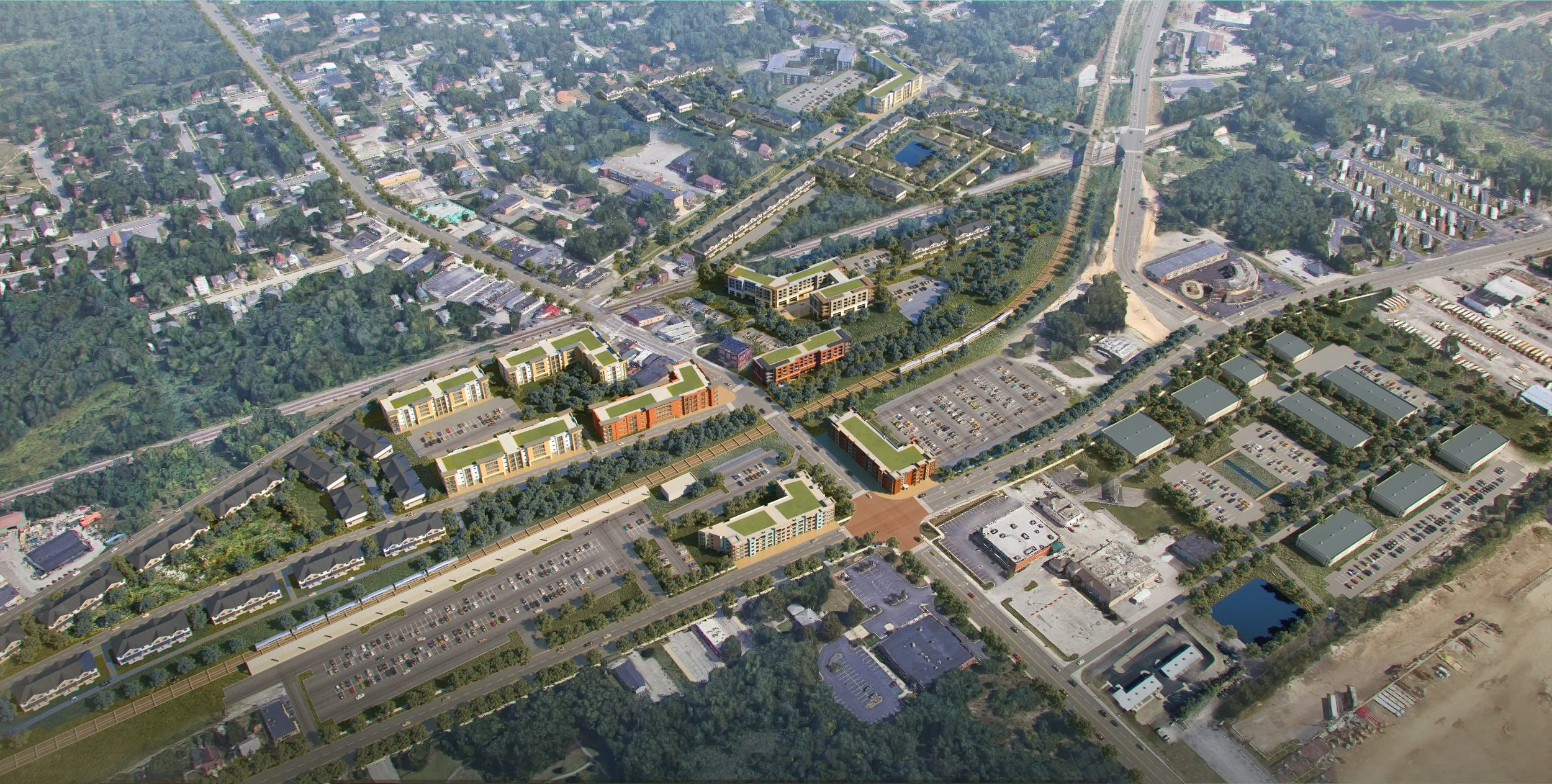
New Trends in Transit Oriented Development
Transit Oriented Development (TOD) leans in towards the evolution from station planning to district-building: blending transit, trails, walkability, housing choice, community services, public space, economic strategy, and implementation tools to create vibrant, people-centered, mixed-use places.
For decades, transit-oriented development has been defined by proximity. Transit is no longer just the end goal; it is the catalyst. The real value of a transit station lies in what grows around it. Today’s TOD blends transit with a focus on walkability, bikeways, small businesses, housing diversity, and public space, anchored by a revitalization-focused strategy to create places that are economically, socially, and environmentally sustainable and integrated into the neighborhood.
In addition, Transit Oriented Development is being applied in broader contexts. Below we highlight examples of the importance of TOD for placemaking (Van Aken); the development, feasibility testing, and financing of TOD through Transit Development Districts (NWI); the role TOD can play in economic recovery and revitalization (Gary Metro); the ability of TOD to address a community’s missing middle housing (Knoxville); the application of TOD to bikeway and trail development aka. “Mobility Oriented Development” (Indianapolis); and the combination of transit station and trail development for tourism aka. “Trail Oriented Development” (RDA Trails).
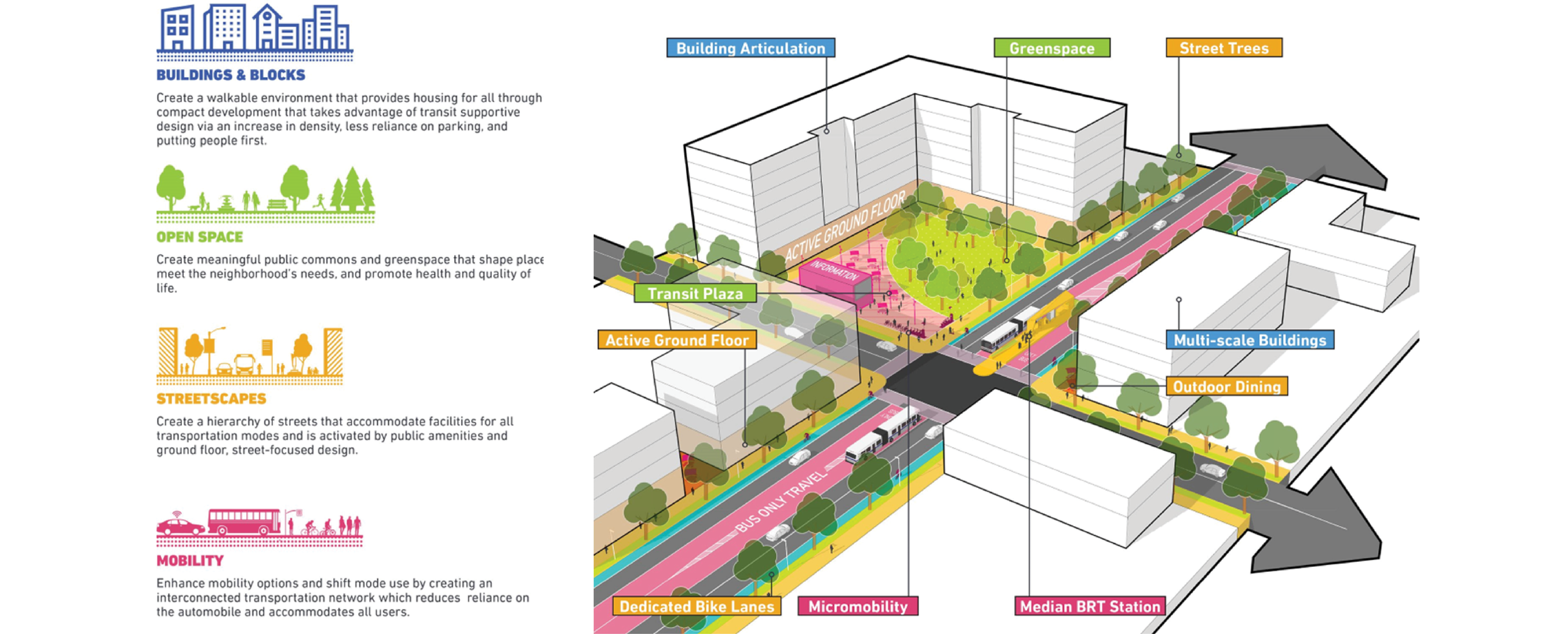
Transit Supportive Design for TOD from COTA LinkUS TOD Study
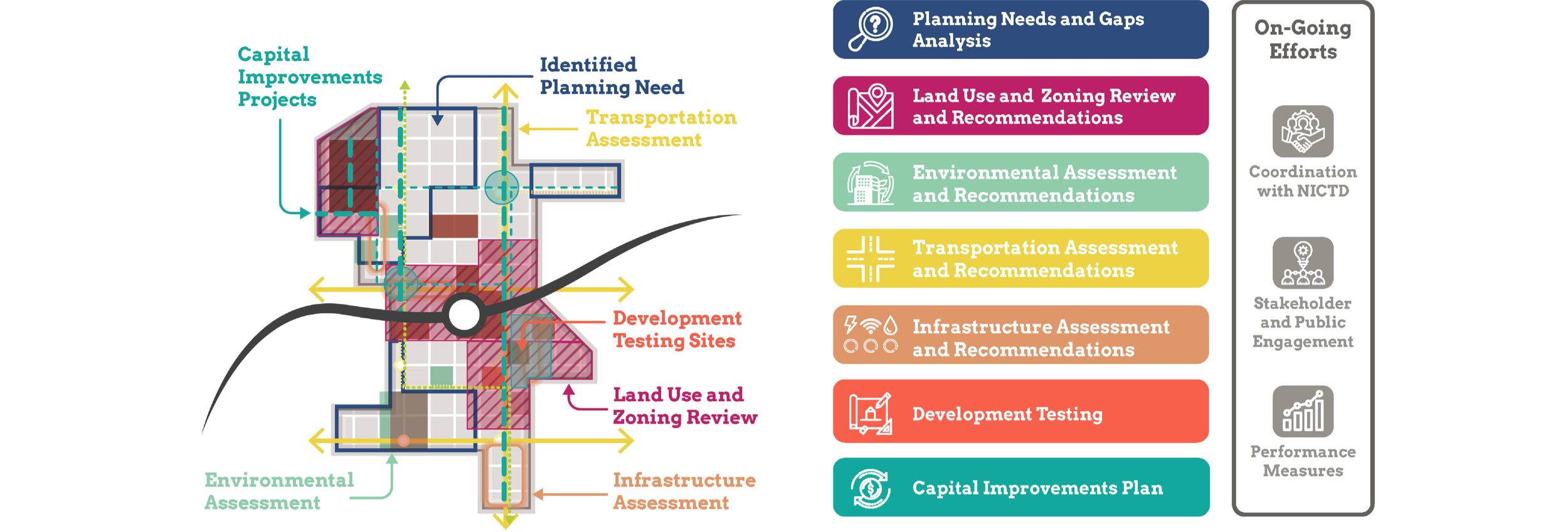
TOD Area Study Components from Northwest Indiana TOD Implementation Strategy
Case Studies:
Urban Design + Placemaking
Van Aken District, Shaker Heights, Ohio
The Van Aken District is a $100 million + transit-served district anchored by the eastern terminus of the RTA Blue Line, connecting the community of Shaker Heights directly to Downtown Cleveland. With a focus on placemaking and experience, this project converted parking lots and a struggling retail center with a development that blends public space and carefully crafted mixed-use into a cohesive, walkable place. The result is a district where transit supports experience, not the other way around, repositioning the station as a destination and demand generator while creating a place that is both locally rooted and regionally competitive. Its success has led to a second phase consisting of significant new housing in a multi-story tower. Van Aken is an example of a national best practice for how TOD, paired with strong urban design and placemaking, can create authentic, high-performing districts that uplift communities.
MKSK was part of a team that led the continuum from planning through design, with a focus on placemaking.
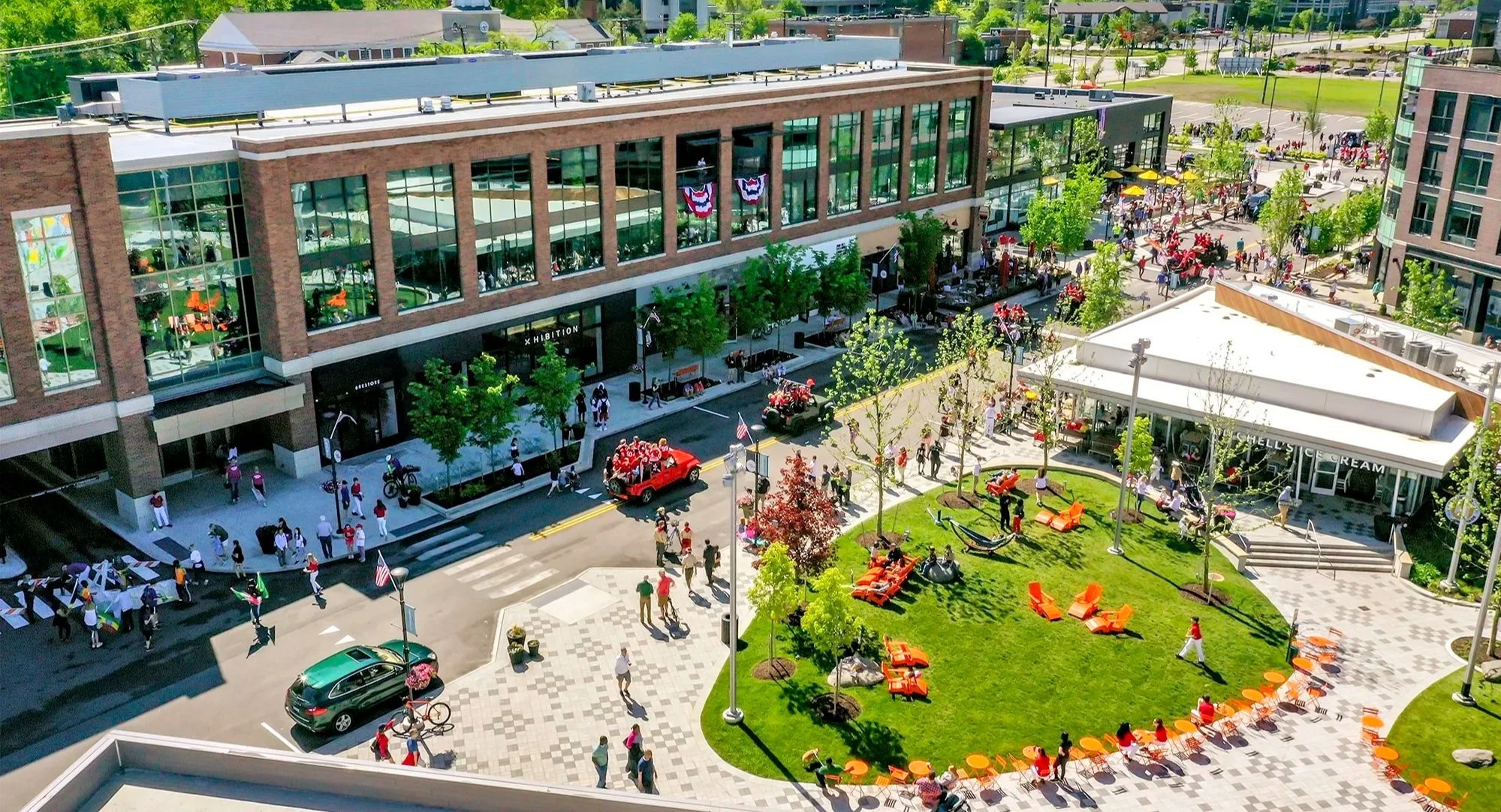
Van Aken has received national awards in excellence and implementation through the Urban Land Institute and the American Planning Association.
Development Testing + Real World Feasibility
Northwest Indiana Regional Development Authority
In Northwest Indiana, MKSK completed an FTA Pilot TOD Planning project that grounded TOD planning in real-world feasibility, aligning land use visioning with market testing, infrastructure costs, and funding tools. This work directly informed the creation of the Northwest Indiana Regional Development Authority’s Transit Development Districts (TDDs), essentially transit-focused TIF districts that capture incremental value to fund infrastructure and catalytic development. As outlined in the Comprehensive Strategic Plan, these districts build on over $1.5 billion in rail investment projected to generate $2.7 billion in private development, reinforcing a model that delivers an approximate 4x return on state investment while positioning station areas to attract sustained reinvestment and move projects from concept to implementation.
MKSK led the team that conducted this study for the RDA.
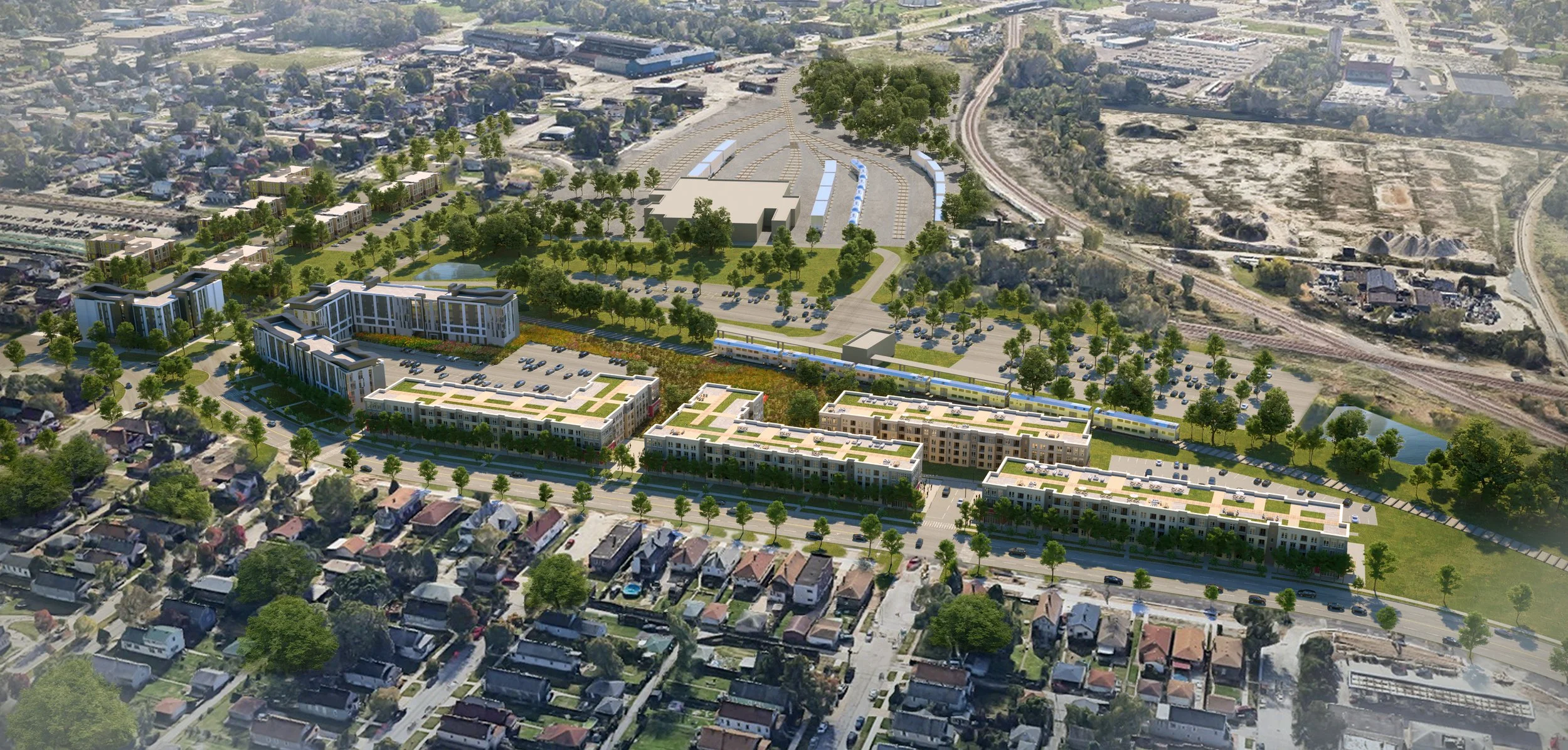
Economic Recovery
Northwest Indiana Regional Development Authority, City of Gary, Indiana
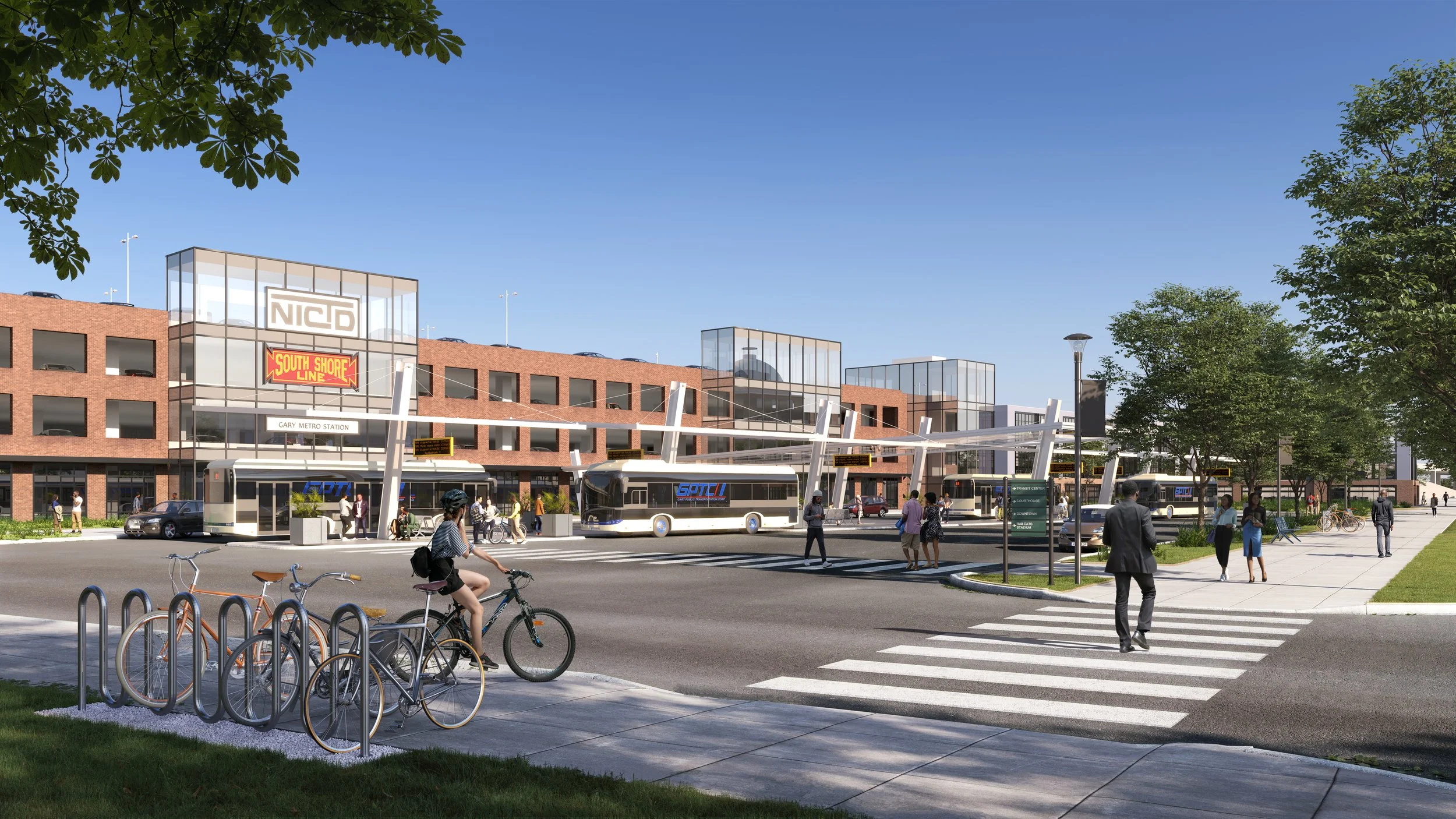
In Gary, the RDA is partnering to position Downtown Gary for a renaissance, led by investment in replacing the Gary Metro Station and TOD as a catalyst for economic recovery. This landmark effort pairs a new multimodal station with district-scale redevelopment and site readiness strategies, anchored by a $150 million station and TOD project. Backed by significant state and local investment, and complemented by more than $12 million in ongoing blight elimination, this initiative is designed to attract private development, increase vitality, restore the tax base, and reestablish downtown as a walkable, mixed-use center.
MKSK helped to lead this effort on behalf of the RDA.
Missing Middle Housing Integration
City of Knoxville, Tennessee
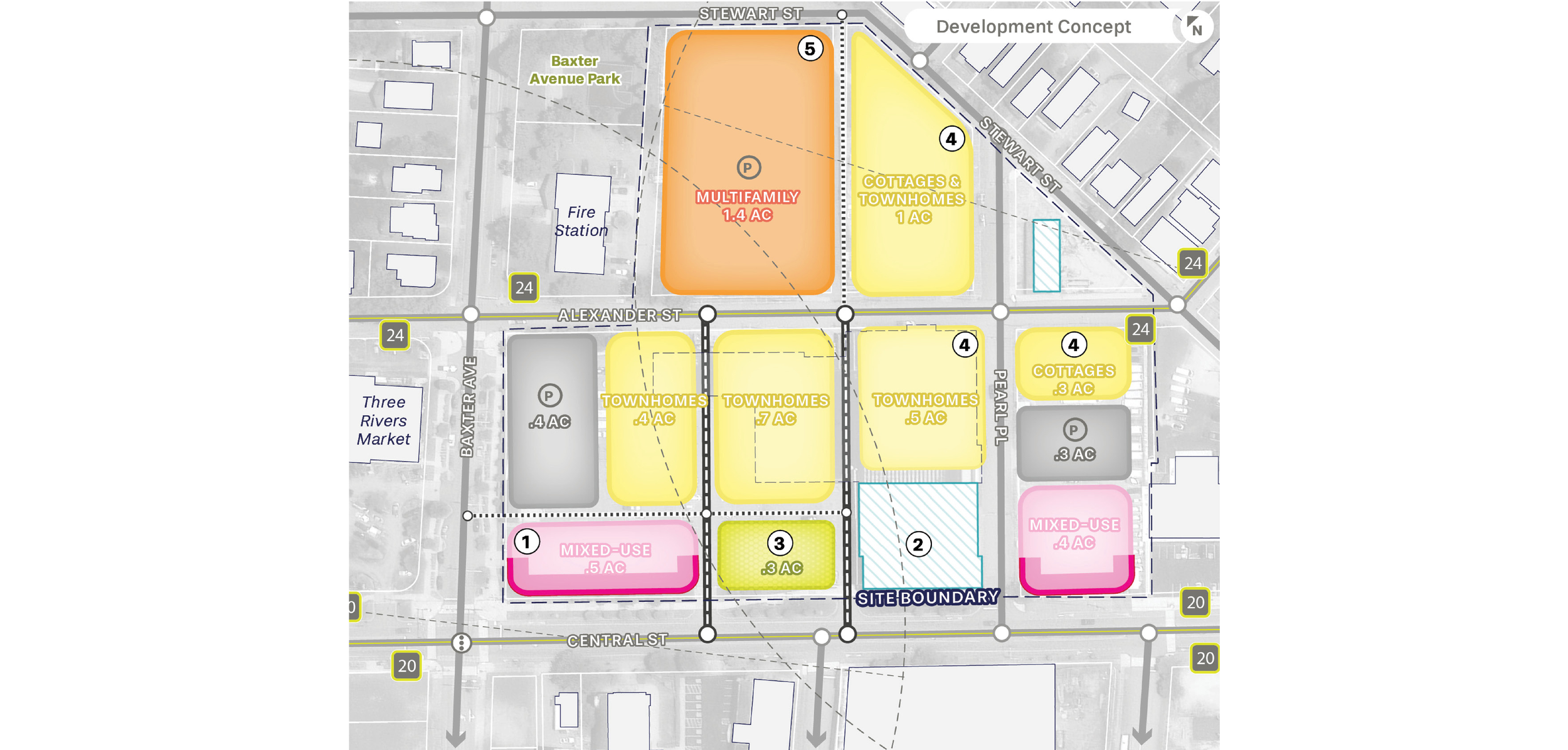
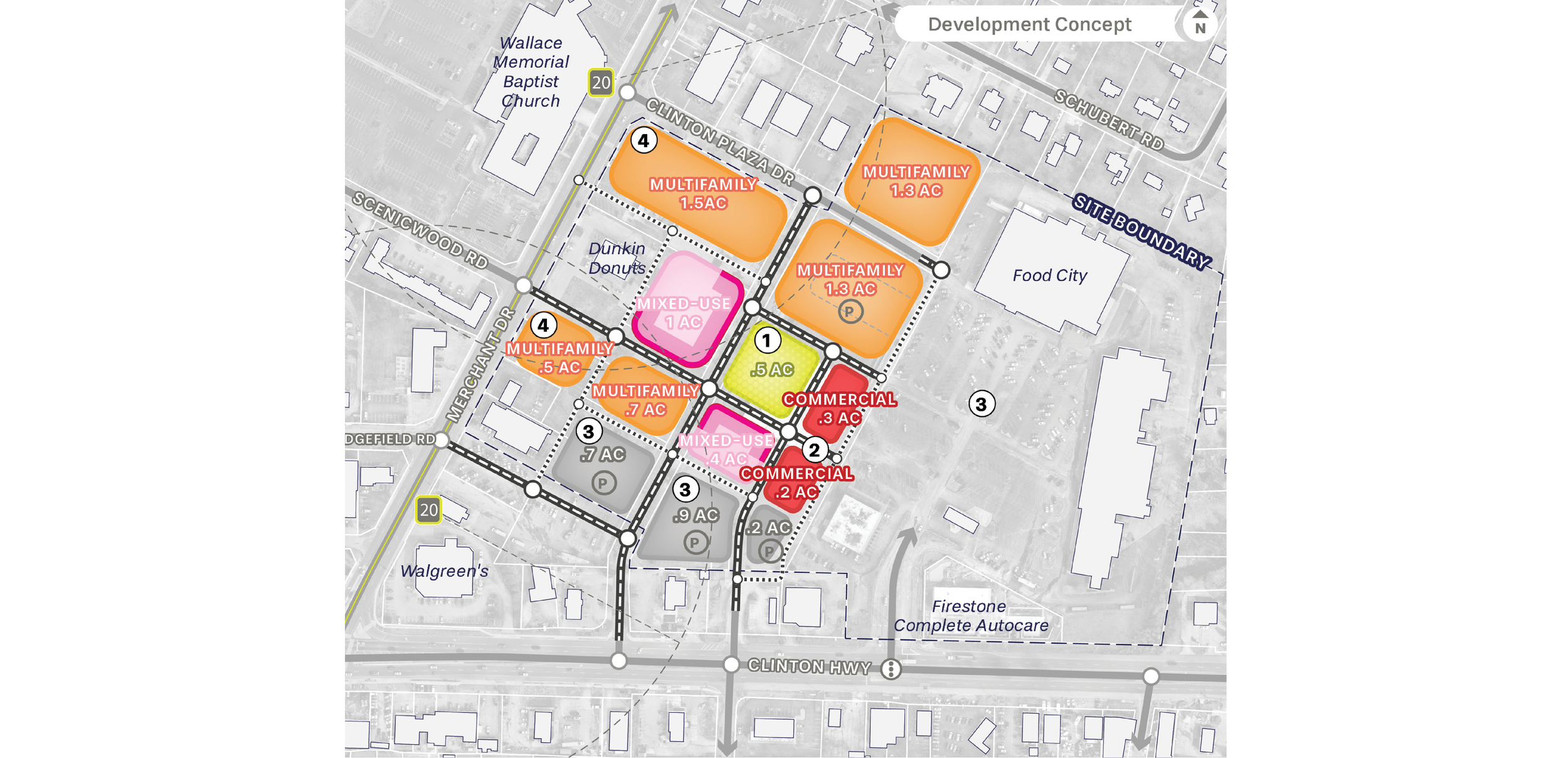
The city of Knoxville, Knoxville Regional TPO, and Knoxville Area Transit (KAT) teamed to advance a transit supportive development framework that integrates infill housing, including missing middle typologies, along high-frequency corridors served by the Knoxville Area Transit system. By aligning land use, transit, and market conditions in a high-demand housing market, the plan expands housing choice while advancing the City’s goals to increase housing at transit-connected sites, leveraging strong ridership and frequent headways to support walkable, attainable neighborhoods. The study elevates reinvestment opportunities in core, transit-served areas, positioning missing middle housing as a scalable, implementable solution that bridges neighborhood context with corridor-level growth.
MKSK led the team that conducted this framework.
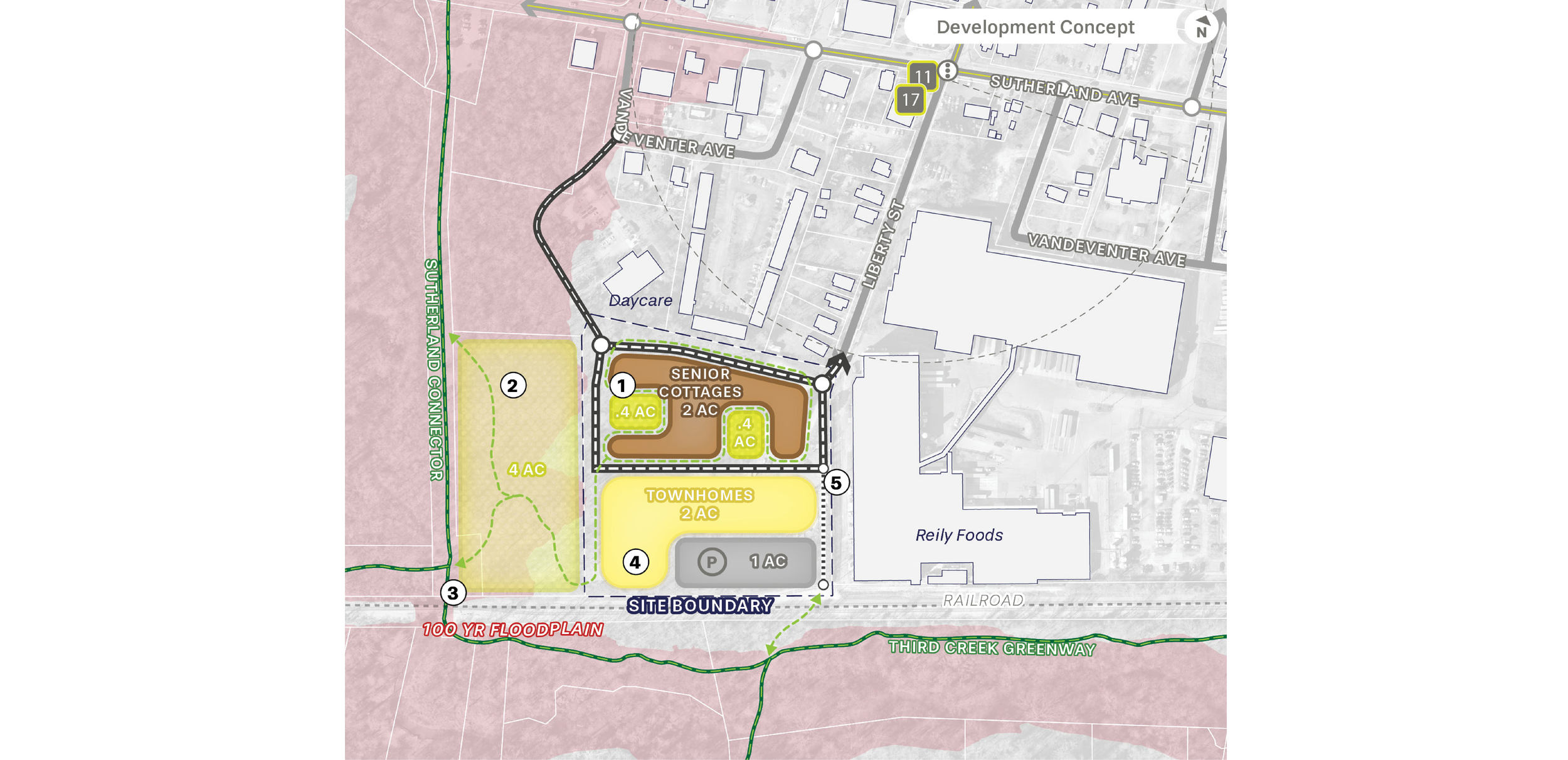
Mobility Oriented Development
City of Indianapolis/Marion County, Indiana
Transit Oriented Development comes in more flavors – including development oriented around regional trail networks. Communities across the country are beginning to partner with developers and tourism agencies to create Mobility Oriented Development (MOD). Indianapolis’s Indy Greenways for All plan is repositioning greenways as the backbone of a city-wide mobility network for walking, biking, and transit, that links neighborhoods, jobs, and destinations. The plan aligns transportation, equity, and development to ensure over 80% of residents are within a mile of a greenway, turning trails into everyday infrastructure that shapes how the city grows. These nodes are reinforced through integrated design guidelines, land use strategies, and zoning recommendations that enable more walkable, connected, and vibrant places, further solidifying Indianapolis’ position at the forefront of national trail cities.
MKSK is leading this plan for the city of Indianapolis.
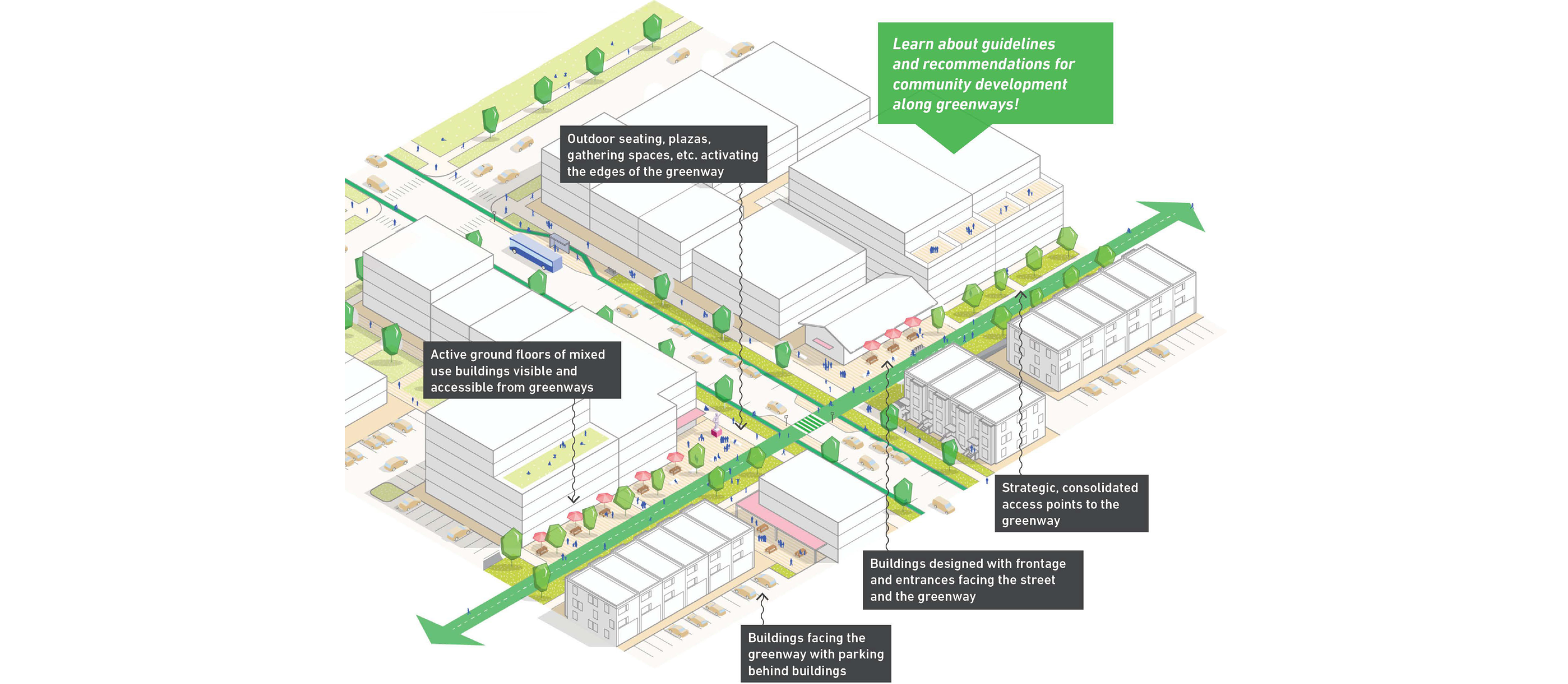
Condé Nast Traveler highlighted Indianapolis for its expanding greenway network as part of why it was named a top U.S. destination for 2026.
Transit + Trail Oriented Development
Northwest Indiana Regional Development Authority, Lake, Porter, and LaPorte Counties, Indiana
With the popularity of transit oriented development, models are now including “trail oriented development” that combine rail investment with trail systems, greenways, and active mobility networks, expanding TOD beyond the station into broader walkable districts. Through the Northwest Indiana Regional Development Authority Scenic Byway initiative, these hubs are linked to assets like Indiana Dunes National Park, the country’s 61st national park, using the Blue Ridge Parkway model, positioning mobility, recreation, and tourism to drive an additional $80 million in economic output, $170 million in personal income, and over 900 jobs by 2050.
MKSK is advancing this planning for the RDA.
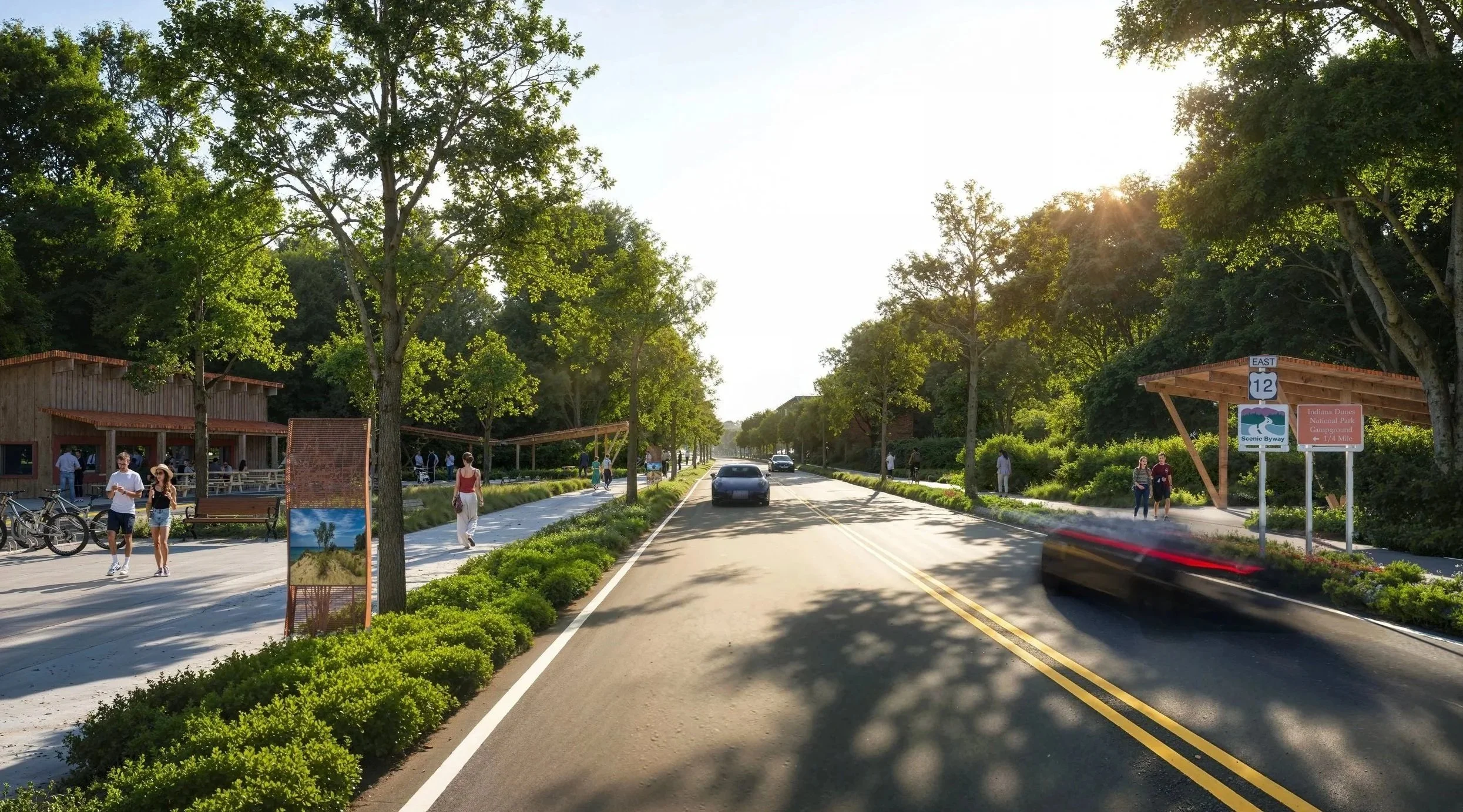
MKSK’s approach to TOD is comprehensive and tailored to each community, grounded in a process that uncovers local needs and opportunities while staying focused on the end goal: delivering projects that are market-real, authentic and investment ready.
About the Authors:
Chris Hermann, FAICP, Principal, has 34 years of professional experience from planning and visioning for comprehensive, downtown, and community strategic plans, to urban design and streetscape/corridor enhancement projects. His engagement on the Columbus Innerbelt reconstruction project spans more than a decade from the I-670 Mitigation and Design Enhancement Plan which set a design vocabulary within the innerbelt, to the I-70/71 South Innerbelt Study and Design Enhancement Manual which included an extensive Public Process of over 100 meetings, and now as part of the design teams for the phased implementation projects. Throughout, Chris has earned the trust of the community on behalf of the ODOT project team. Chris is skilled at helping communities create a unique, compelling vision and translating that vision into strategic steps that transform spaces and communities.
Aaron Kowalski, AICP, Associate Principal, specializes in transit- and trail-oriented development (TOD/TrOD), leading projects that integrate land use, mobility, infrastructure, and economic development to create investment-ready, equitable communities. His approach combines design-based planning, market analysis, and development feasibility to identify opportunities and deliver actionable strategies that move projects from concept to construction. He has led multidisciplinary teams nationwide, developing TOD readiness analyses, zoning and policy frameworks, and public-private implementation strategies that align community goals with real-world development outcomes.