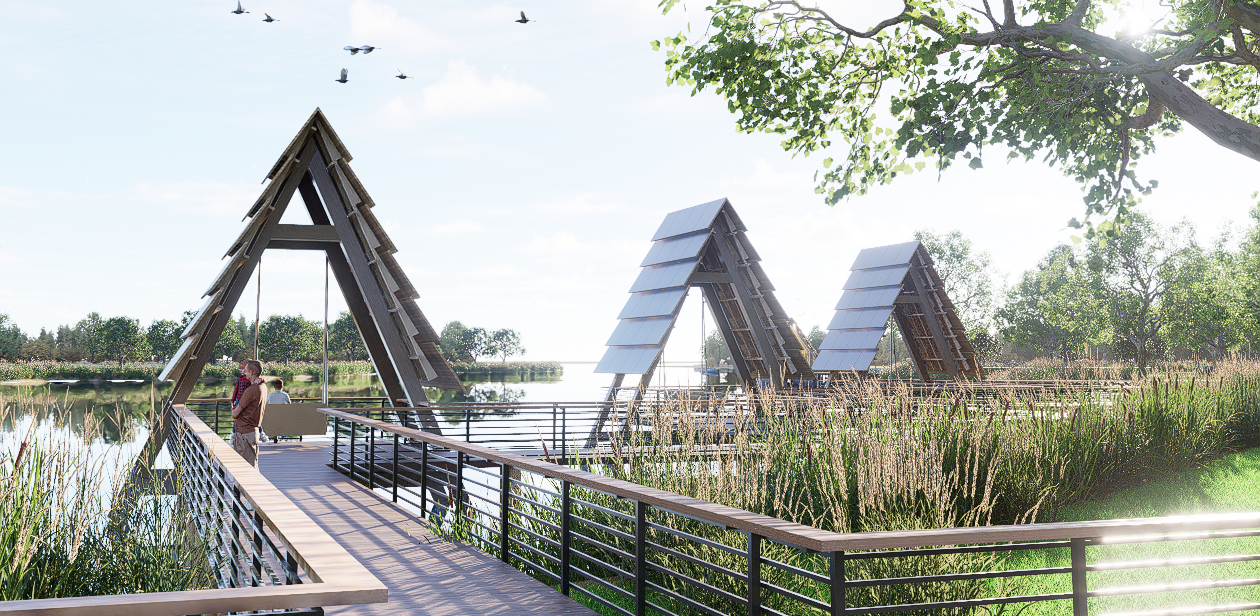
How Do You Approach a Beloved Public Park That Needs a Refresh?
For decades, Abernathy Park has been a memorable place for the Clemson, South Carolina community to be immersed in the scenic beauty of Lake Hartwell, but aging features and the onset of a major sewer upgrade necessitate refreshing Abernathy Park for the decades to come.
Tucked into an inlet in the northern reach of Lake Hartwell, Abernathy Park has served as an oasis near downtown and the Clemson campus since the early 2000’s. Popular for fishing, kayaking, and watching sunsets over the lake, the linear park that parallels the shoreline is known for its forested character and for a series of boardwalks that provide open views of the water.
Though popular with both residents and students, the primary features of the park have been in decline in recent years. The wooden boardwalks and overlooks have deteriorated and some of the forested areas have become cluttered with invasive undergrowth. On top of these conditions, the park is planned for closure in 2026 to allow for the replacement of a sewer trunk line that runs through the heart of the park. This work will create a major disturbance to the park, clearing trees and leaving a highly visible footprint.
Given these challenges, the City of Clemson engaged MKSK to develop a community-driven vision for a refresh of Abernathy Park. Our charge was to make water the central feature of the park experience, to recreate the idyllic, nature-based environment compromised by the sewer replacement, and to make Abernathy Park a jewel in the Clemson landscape.
With a light touch on the landscape, our approach involves five moves to meet the goals of the community:
1. Build on Local Knowledge – through robust engagement with Clemson residents, the Lake Hartwell boating community, outdoor enthusiasts, university professors, students, City staff, and the US Army Corps of Engineers, we were able to tap into a substantive local knowledge base regarding lake water levels, seasonal conditions, boating traffic patterns, preferred park uses, and beloved qualities of the park. This knowledge was the foundation for our creative work and provided important nuance in the development of park features, particularly the overwater structures.
2. Uncover Local Strengths – existing vegetation tends to have inertia, and the slow encroachment of invasives (limited ability to apply herbicides near the water) and colonizing undergrowth at the water’s edge had made the lake unseeable from the park and vice versa. Our plans for selective clearing of invasive and dense undergrowth allow for better safety and legibility along trails, the creation of new scenic vistas of the water, and convenient access to the lake shore.
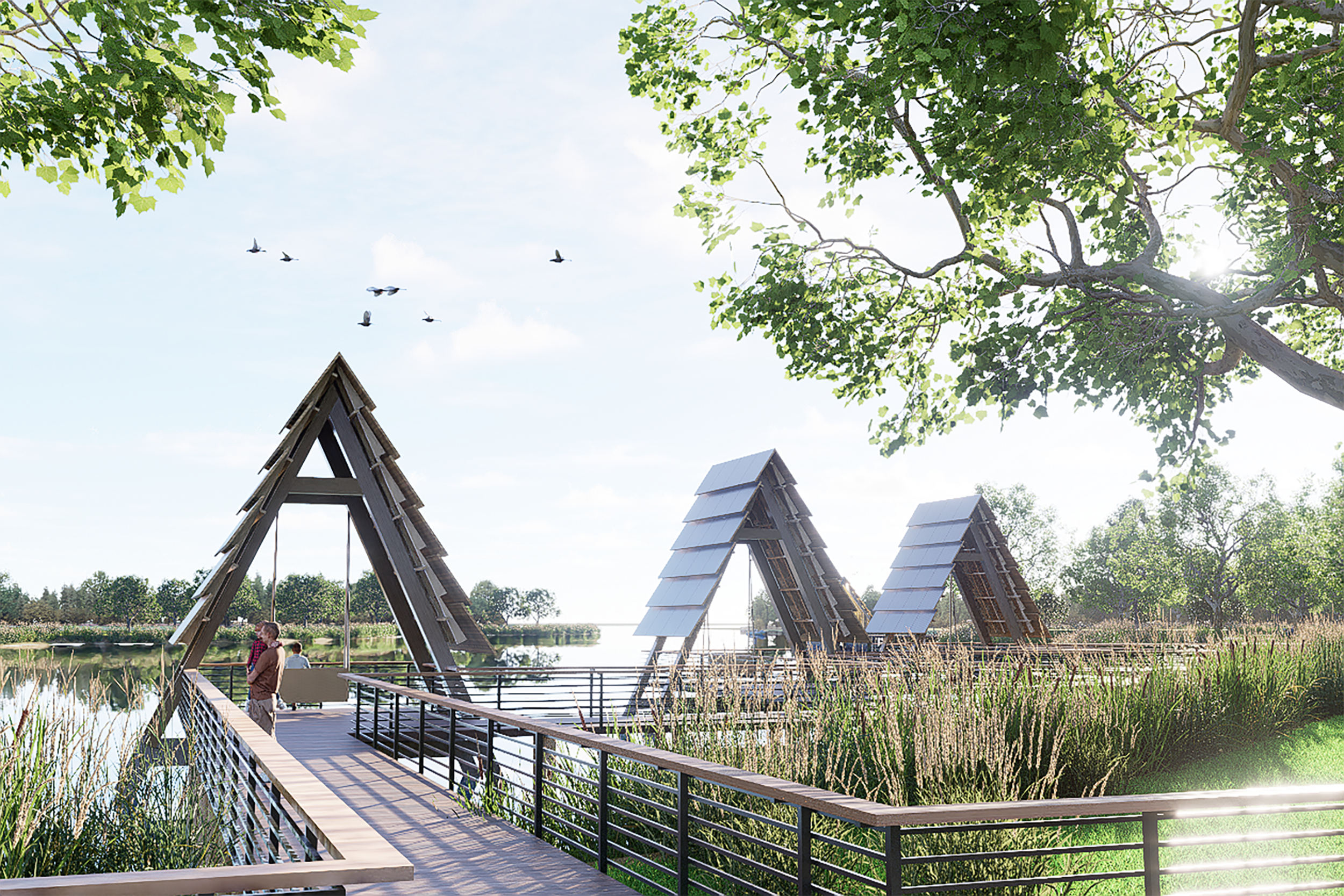
3. Sublimate the Impact of Sewer Work – the path of disturbance from construction activities and the permanent maintenance easement centered around the new sewer trunk line create an unmistakable linear clearing in an otherwise wooded park environment. To minimize the impact of the sewer, our plans locate a new multi-use trail along the maintenance easement. Linear in nature, the new path effectively erases the perception of a cleared easement and allows for re-forestation on either side of the trail.
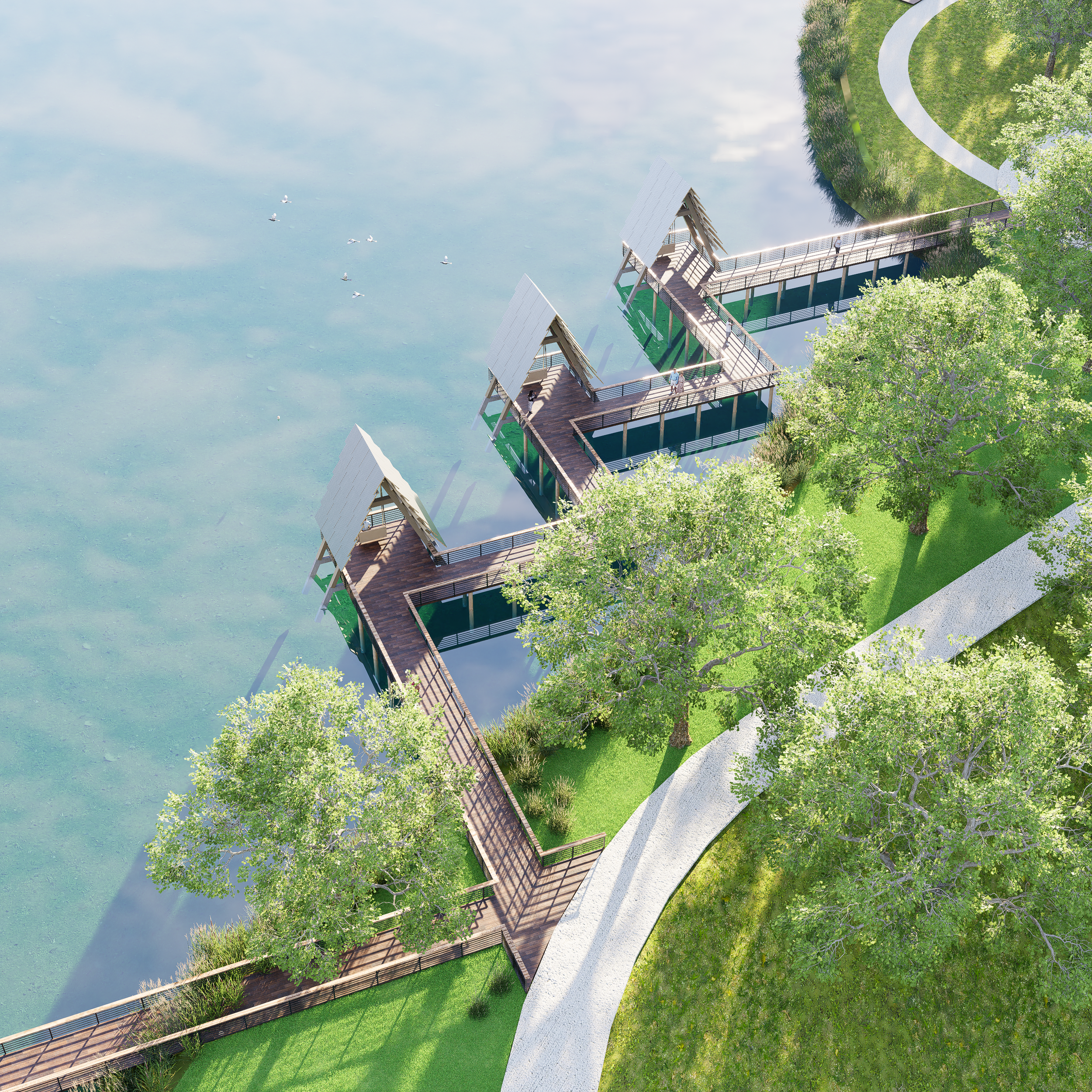
4. Resist the Urge to Over-Boardwalk the Waterfront – the existing wooden boardwalks in Abernathy Park provide open views for those on the boardwalk system but also create visual clutter from the shore and other vantage points. In partnership with the highly creative design professionals at Rome Office Architects, our plans make very selective use of overwater structures. These pieces include a thoughtfully located and exquisitely crafted pier house that provides the signature experience of the park overlooking Lake Hartwell.
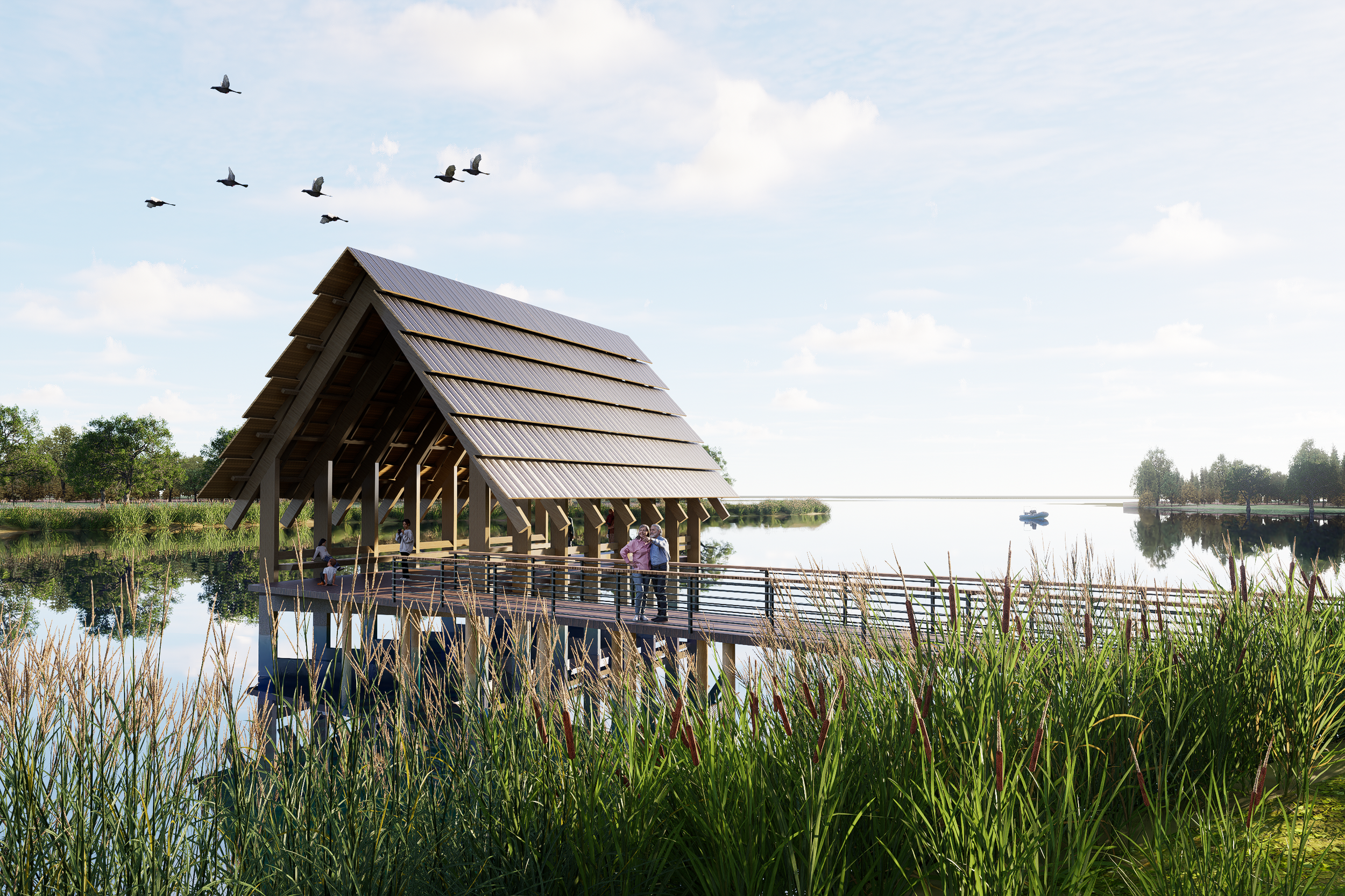
5. Refresh the Oasis – the public’s use and enjoyment of Abernathy Park, historically and in the years ahead, is based on an ecologically-healthy and idyllic landscape along the lake shore. Building on the conservation of existing native plant material, our regionally derived landscape palette is designed for improved habitat, the framing of scenic views, resilience with varying water levels (USACE-managed flood control and hydropower), and seasonal beauty.
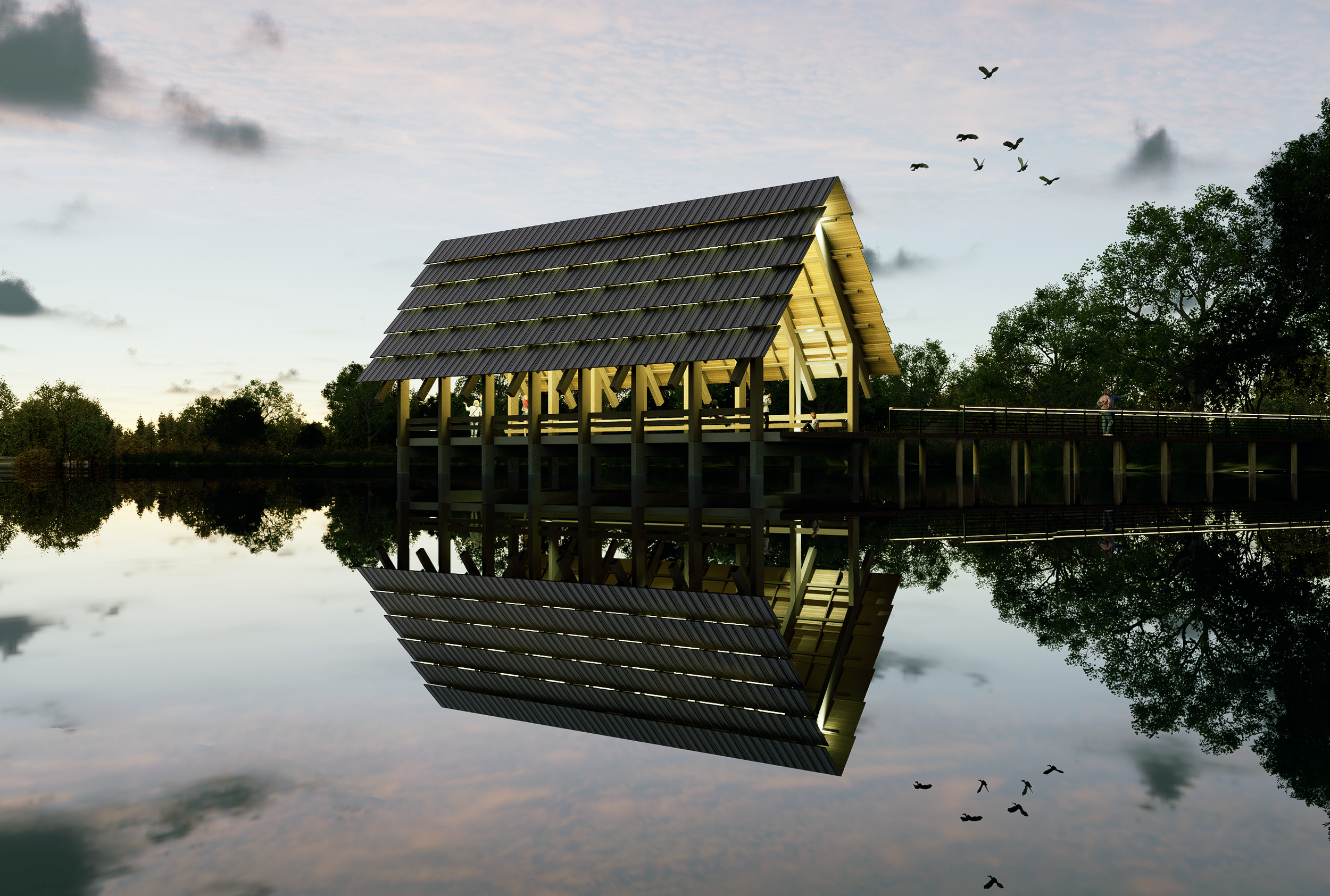
The start of construction for the refreshed Abernathy Park is slated for early 2027 on the heels of the sewer trunk line replacement. Clemson residents and visitors are just a few short seasons away from a delightful re-engagement with nature and water in the heart of the City.
Darren Meyer, ASLA, PLA, AICP, is a Principal at MKSK and is leading the design team for the Capital Line. From the planning of communities and promoting projects that champion community wellness and sustainability to the details of public open spaces, Darren’s more than 20 years of professional experience is at the intersection of complex infrastructure and community life. With projects across Columbus and the Southeast U.S., Darren brings deep experience in leading large, multidisciplinary teams to tackle complex urban challenges. He has served as the active and engaged leader of both planning and constructed projects bringing proven experience in all aspects of project implementation.