Where Forest Meets City: Reframing the Future of Jefferson Memorial Forest
Envisioning a Bold New Future for an Urban Wilderness of National Significance.
The Setting
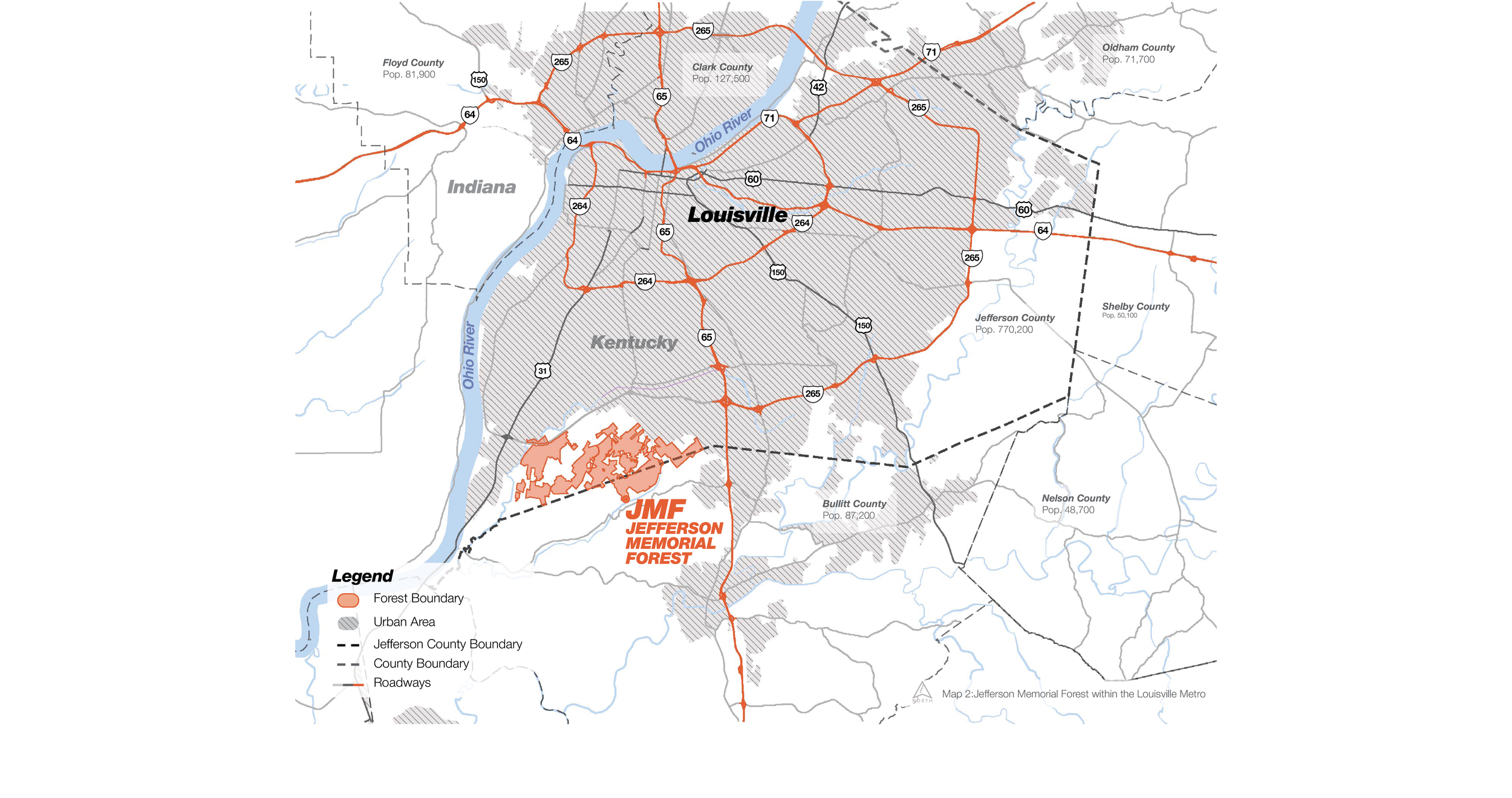
Spanning nearly 7,000 acres, Jefferson Memorial Forest stands as the largest municipally owned urban forest in the United States. This expansive natural sanctuary stretches across Louisville Metro to the south and Bullitt County to the north, offering a remarkable blend of urban accessibility and wilderness. Dedicated to honoring and remembering those who have served in the U.S. armed forces, Jefferson Memorial Forest provides a solemn space for reflection and remembrance. It serves as a vital link to the community, fostering a sense of reverence and gratitude for the sacrifices made by service members. Its diverse topography, characterized by rugged ridgelines, steep hollows, and dense woodland canopies, creates one of the most distinctive and breathtaking landscapes in the region – arguably operating as the “Lungs of the Region”. Visitors are treated to a multitude of experiences, from tranquil hikes along scenic trails to exhilarating outdoor adventures amidst this vibrant, ever-changing environment. Jefferson Memorial Forest is not just a place of natural beauty; it is a dynamic ecosystem that invites exploration, discovery, and a deep connection with nature, making it a true gem for outdoor enthusiasts and nature lovers alike.
The Opportunity
While the scale and topography of the Forest stand as two of its most impressive features, they currently hinder its overall clarity and accessibility. The vastness of the area makes it challenging for visitors to fully grasp and navigate the landscape. Although facilities and trails are dispersed throughout, there is no central focal point—no unifying core that provides a sense of orientation. The vision outlined in this master plan aims to create a clear framework that organizes the forest into distinct zones and hubs, enhancing both navigation and experience. While areas such as Moreman’s Hill, Horine Reservation, and Tom Wallace have been established for years, visitors, whether first-timers, casual hikers, or campers—often perceive the forest solely through the lens of their specific destination. This limited perspective prevents them from appreciating the full spectrum of experiences that the Jefferson Memorial Forest offers. The vision is to transform the forest into a cohesive, engaging environment where every visitor can easily explore, understand, and enjoy the diverse natural and recreational opportunities available, fostering a deeper connection with this remarkable and ecologically diverse landscape.
The Framework - Reveal + Refocus
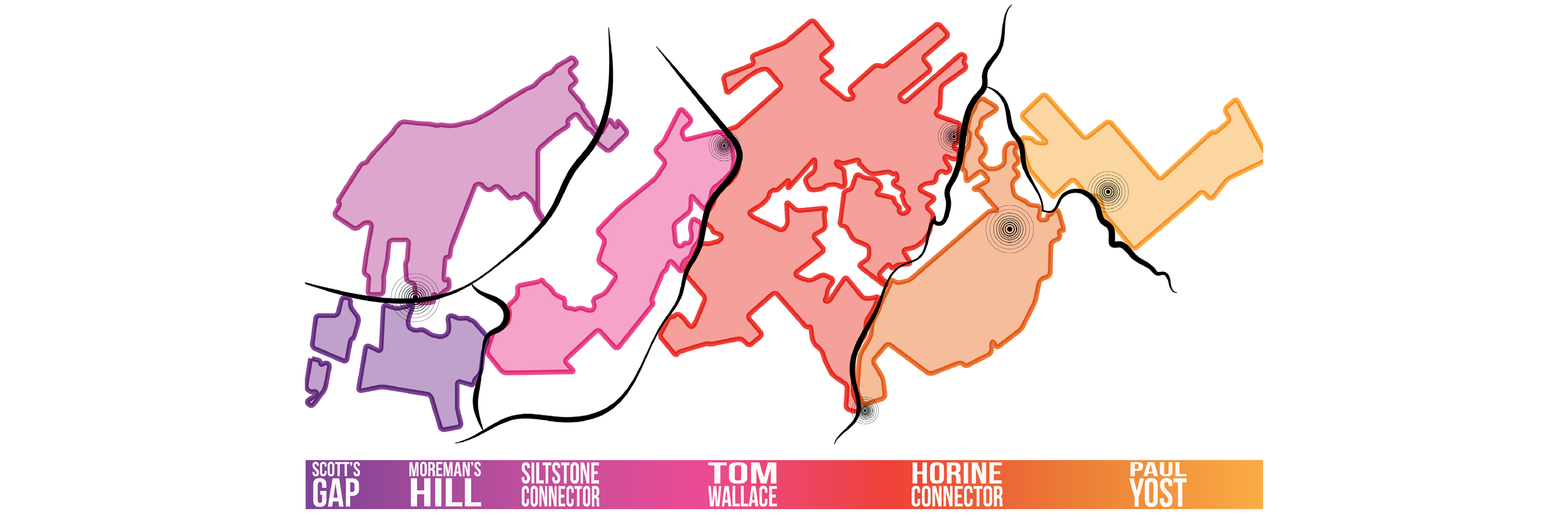
The current understanding of Jefferson Memorial Forest is organized into five named zones, each loosely defined by a network of roads and property lines: Paul Yost, Horine Reserve, Tom Wallace, Scott’s Gap, and Moreman’s Hill, listed from east to west. While these areas host several notable destinations, there is a significant opportunity to enhance their prominence by establishing dedicated hubs that serve as gateways into the forest – effectively “revealing” the forest as a legible and accessible landscape of destinations and experiences. These hubs will act as starting points for exploration, offering visitors a seamless entry into the natural beauty of each zone. Within each zone, tailored destinations and activities should be developed to highlight their unique features and sense of place, creating immersive experiences that celebrate the forest's diverse landscapes – choreographed movement and curated experiences that “reveal” immersive destinations, inspiring viewsheds, new and memorable experiences, and an enhanced connection to nature. By emphasizing these zones and introducing specialized hubs, Jefferson Memorial Forest enhances its potential to transform into a more engaging and accessible natural sanctuary, inviting visitors to discover its hidden gems and enjoy a variety of outdoor adventures and tranquil retreats.
The recently completed master plan by MKSK reimagines the forest as both a regional destination and a deeply local experience – one that strengthens the relationship between nature, community, wellness, and environmental stewardship. The plan frames the forest not as an isolated preserve on the edge of the city, but as an essential part of Louisville’s civic identity and future resilience.
The master plan aims to enhance the existing framework by creating a well-organized landscape divided into six distinct zones. Although numerous roads wind through the forest, five main roads stand out as vital arteries, providing essential access and connectivity. These primary routes not only facilitate movement but also define the boundaries and transition points between the zones, establishing a more cohesive and accessible framework. The strategic organization of these roads and zones promises to foster a harmonious balance between development and ecological preservation, making the area more navigable, engaging, and sustainable for future growth and exploration.
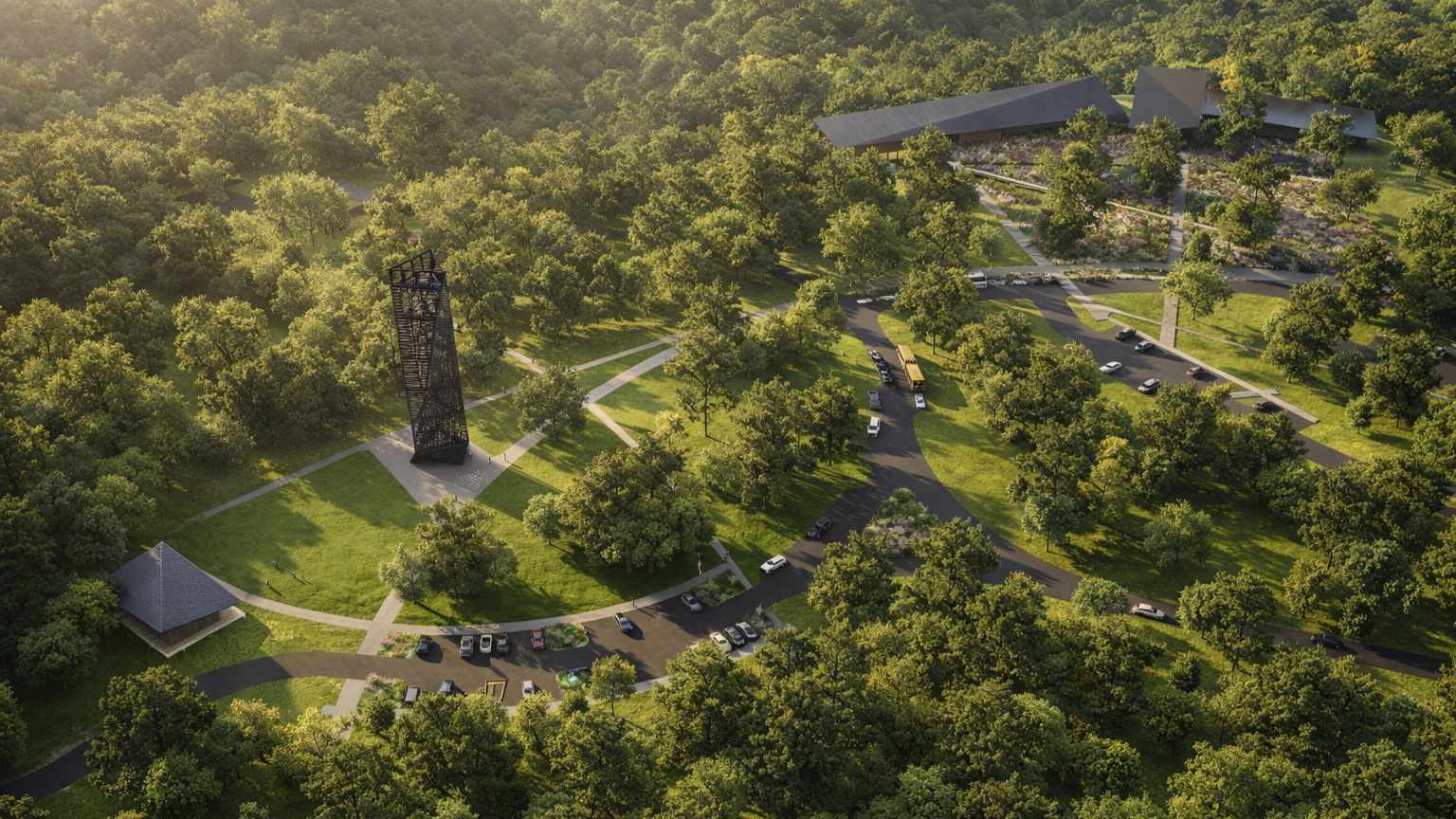
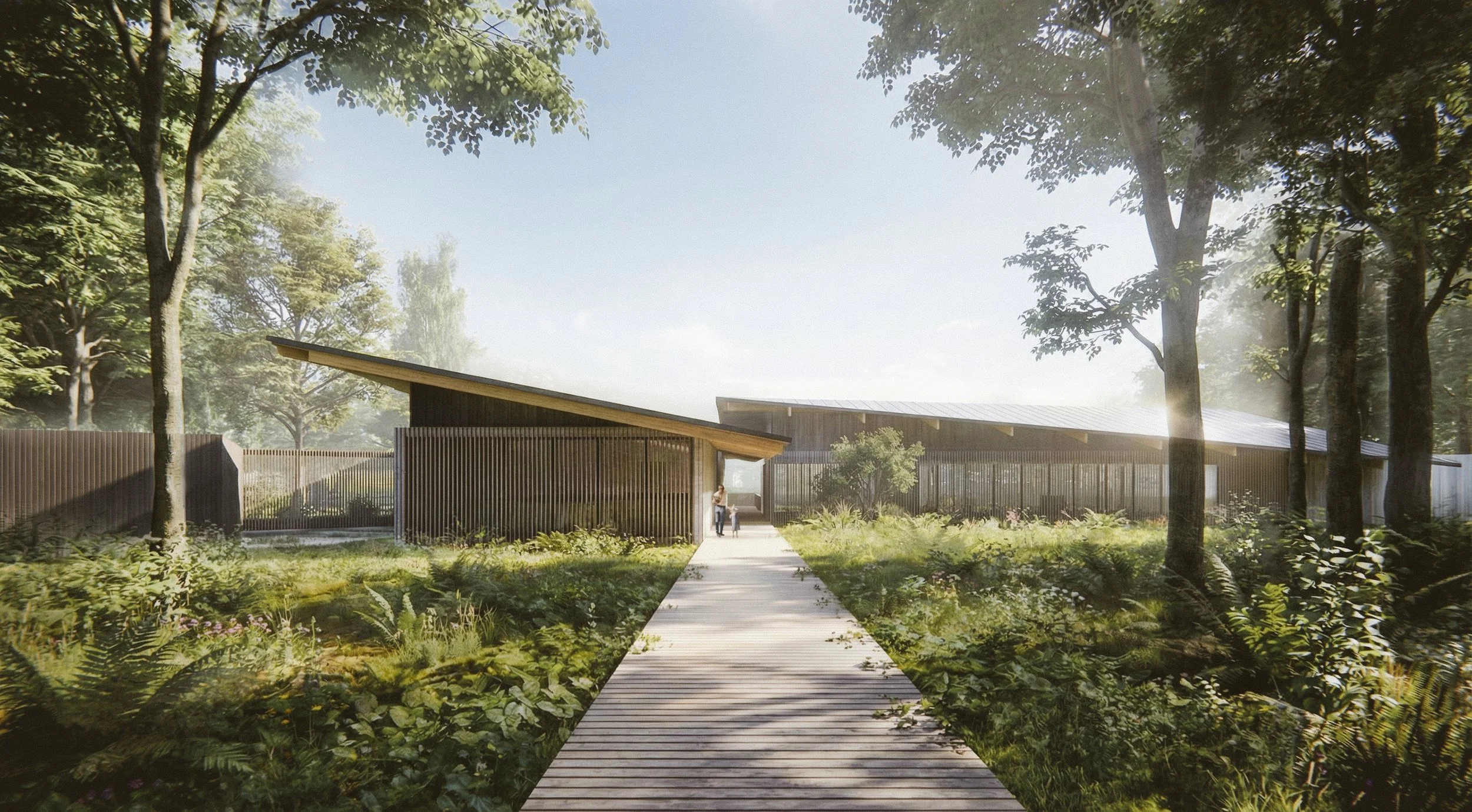
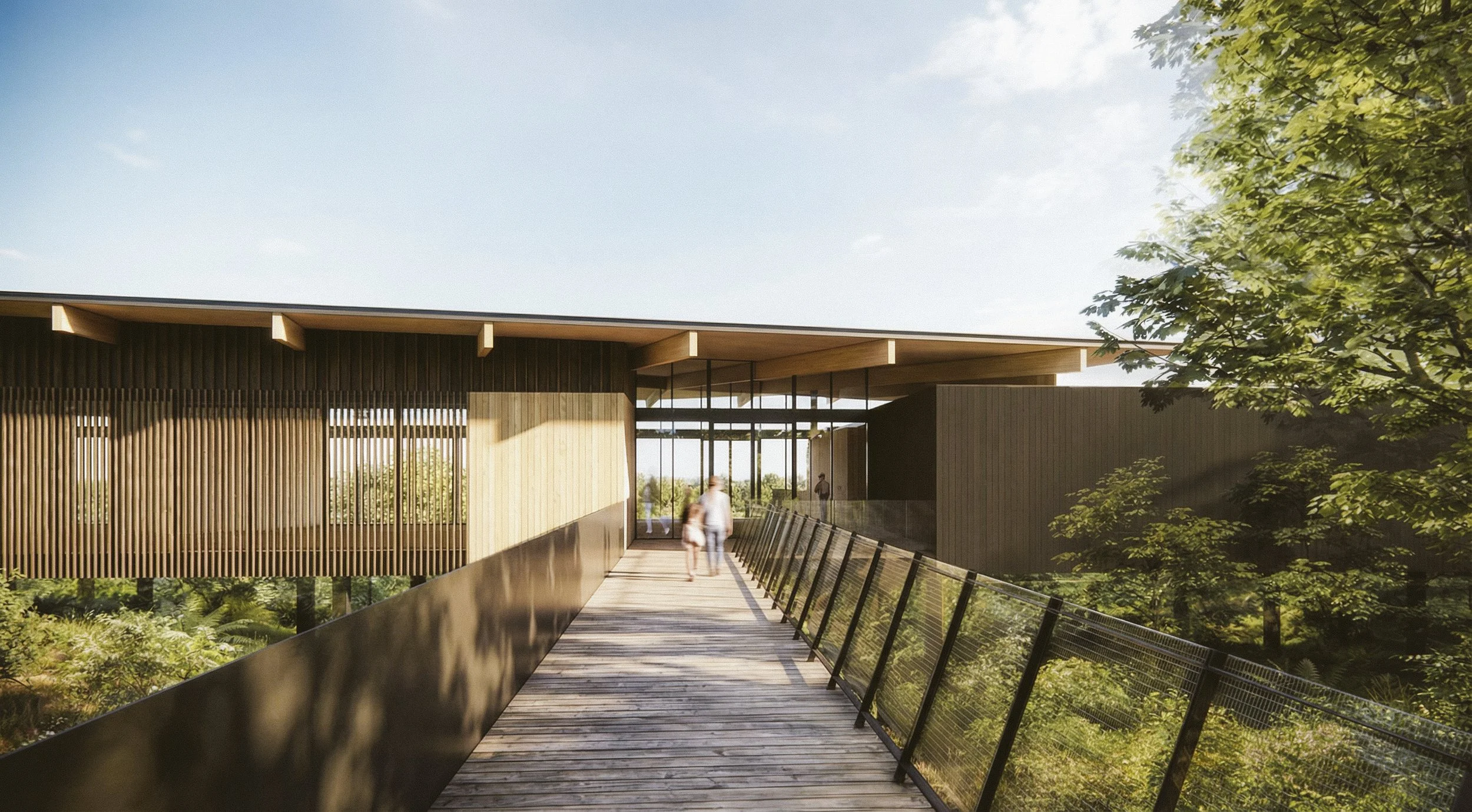
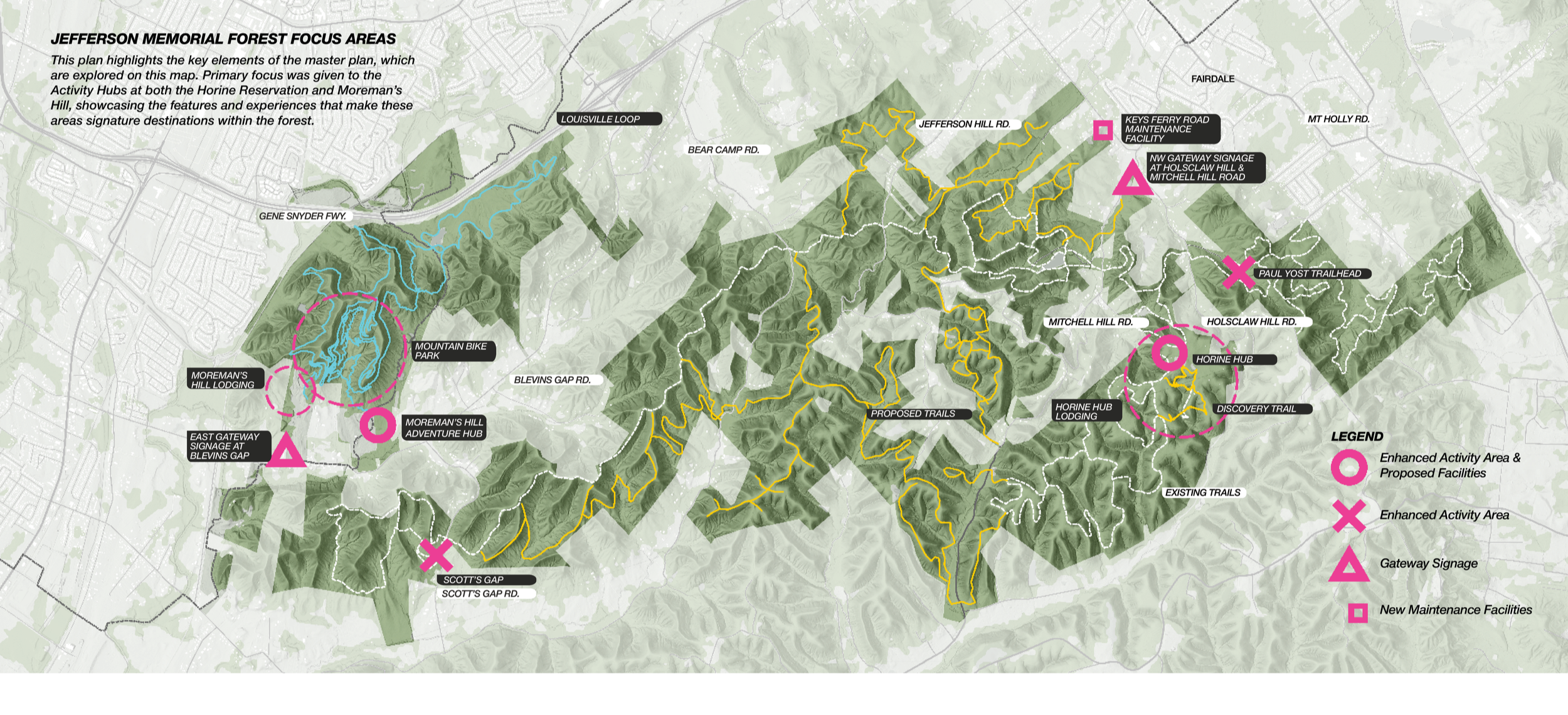
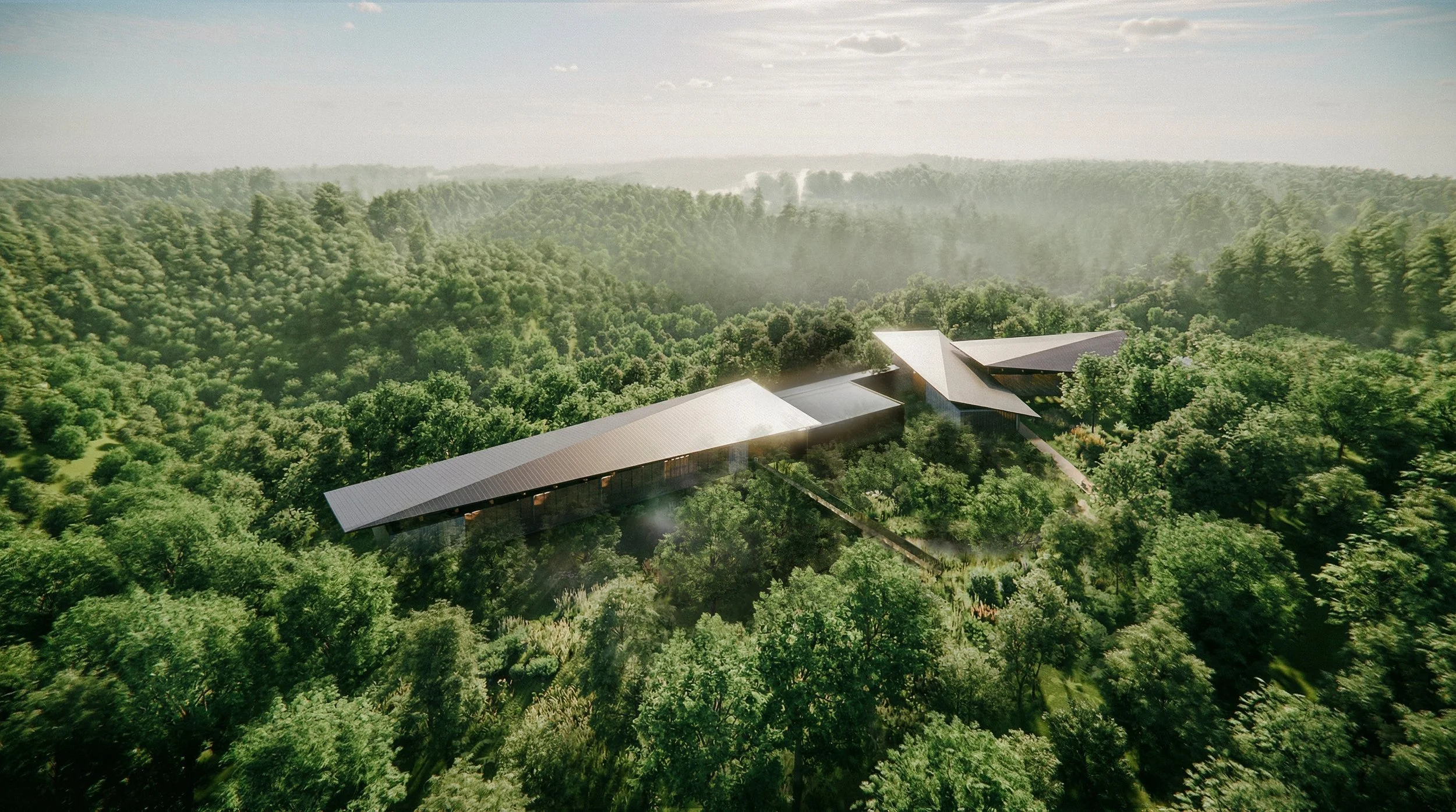
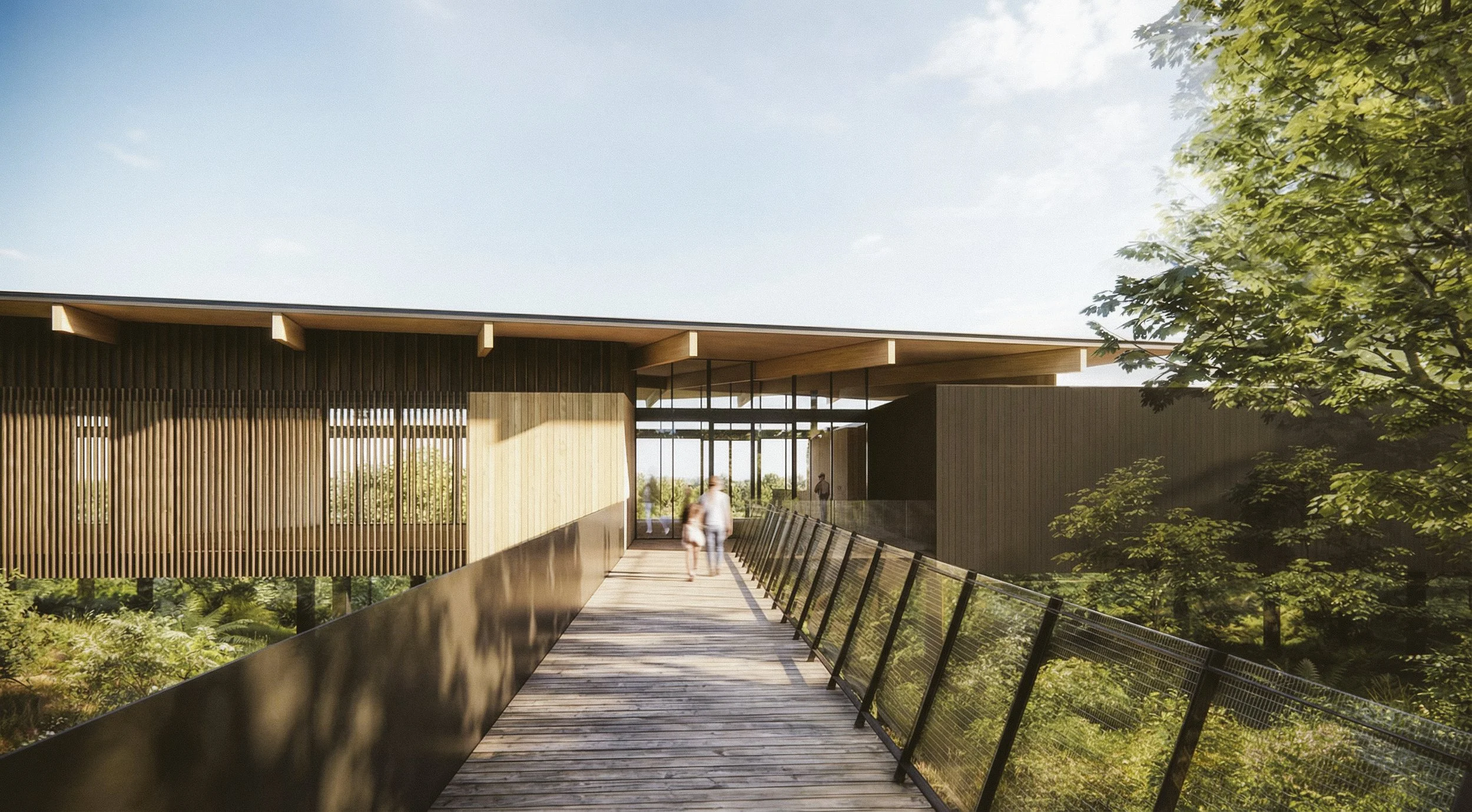
Within the Horine Reservation, the master plan envisions a new model for immersive environmental education – one where architecture, landscape, and ecology work together to deepen visitors’ understanding of the forest. Anchored by the new Environmental Education and Welcome Center, the Horine experience is designed as both a gateway and a learning landscape. Flexible indoor and outdoor learning environments support year-round programming, research, interpretation, and community gatherings, while expansive terraces, nature play areas, and trail connections extend educational experience directly into the landscape itself.
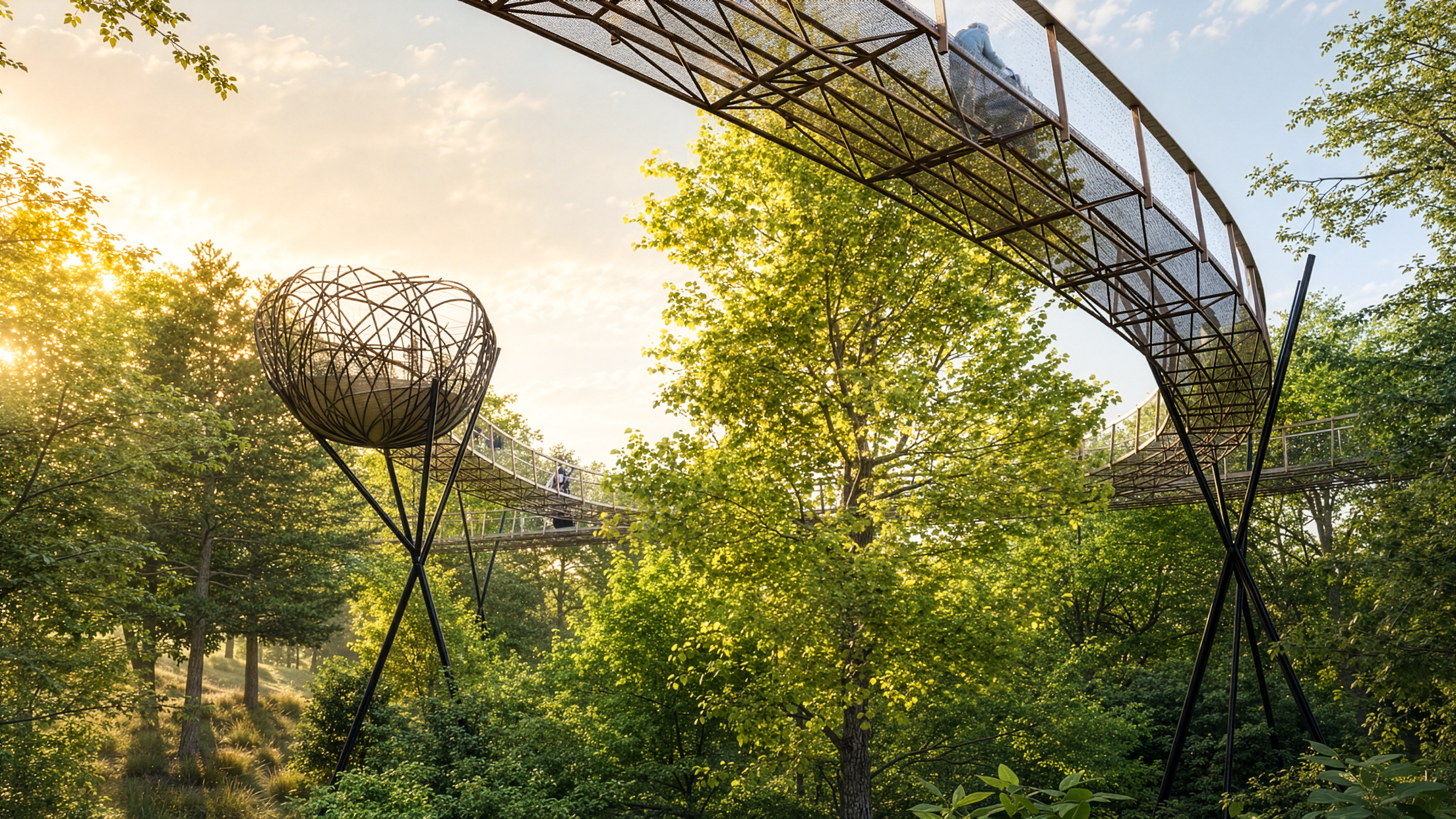
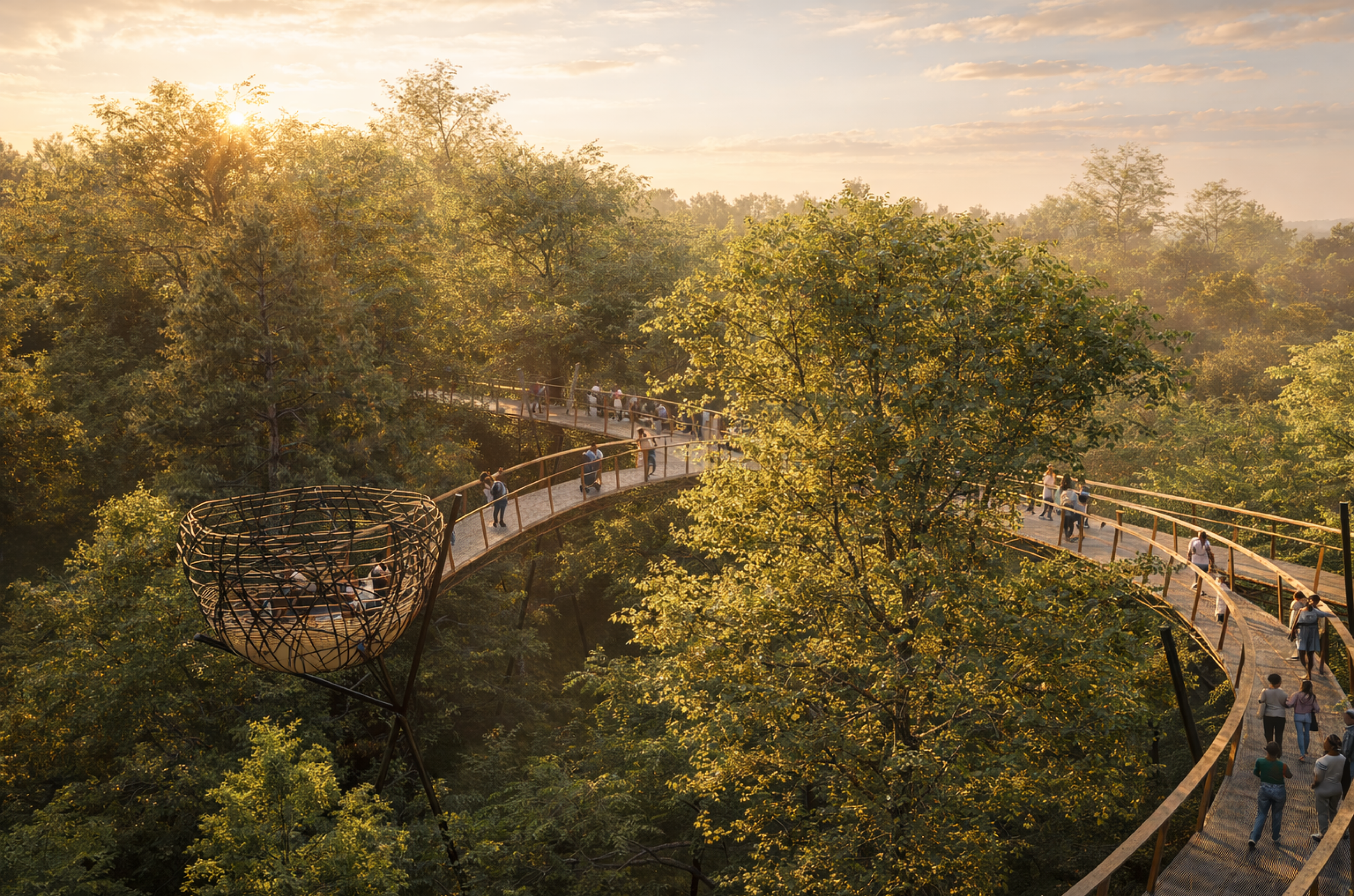
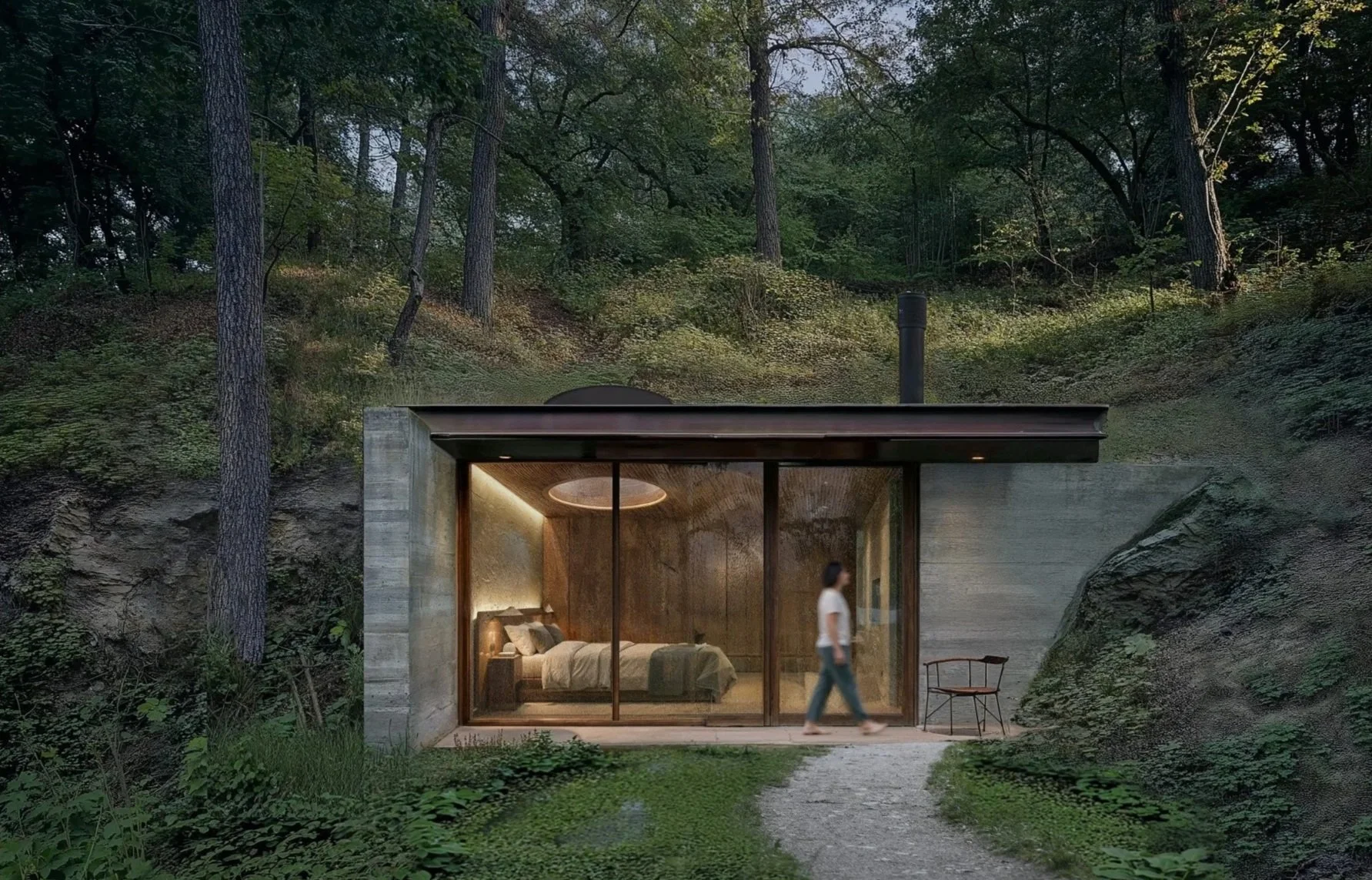
Beyond the welcome center, the Horine Reservation introduces a series of elevated and immersive experiences that encourage visitors to engage the forest from entirely new perspectives. A signature canopy walk traverses through the treetops, offering moments of discovery high within the woodland canopy while revealing the complexity and beauty of the forest ecosystem above.
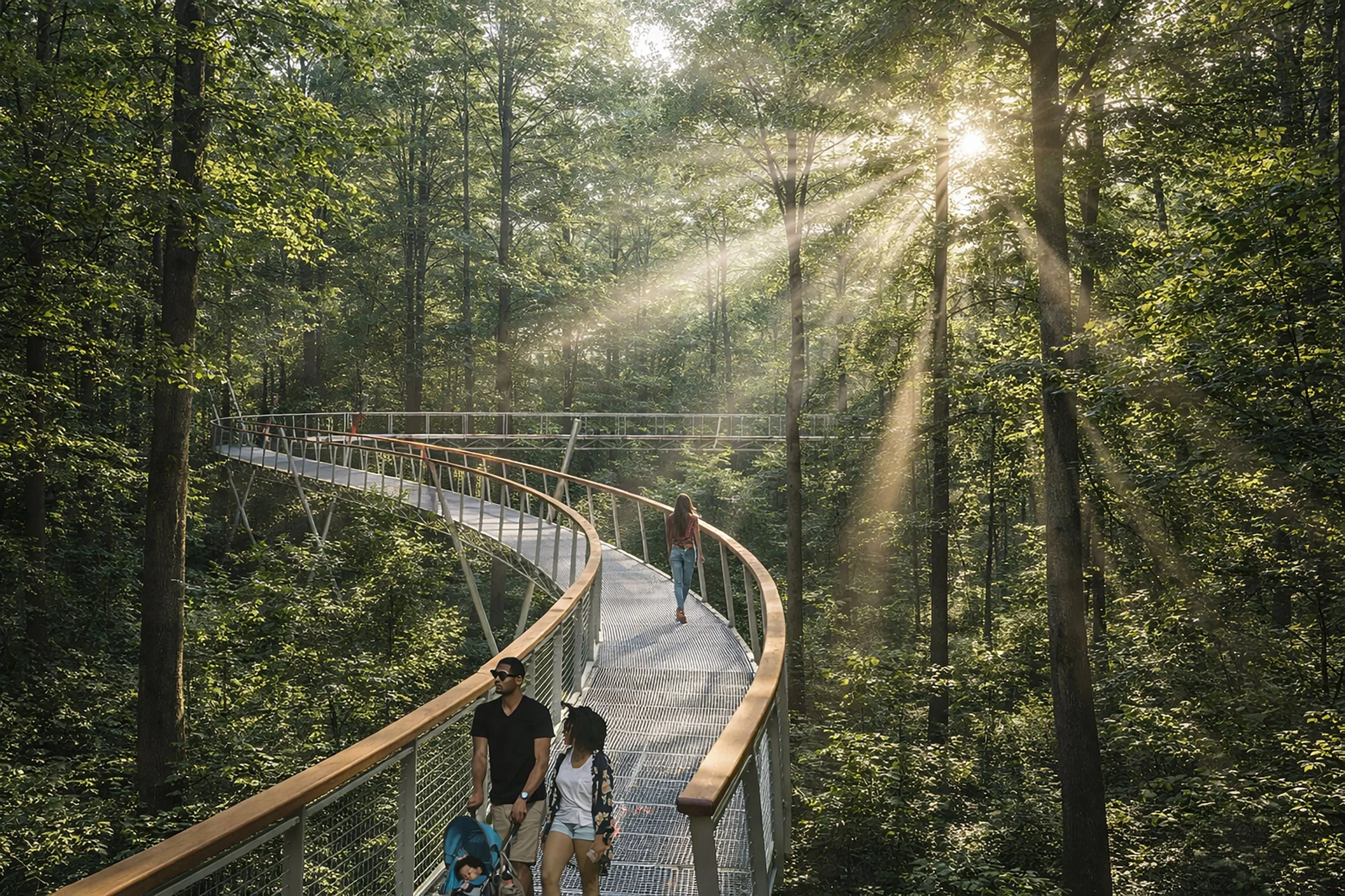
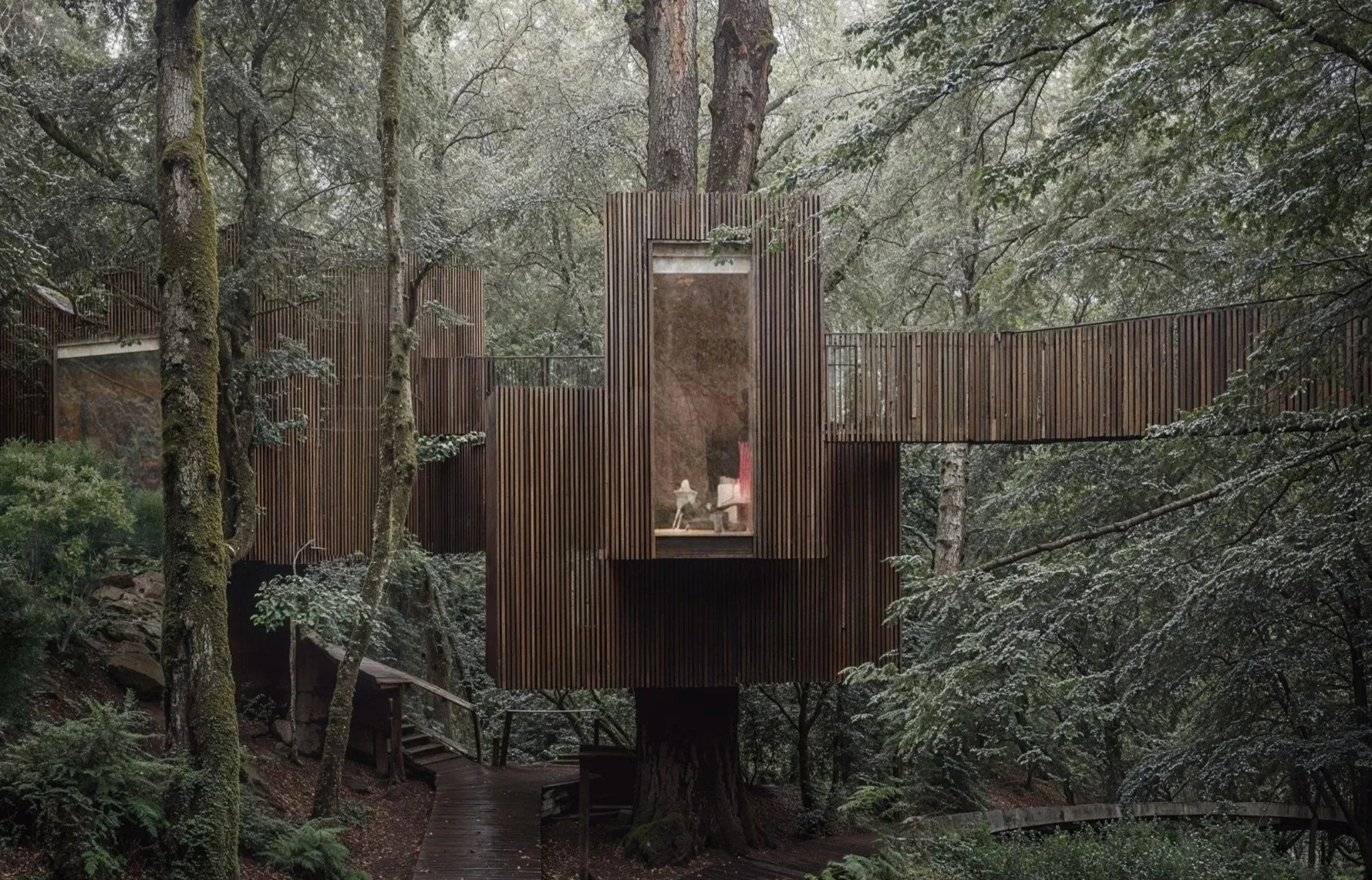
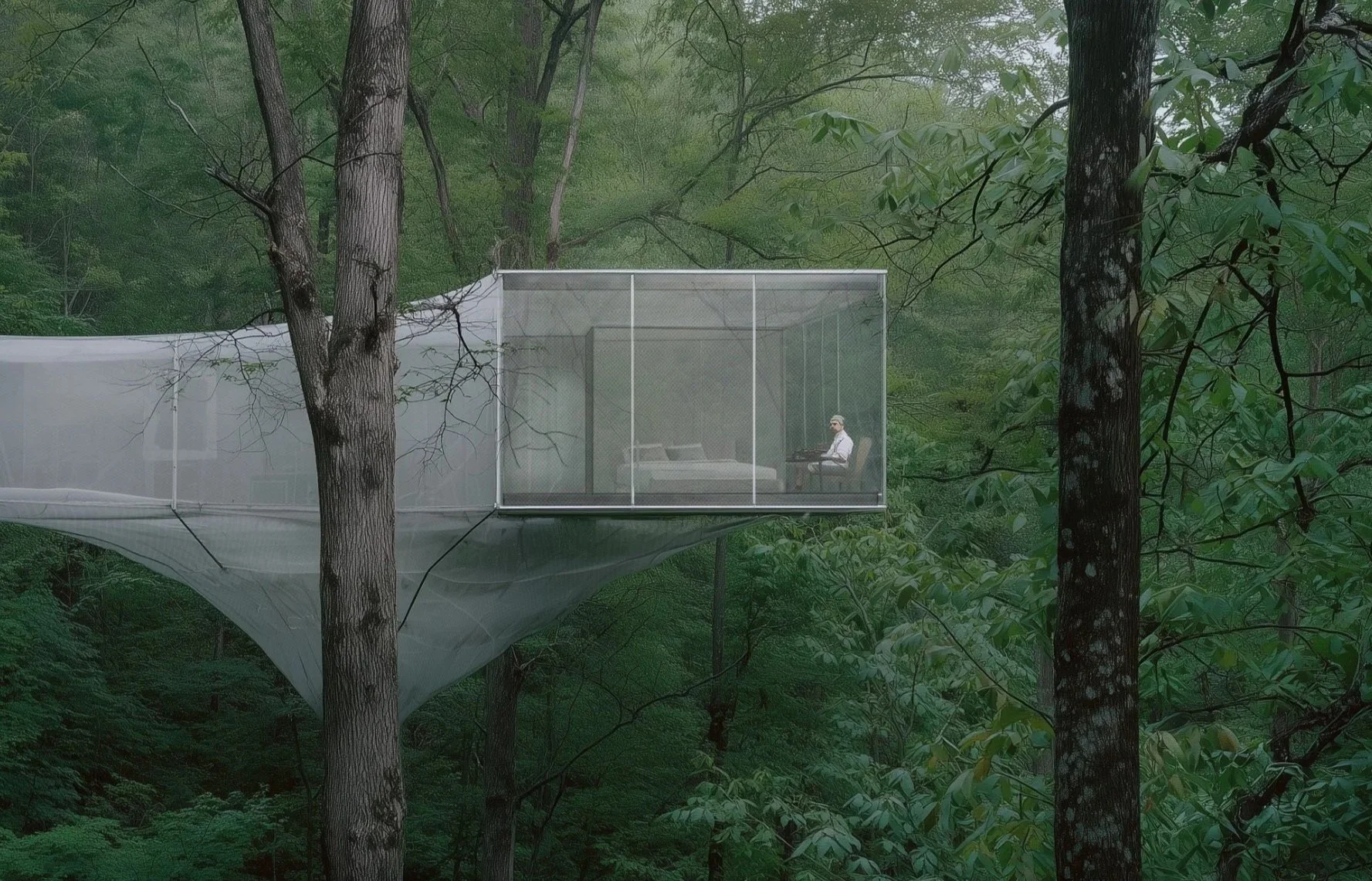
Carefully integrated treehouses and additional primitive camping sites are envisioned as quiet retreats embedded within the landscape – places for environmental education programs, family campus experiences, and restorative overnight stays immersed in nature. Together, these elements transform the Horine Reservation into a destination centered on exploration, wellness, and stewardship, where visitors are encouraged not simply to observe the forest, but to inhabit it.
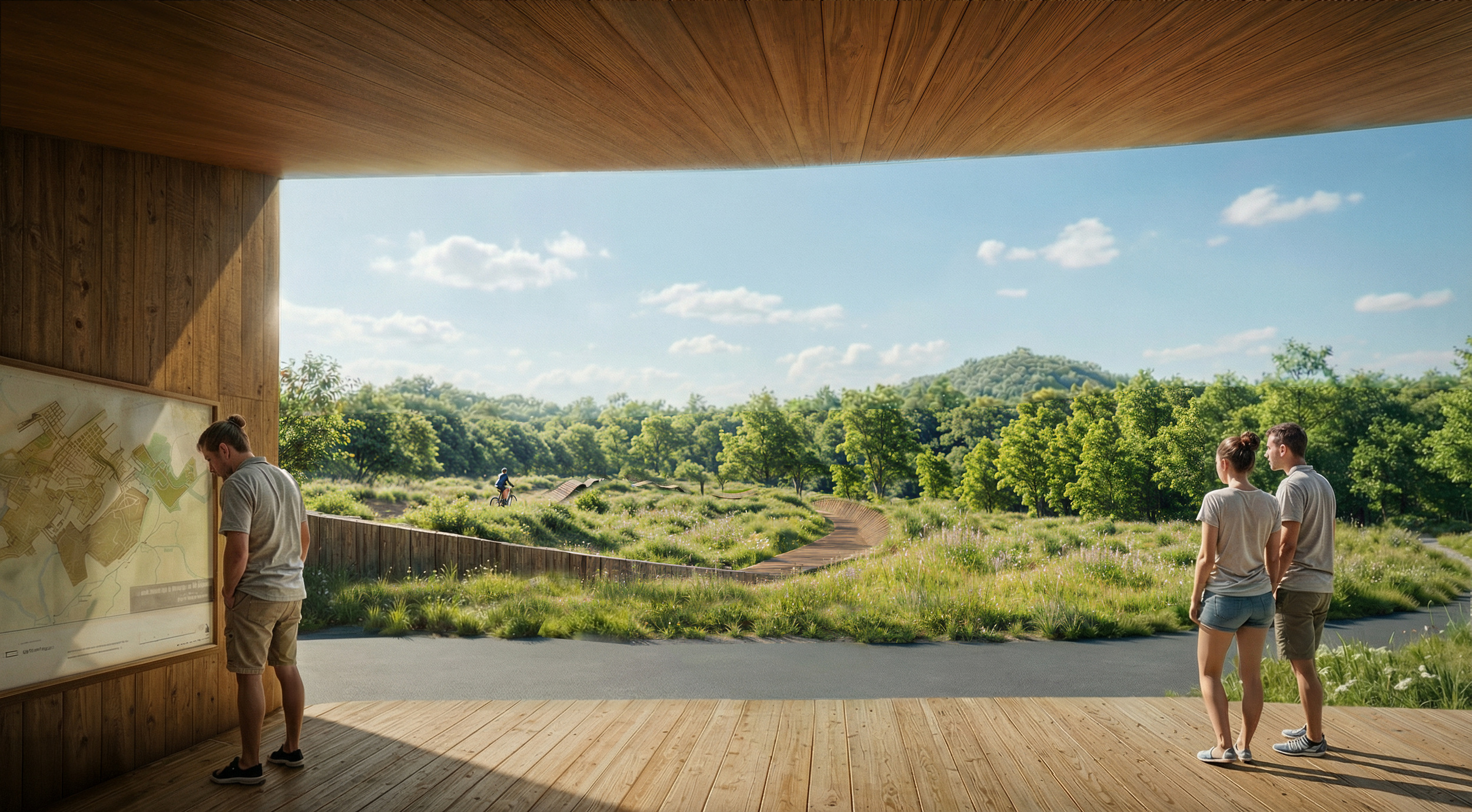
At Moreman’s Hill, the master plan establishes a dramatic western gateway into Jefferson Memorial Forest through a new welcome pavilion experience that celebrates the site’s extraordinary topography and panoramic views. This area also emerges in the master plan as a premier destination for mountain biking and outdoor adventure. The trail system is envisioned to accommodate a wide range of riders – from beginners and families seeking introductory experiences to advanced riders looking for more technical terrain and elevation change. Carefully integrated flow trails, natural surface singletrack routes, downhill segments, and skills areas create opportunities for both everyday recreation and regional draw, positioning Moreman’s Hill as a unique urban mountain biking destination with the Louisville region.
As Louisville continues to grow, the plan reinforces a powerful idea: the city’s future is inseparable from its natural landscapes. In Jefferson Memorial Forest, wilderness is not somewhere beyond the city – it is part of the city itself.
“By balancing accessibility with ecological sensitivity, we are strengthening the forest’s role as both a regional asset and a lasting tribute to those it honors.”
-Andy Knight, ASLA, PLA, Principal
About the Author:
Andy Knight is a Principal at MKSK. As a Design Principal, Andy’s work collectively includes public realm revitalization initiatives, dynamic and productive landscapes, and vibrant public spaces that promote a diversity of social uses and cultural traditions. Andy has also served as a teacher in Landscape Architecture programs at The Ohio State University and the University of Kentucky.