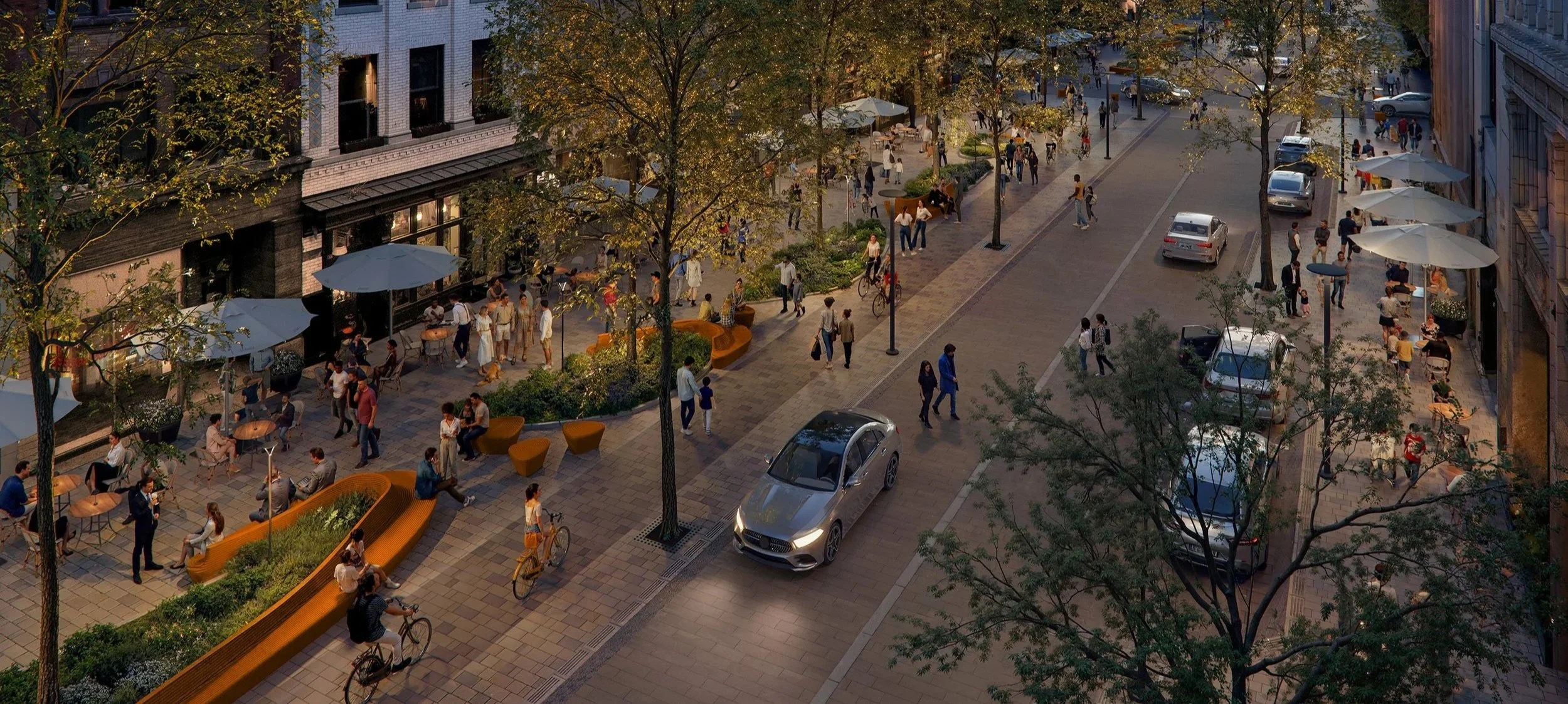
Urban Trail as Street or Park?
Four truths about successful urban trails that have shaped Columbus' Capital Line
Urban trails have surged in popularity over the past two decades. From New York’s High Line to Atlanta’s Beltline and Indianapolis’ Cultural Trail, cities across the country have embraced the power of distinctively designed trail corridors that invite people to move comfortably throughout the city.
In 2026, Columbus takes its next bold step with the launch of the Capital Line, a signature urban trail that will unfold over multiple phases. Designed to link cultural destinations, attract investment, and encourage exploration of downtown’s historic core, the Capital Line represents a once-in-a-generation opportunity for Ohio’s capital city.
Through a strong partnership between Downtown Columbus, Inc. (DCI), the City of Columbus, engineering firm WSP, and MKSK, the vision for the Capital Line is quickly becoming reality. Along the way, four key truths about successful urban trails have come into focus—insights that resonate far beyond Columbus.
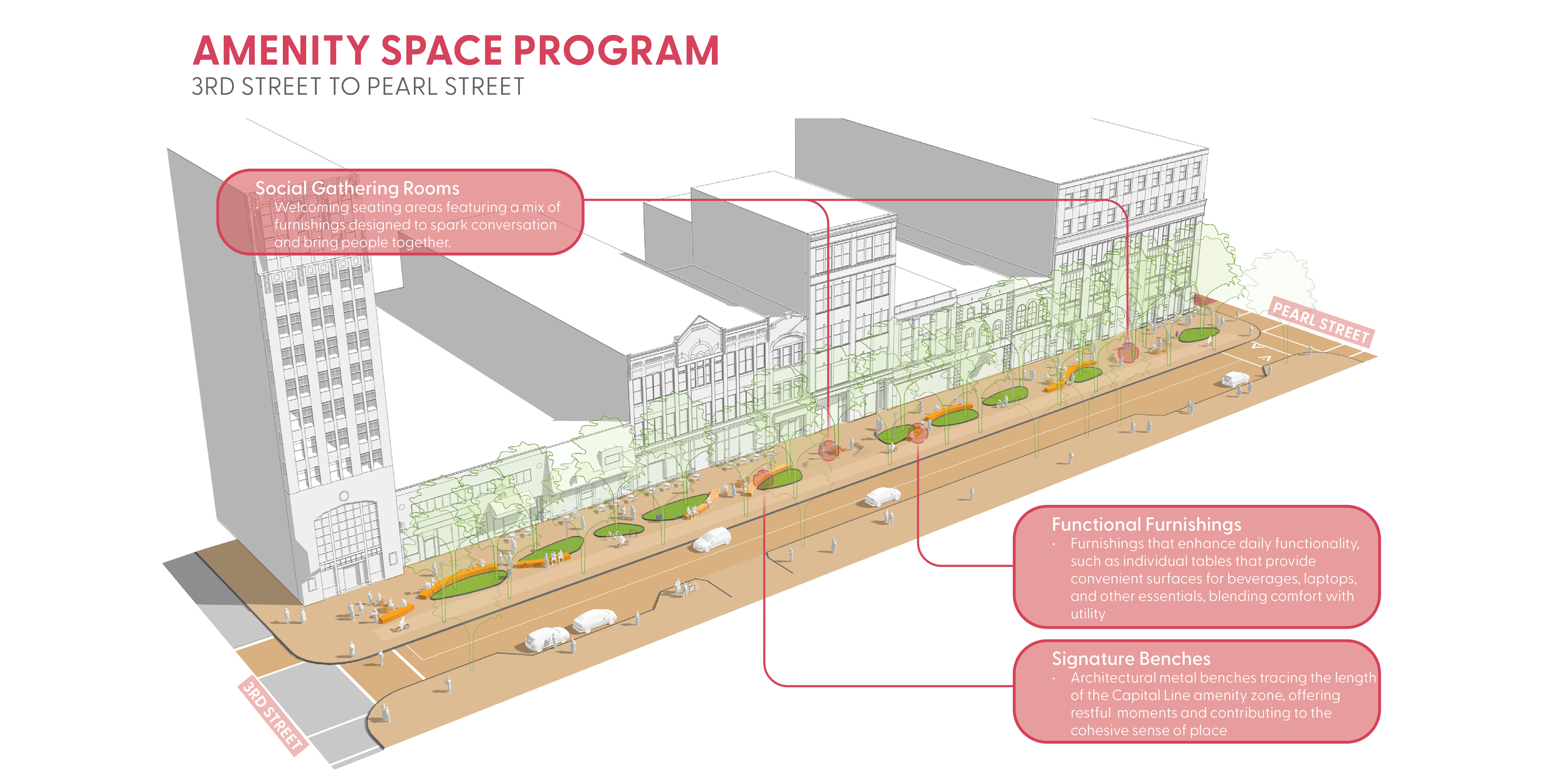
1. Street or Park? It’s More Than Semantics.
While they are typically situated within the city right-of-way and often integrated into the street environment, the most successful urban trails feel like parks—green, welcoming, and designed for experience, not just movement. Streets are designed and built to ensure public safety, manage risk, minimize maintenance, and capture economies of scale via standard engineering practices. Parks, on the other hand, are largely intended to enhance wellness and build community through the unique intermingling of nature and built amenities that support restoration, recreation, and socialization. To capture the best of both worlds, the Capital Line project is being constructed and operated through a public-private partnership between Downtown Columbus, Inc., and the City of Columbus. The responsibilities of each partner have been memorialized through agreements and are designed to align with the respective strengths of each entity. The effect of this partnership is an urban trail that offers the experience of a leafy ribbon of green park knitted into a durable streetscape that accommodates the robust duties of an urban street.
2. A Strong Brand Builds Confidence.
Iconic trails share one thing in common: a recognizable identity. A clear brand signals to the public that a trail is safe, well-kept, and provides access to desirable destinations. This stands in contrast to the average walking trip on sidewalks through an urban area where the walking conditions are often highly variable and the experience may be uneven. To build a brand that conveys quality, comfort, and liveliness, the memorable design of physical space is foundational, but web- and social media-based presence along with regular programming built around the mission of the trail is essential. Through the thoughtful leadership of Downtown Columbus, Inc., the development of the Capital Line has been accompanied by an intentional strategy of branding, programming of events and activities, and public communication that builds awareness, support, and most importantly, momentum for the multi-year implementation of all phases of the project.
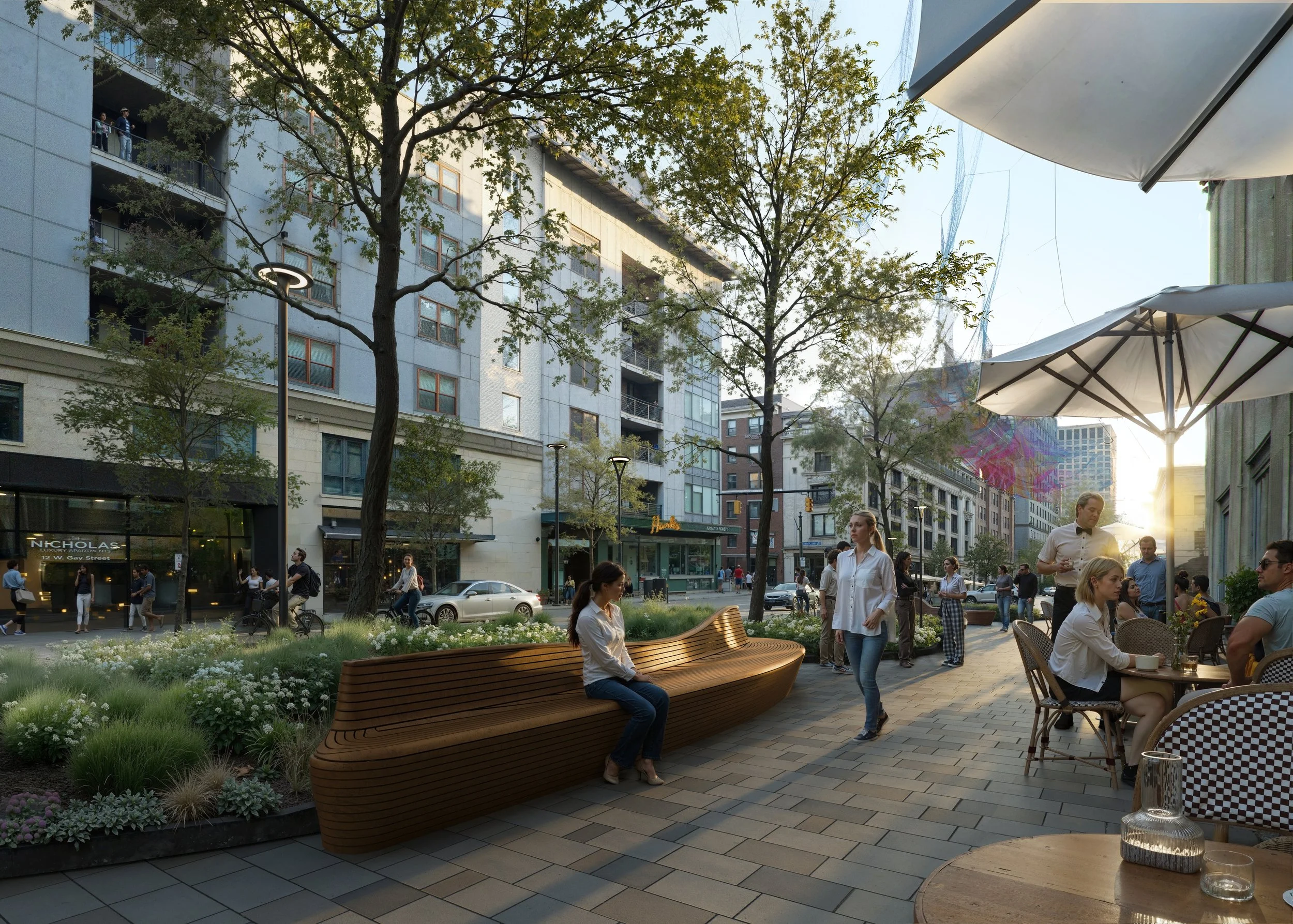
3. Individual Businesses Are Important.
District Vibrancy Is Paramount.
Urban trails do not just support single storefronts—they help create entire districts. Well-designed and maintained urban trails are correlated with positive benefits for adjacent businesses and real estate, creating a halo effect that attracts investment. While care must be taken to maintain existing business vitality, the urban trail design must consider long-term stewardship and programming that creates a nucleus of energy to sustain larger clusters of dining and shopping activity. Evidence abounds of this connection between great centers of urban culture, food, and craft and high quality streets and urban spaces: think of the shopping districts along 5th Avenue in New York, Oak Street in Chicago, or in Union Square in San Francisco; or dining destinations such as the Gourmet Ghetto in Berkeley, the French Quarter in New Orleans, or Little Italy in Chicago. In the geographically-expansive downtown of Columbus, Ohio, the hot spot of investment and business activity has shifted over the years, but the Capital Line is poised to become the beachfront that attracts and concentrates foot traffic, anchoring long-term business vitality and sustaining a critical mass of street-level dining, shopping, and cultural activity in the historic core of Columbus for decades ahead.
4. Design Quality Pays Dividends.
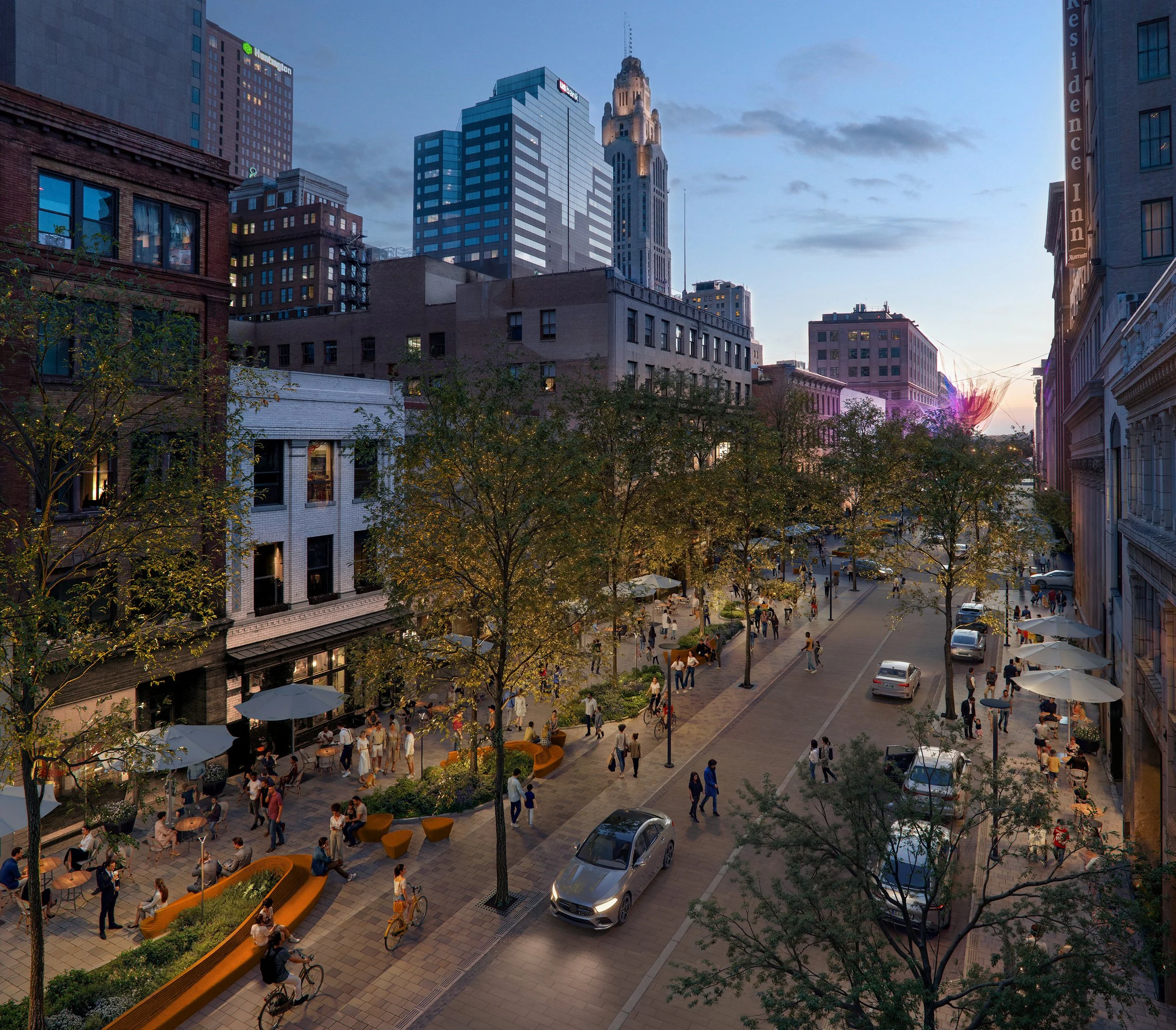
Signature places deserve signature design. Investing in craftsmanship, art, and distinctive details—especially in the most visible areas—elevates not only the trail, but the surrounding district. These hallmark elements strengthen emotional connection to a place, establish an identity, inspire repeat visits, and set the standard of quality for future public and private developments. For the Capital Line, design quality was established as a priority at the inception of the project. The leadership at DCI and the City of Columbus envisioned a refreshed public space in the heart of downtown that complemented the enduring qualities of historic architecture while exhibiting the singular design trademarks that entice urban dwellers and urban enterprises. Moreover, the champions of the Capital Line recognized that a landmark investment in great public space would become part of the image of the city and region, making Central Ohio at once more livable, business-friendly, culturally-relevant and economically competitive.
The Capital Line will begin taking shape in the coming months—but its impact will be felt for decades. Columbus is building more than a trail. It is creating a destination.
Darren Meyer, ASLA, PLA, AICP, is a Principal at MKSK and is leading the design team for the Capital Line. From the planning of communities and promoting projects that champion community wellness and sustainability to the details of public open spaces, Darren’s more than 20 years of professional experience is at the intersection of complex infrastructure and community life. With projects across Columbus and the Southeast U.S., Darren brings deep experience in leading large, multidisciplinary teams to tackle complex urban challenges. He has served as the active and engaged leader of both planning and constructed projects bringing proven experience in all aspects of project implementation.