PlayPort at Waterfront Park Louisville, Kentucky
Role
Landscape Architecture / Planning
People Involved
Andy Knight, Casey Elmer, Ryan Blume, Nathan Young
Typology
Public Park, City Infrastructure, Play Scape
Project Timeline
2015-2019
Collaborators
Champlin | EOP Architects, Jeana Dunlap, Weber Group, BTM Engineering, Waterfront Development Corporation
Waterfront Park’s new play space creates ‘Play out of Work’
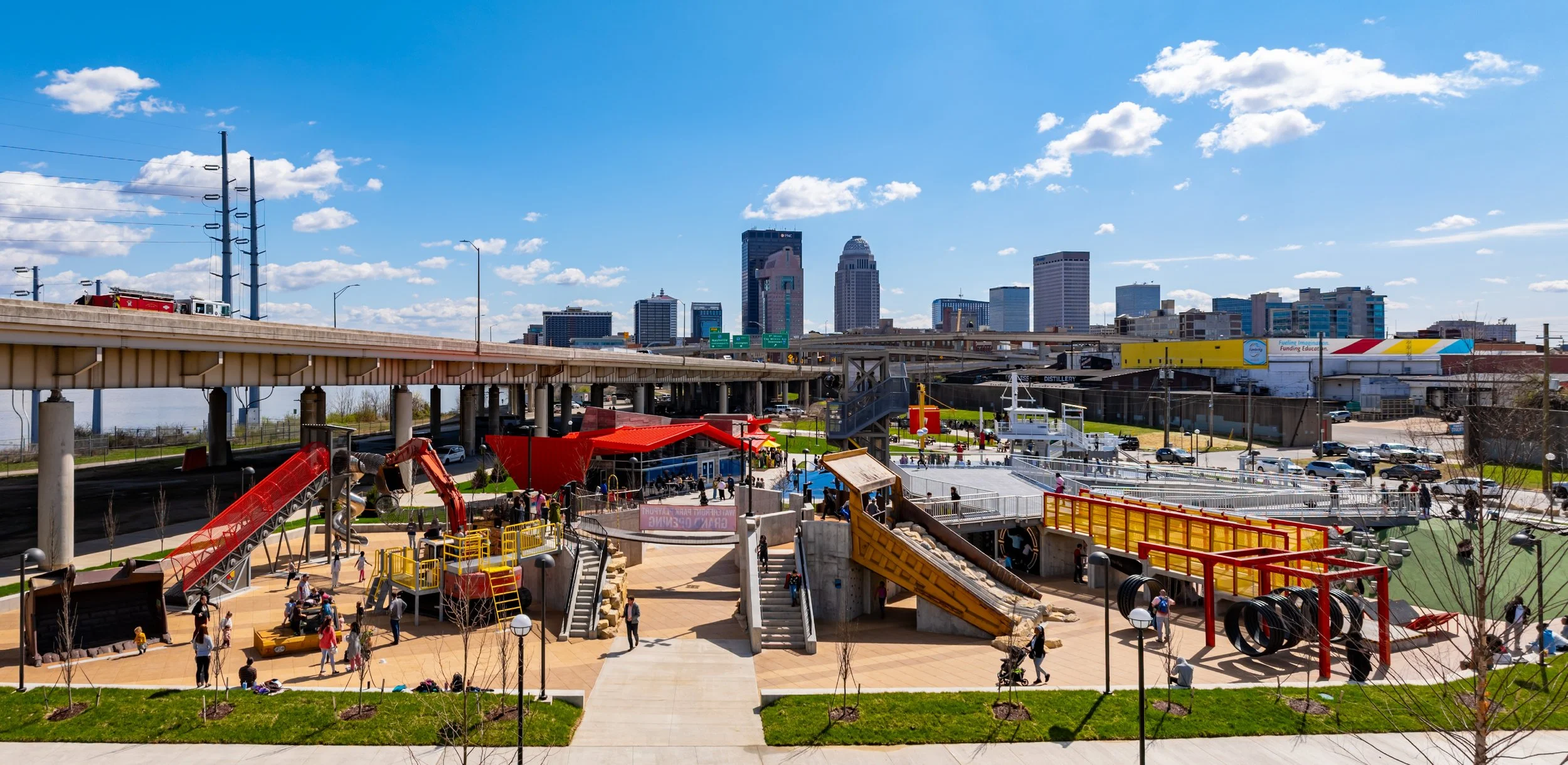
Situated on an underutilized site along the Ohio River, PlayPort offers a unique play environment that reimagines industry as play and makes a meaningful investment in an underserved community just across the “9th Street Divide”. PlayPort is the first investment in Phase 4 of Waterfront Park, an 85-acre urban park with over 2.4 million visitors annually and is accessible within a 15-minute walk of nearly 3,000 households. Given the location, a study was conducted using a research-grade air sensor to measure air quality, which indicated that the air quality was within the safe National Ambient Air Quality Standards thresholds defined by the EPA. The design also leans on research showing the benefits of greening to reduce the impacts of air pollution. The site is surrounded by new tree plantings, with successive layers of tree plantings scheduled in future phases. The landscape architect led the 2016 Waterfront Phase 4 Master Plan and the design of PlayPort in collaboration with the Kentucky Science Center and Waterfront Park.
Several public engagement workshops, interactive play discussions, and dotmocracy exercises informed the programming and design of PlayPort. The community voiced strong support for inclusive play, and the project is designed with 75% of the features being fully accessible utilizing a mix of ramps, transfer stations, and creative grade changes that welcome all abilities.
“PlayPort transforms Louisville’s river and industrial heritage into an immersive landscape for discovery. By bringing play, science, history, and imagination together, it creates more than a destination. it extends the promise of Waterfront Park and provides a welcoming place where children and families from across the community can learn, connect, and explore.”
- Andy Knight, ASLA, PLA, Principal Landscape Architect, MKSK
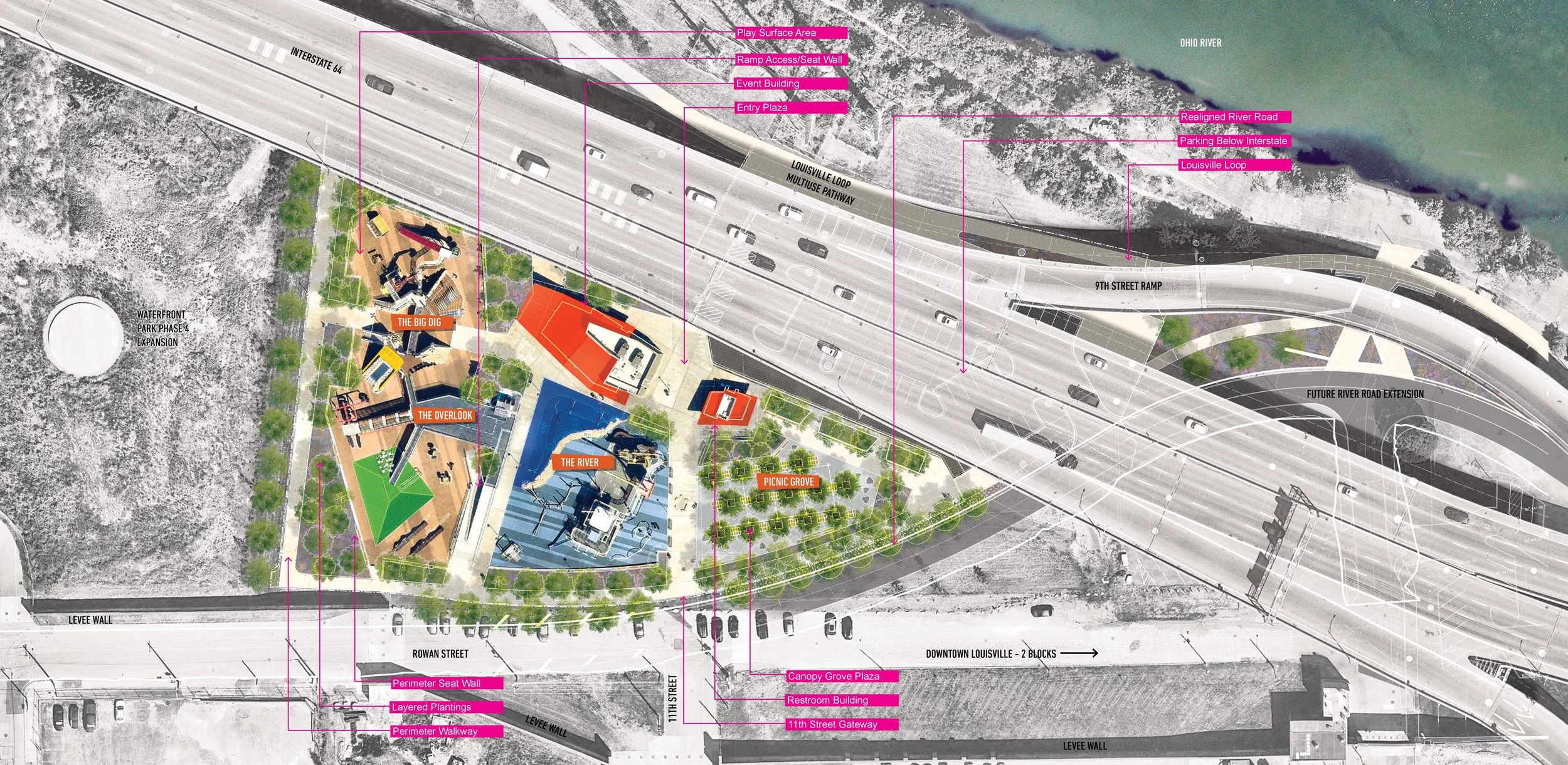
Program spaces include:
The River
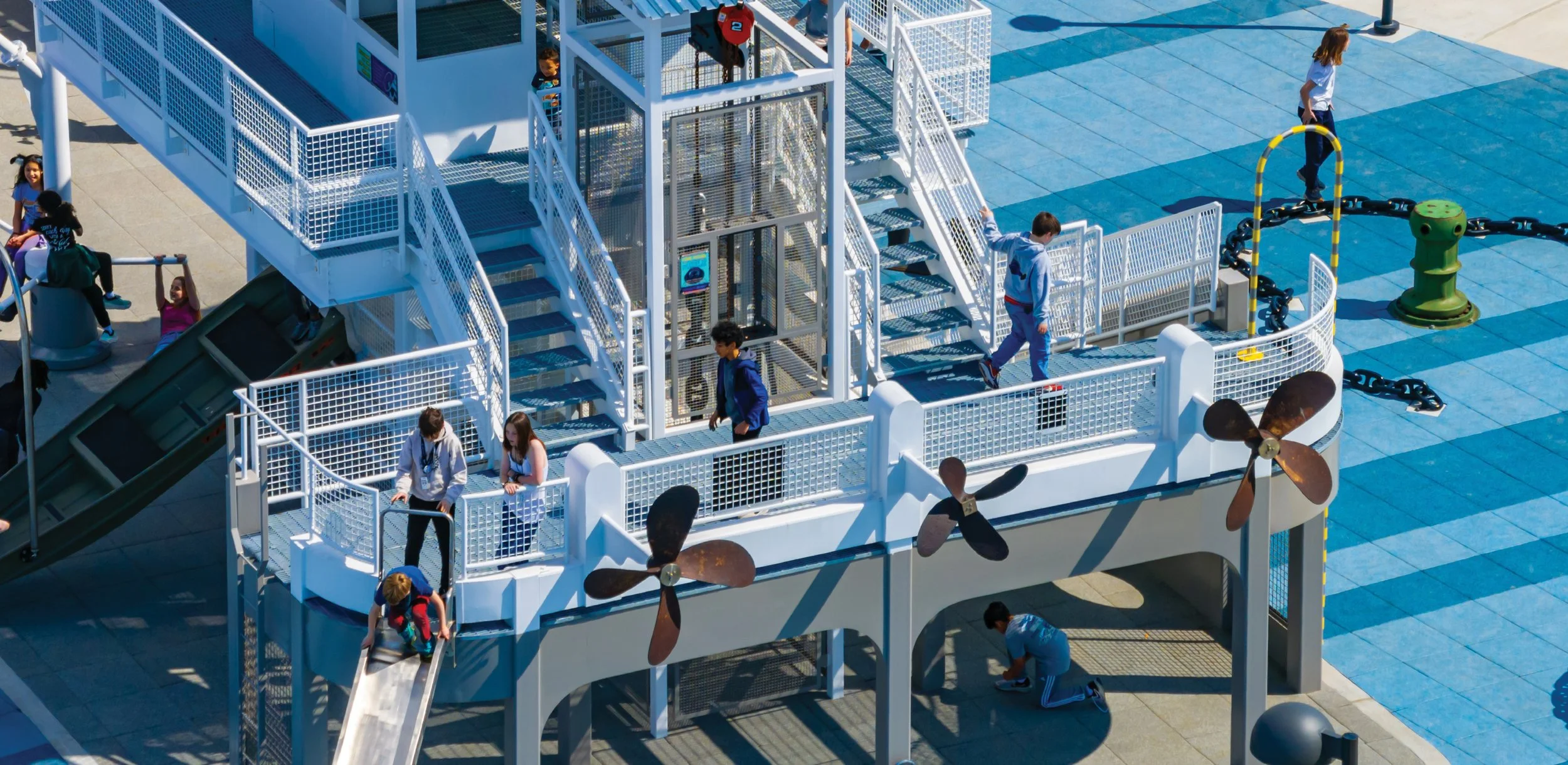
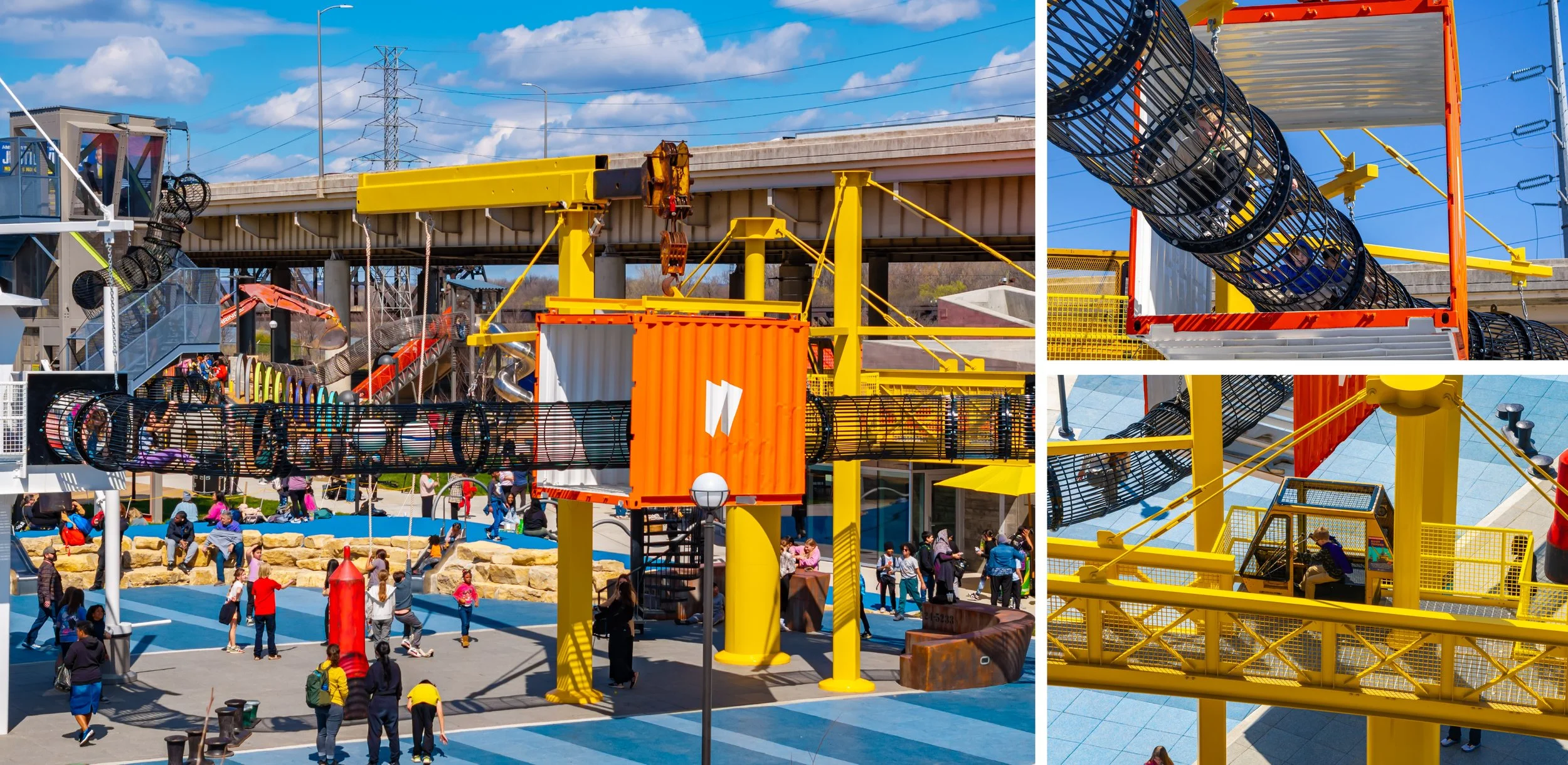
Inspired by shipping and river navigation, this area allows participants to interact with equipment and artifacts such as shipping containers, buoy tenders, crane jibs, and industrial pulleys. It also includes a 5,000 SF rentable pavilion for educational sessions, parties, and community events
The Big Dig
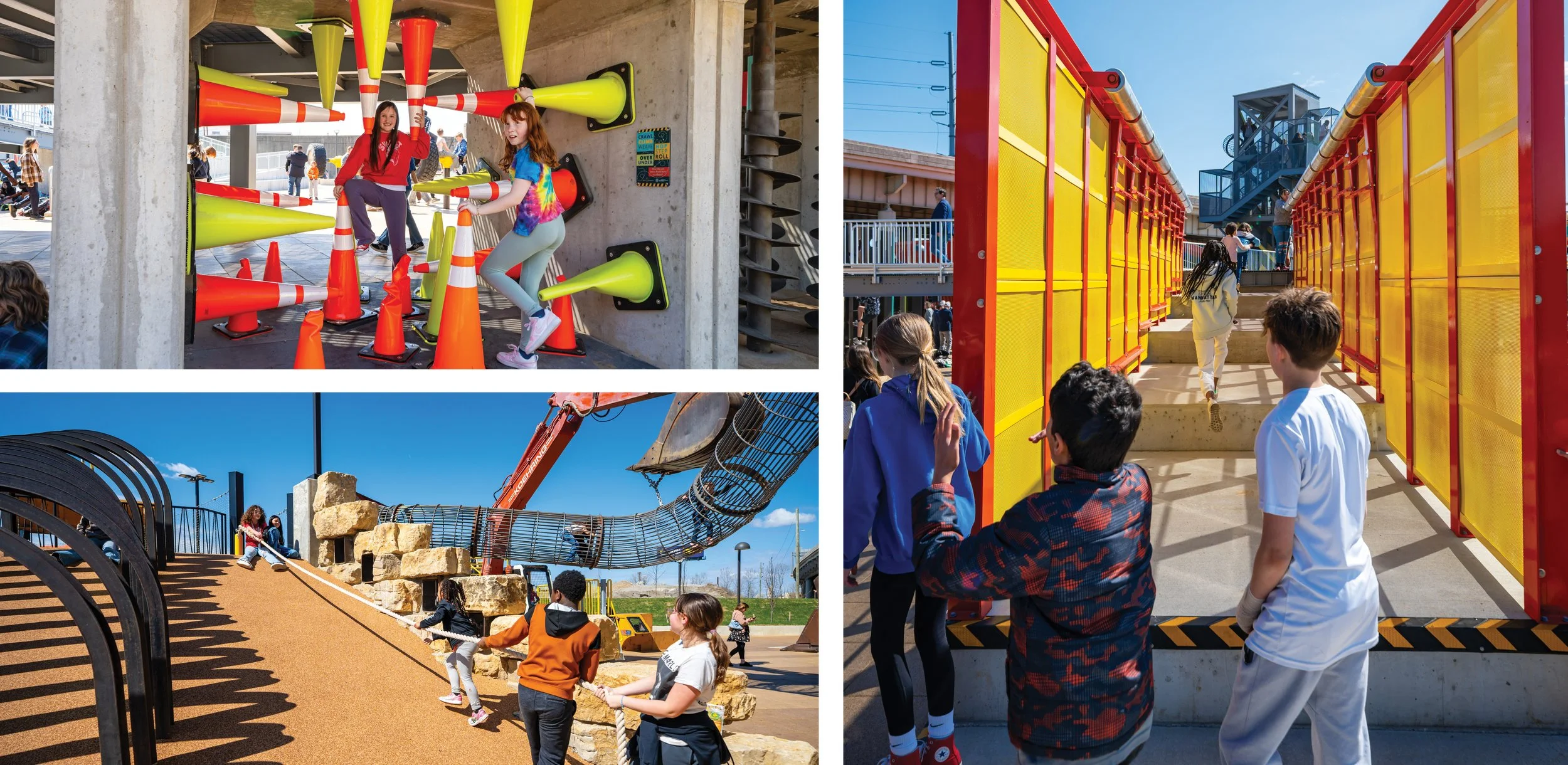
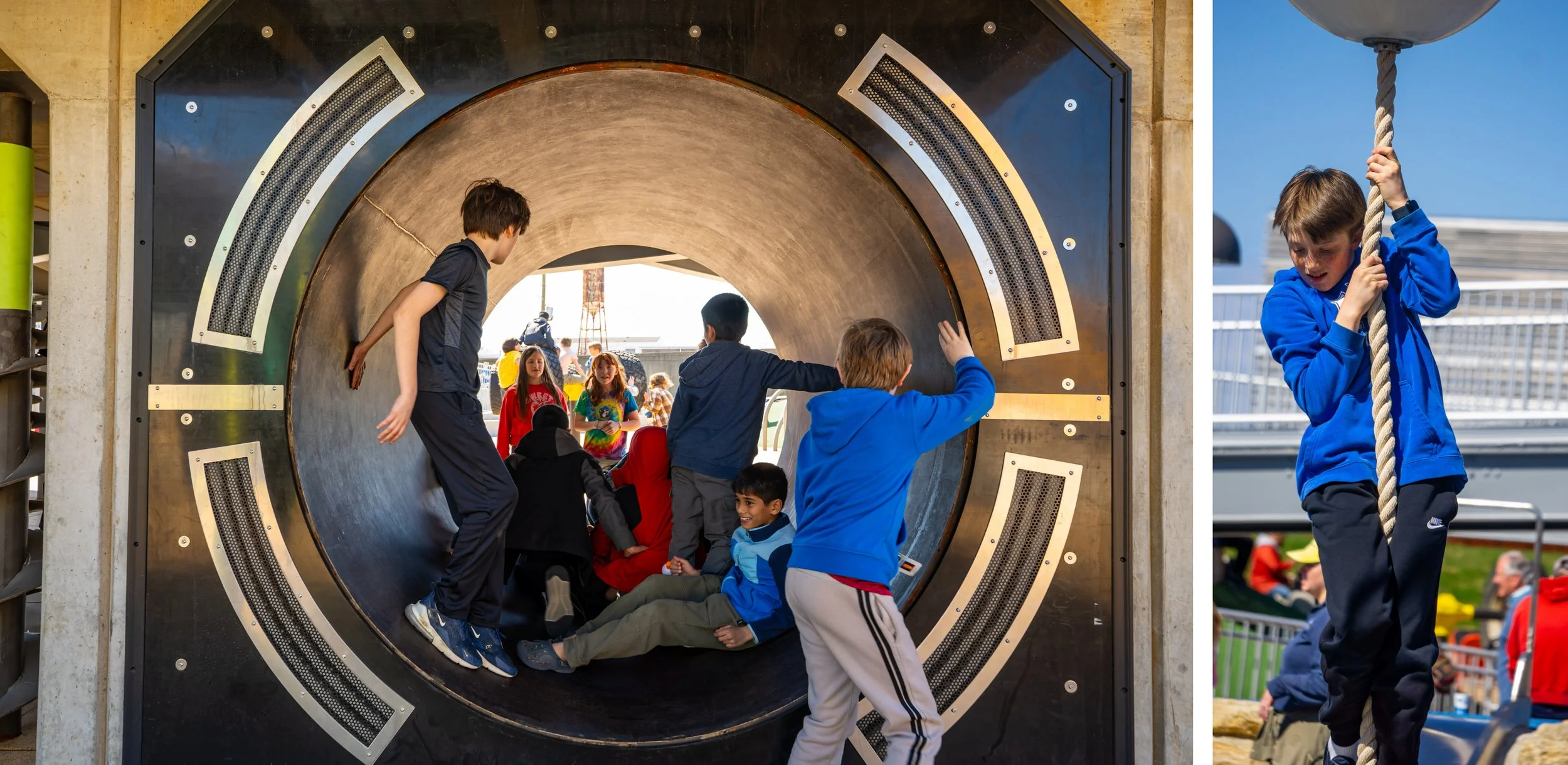
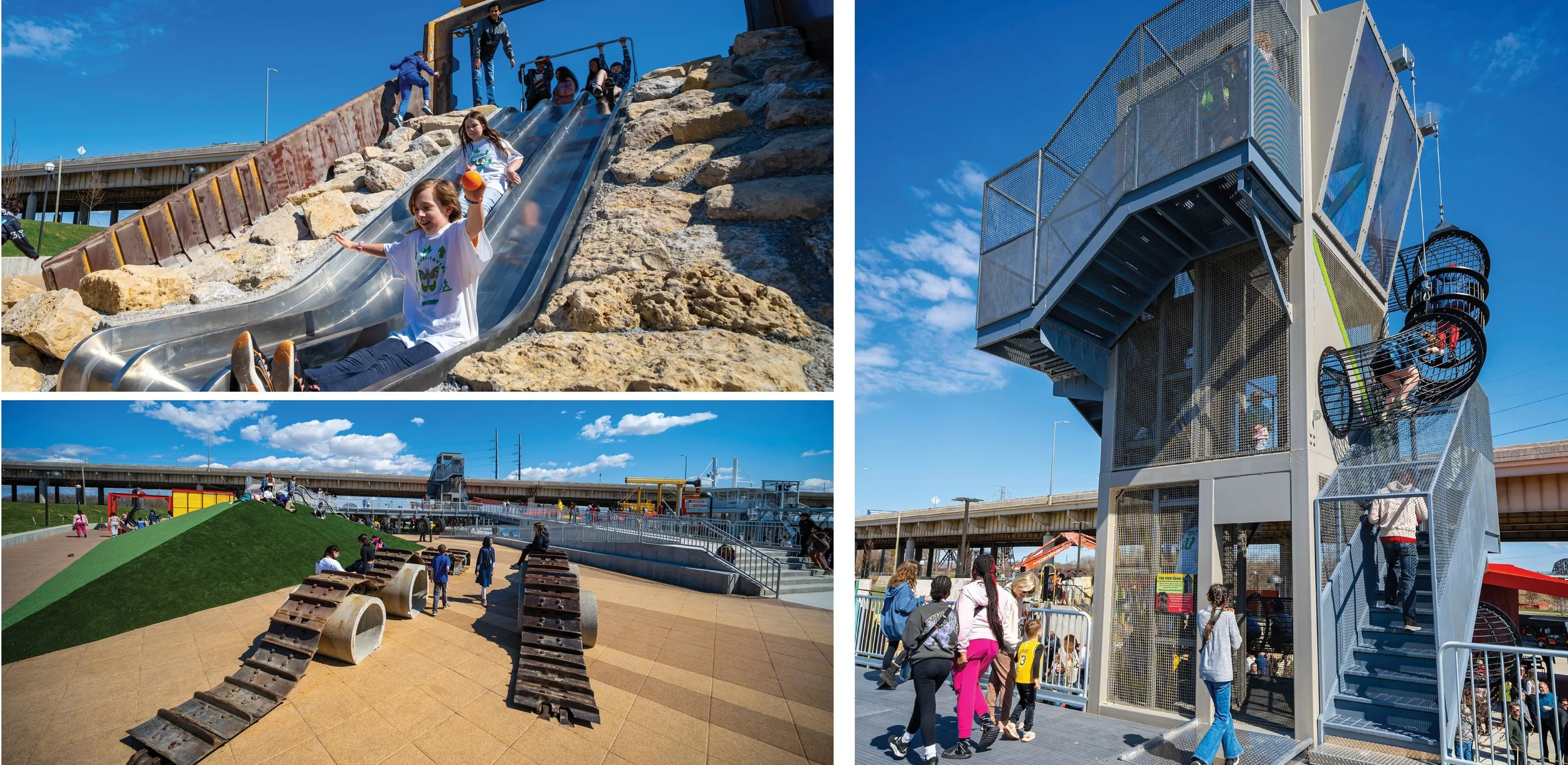
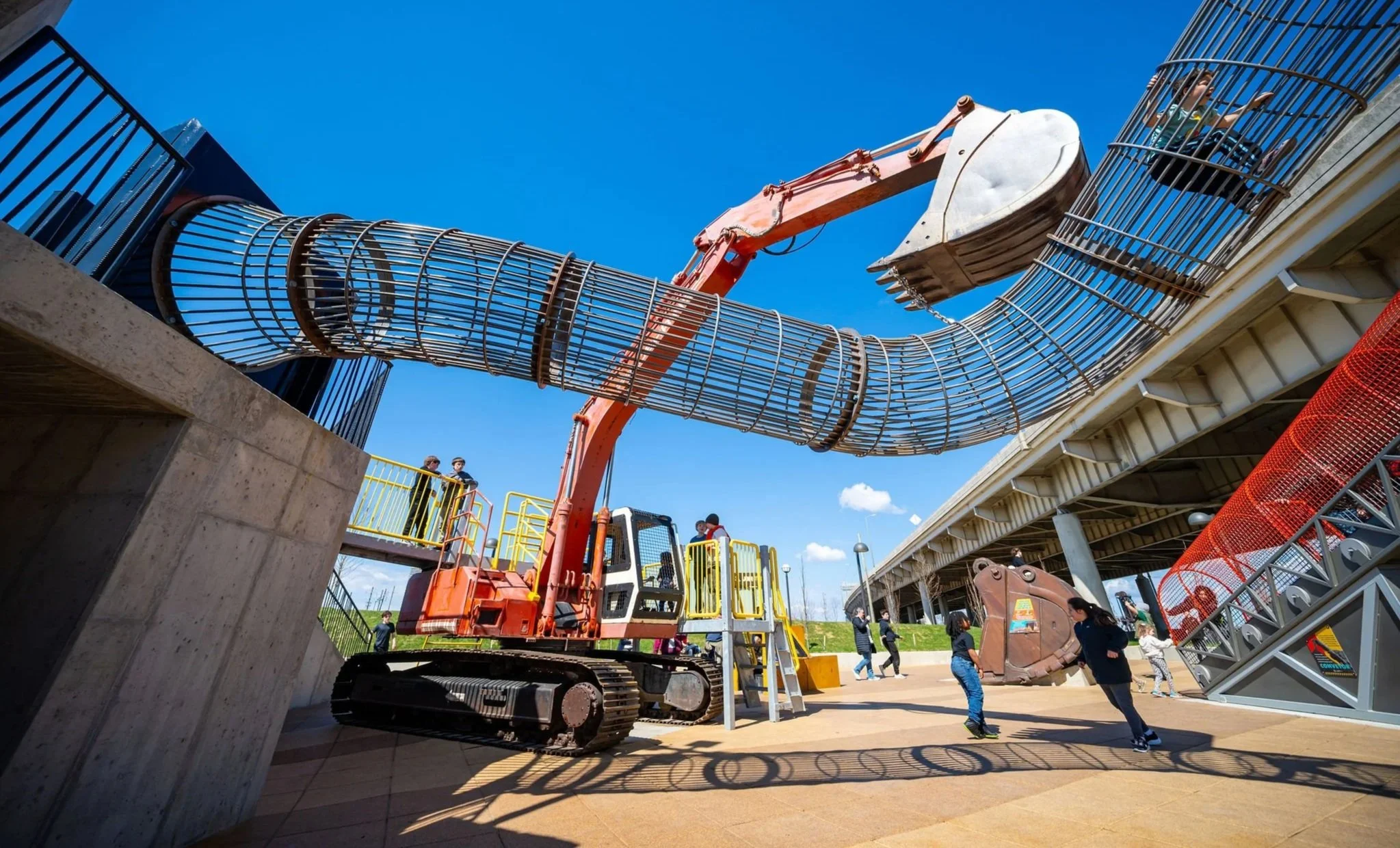
This section illustrates the site’s industrial history, offering engaging, educational experience. Visitors can interact with artifacts used during the construction of the nearby canal, lock, and dam built in the 1950s. Features include large-scale, kid-friendly equipment like excavators and dump trucks, and active play challenges such as navigating oversized tires and box culverts. This immersive environment promotes hands-on learning about industrial heritage, encouraging curiosity and active participation across all age groups.
The Overlook
A key feature is the elevated overlook platform, allowing children to climb and play while floating above the play surface, offering a thrilling yet safe experience. The design also prioritized creating a fully accessible environment, ensuring inclusivity for individuals of all abilities, ages, and genders, fostering exploration, creativity, and social interaction for everyone.
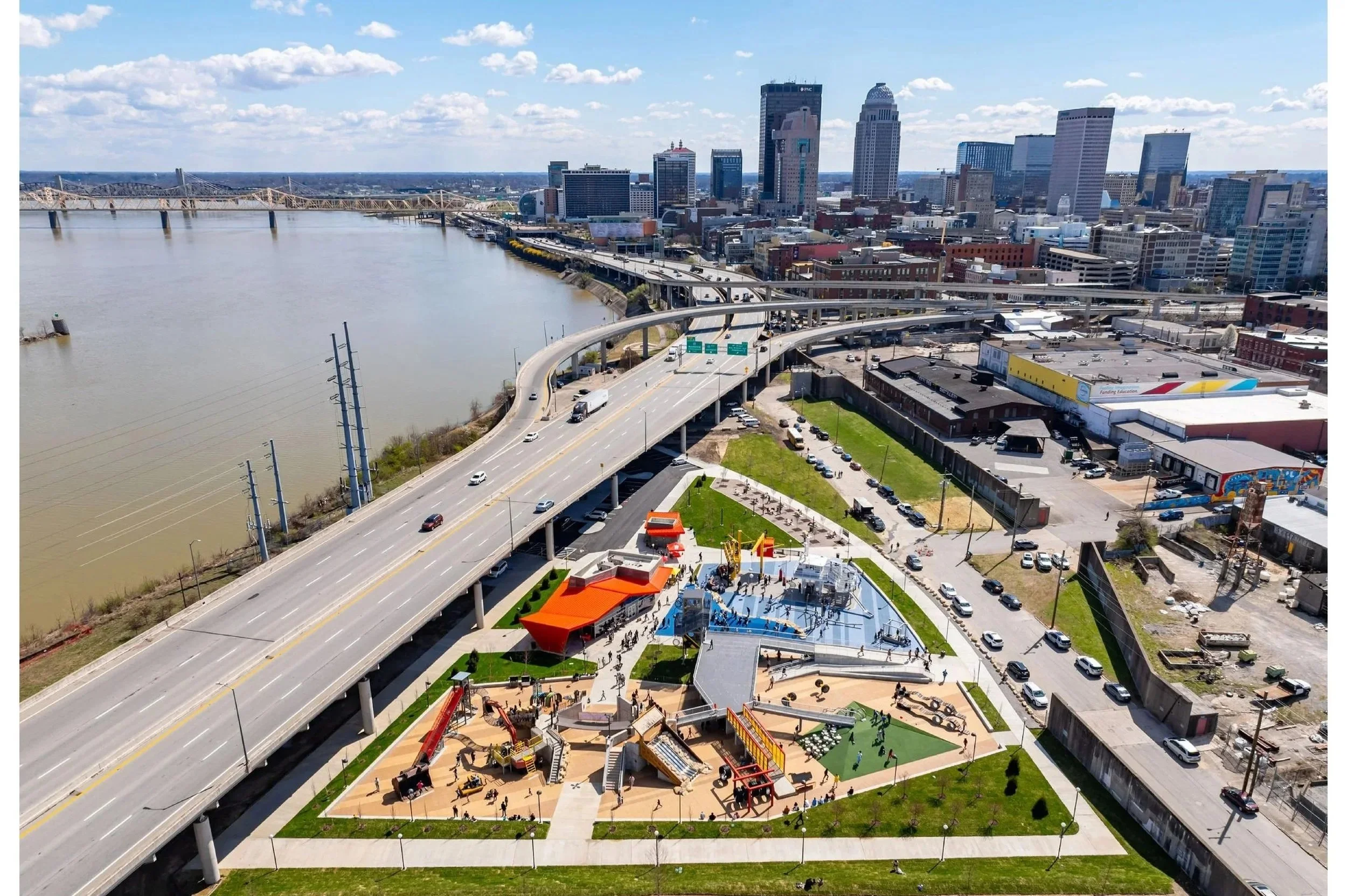
PlayPort seamlessly weaves together play and learning to create a STEM-centered environment. The design process included exploration of local bone and salvage yards to identify potential reuse opportunities, strategize for acquisition, and integrate these elements into the overall design.
PlayPort is heralded by community leaders, local and state politicians, teachers, and non-profit leaders as an impactful, community-centered investment. Additional phases from the master plan are expected to begin in late 2026 – demonstrating the success and value of PlayPort. It is projects like these that elevate the practice of landscape architecture to resolve complex problems with imagination, elegance, and creativity, all from a position of serving the community and environment.