
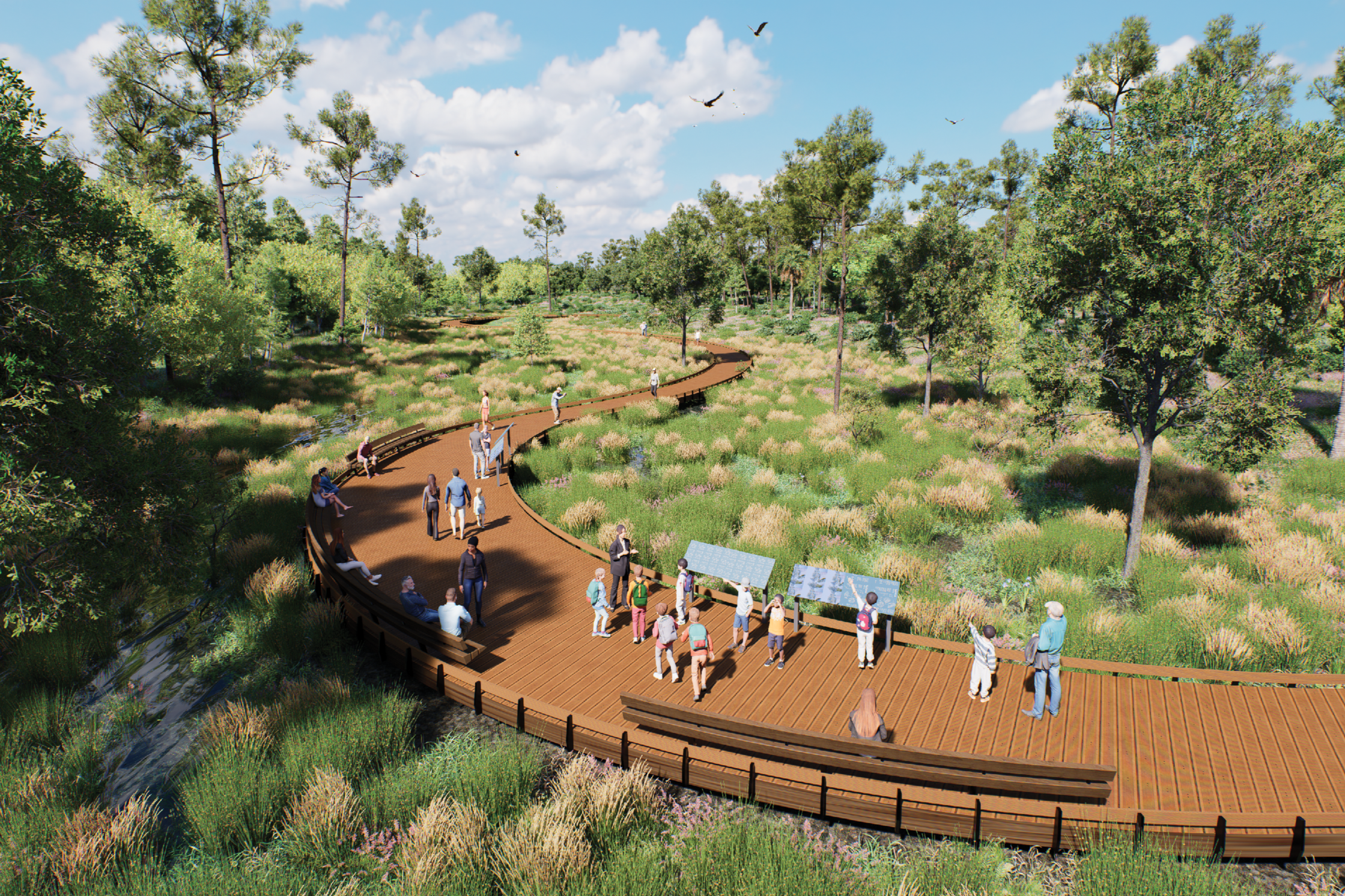
Mid-Island Park Hilton Head Island, South Carolina
Role
Master Planning / Urban Park Design / Sustainable Design
People Involved
Brian Kinzleman, Tony Roell, Haley Wolfe, Matt Kellogg, Ryan Atkinson, John Petrushka
Typology
Public Park, City Infrastructure, Master Plan
Project Timeline
2022 - Ongoing
Collaborators
Biohabitats, Cranston, LS3P
A resilient natural landscape for Hilton Head Island that restores habitat, improves water quality, and creates welcoming spaces for community gathering and exploration
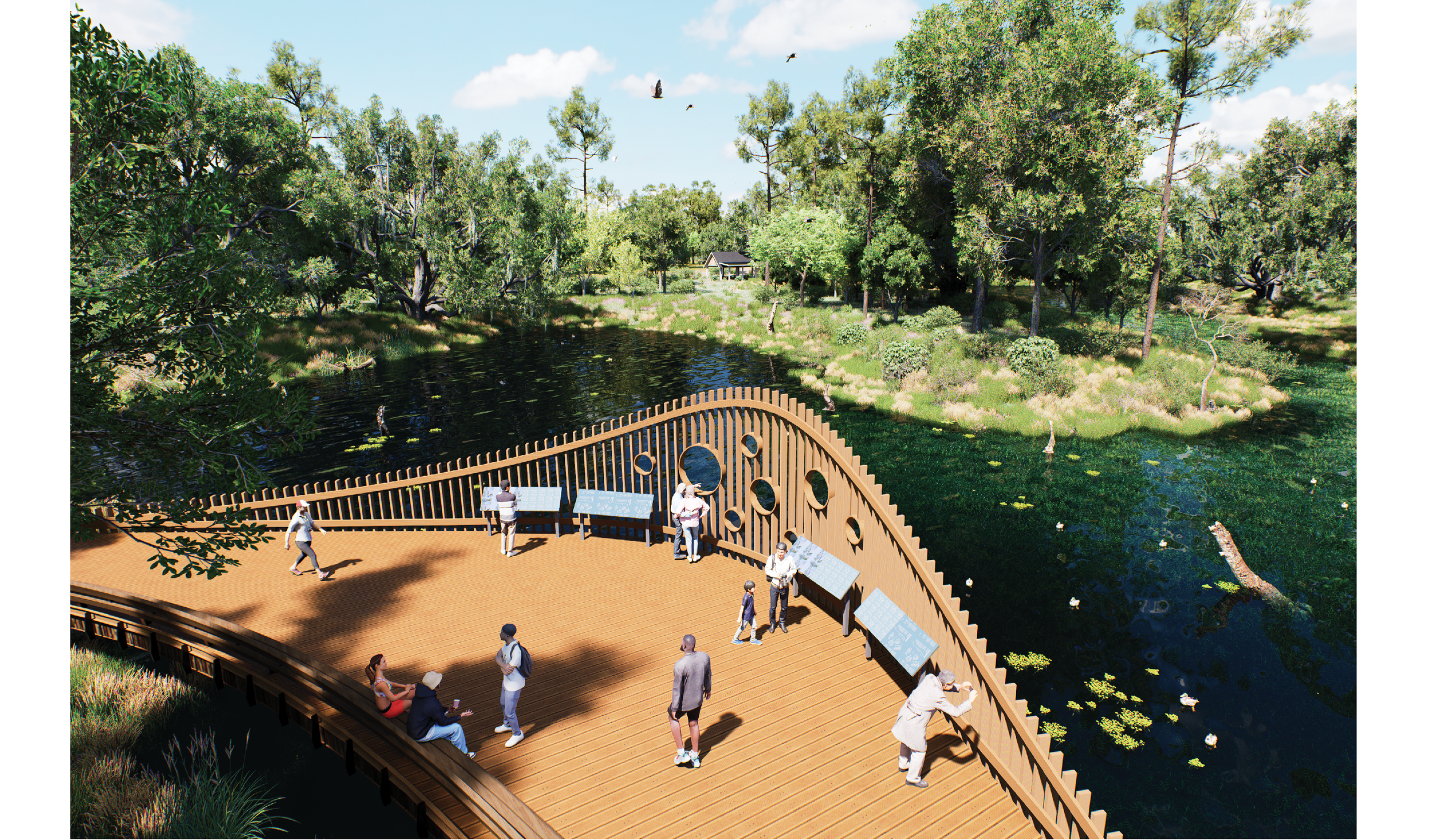
Mid-Island Park is the transformation of a former golf course site into an approximately 100-acre greenspace for the Town of Hilton Head Island serving the local Island-wide community. The proposed plan is a showcase of the Lowcountry landscape and celebrates the natural and cultural heritage of the site.
The natural beauty of the site with its idyllic Live Oaks, trickling water, and abundance of wildlife offers a welcomed respite from the activity of the adjacent arterial thoroughfare. However, the remnants of previous development, such as algae-covered lagoons, eroding ditches, Bermuda grass fairways, and aging outbuildings, are foreign to the natural environment, detracting from the natural environment and negatively impacting the site’s potential benefit within the larger network.
Initial design thinking for the park commenced alongside the larger Mid-Island District Plan with considerations of economic drivers such as land use and density, connectivity such as waterways and modal networks, as well as cultural signatures such as Native Islander communities and district identity, providing key context to overlay with the natural freshwater systems and marine dynamics.
Development of the program, site design, and storytelling are all directly informed by the site context and the present and future needs of the Hilton Head Island community. Building upon Town, stakeholder and public feedback, the clear priority became creating a well-connected passive park with robust features focused on the site’s historic context and environmental stewardship.
“The most successful public spaces solve more than one challenge. Mid-Island Park demonstrates how ecological restoration, resilient infrastructure, and community gathering can work together to create a place that serves both people and the environment.”
- Tony Roell, PLA, LEED AP, Associate Principal Landscape Architect, MKSK
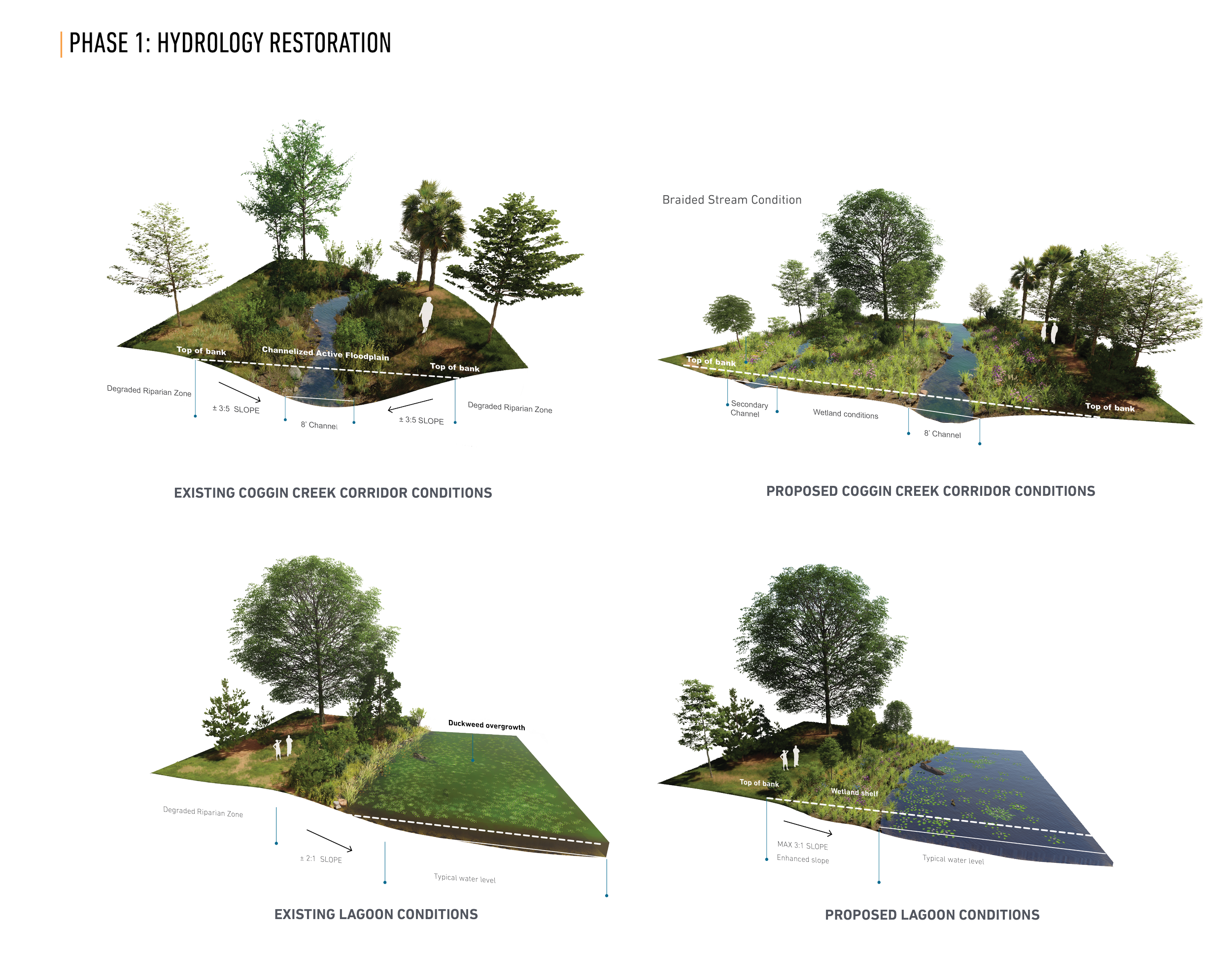
The site will be returned to a more natural state through a variety of techniques, starting with the landform. Existing man-made lagoons are interconnected with pipes and are isolated, discouraging water movement and promoting invasive green algal growth on the water surface. Additionally, the natural water that drains the site and upstream properties was channelized, resulting in steep banks and persistent erosion.
Strategic re-grading of the site will interconnect the lagoons and stream, allowing natural flushing. This process will alleviate water quality issues, creating a more resilient landscape. The site’s ability to store stormwater will be increased to better recharge the subgrade aquifer – a key component of the Town’s water supply that faces a constant threat from saltwater intrusion.
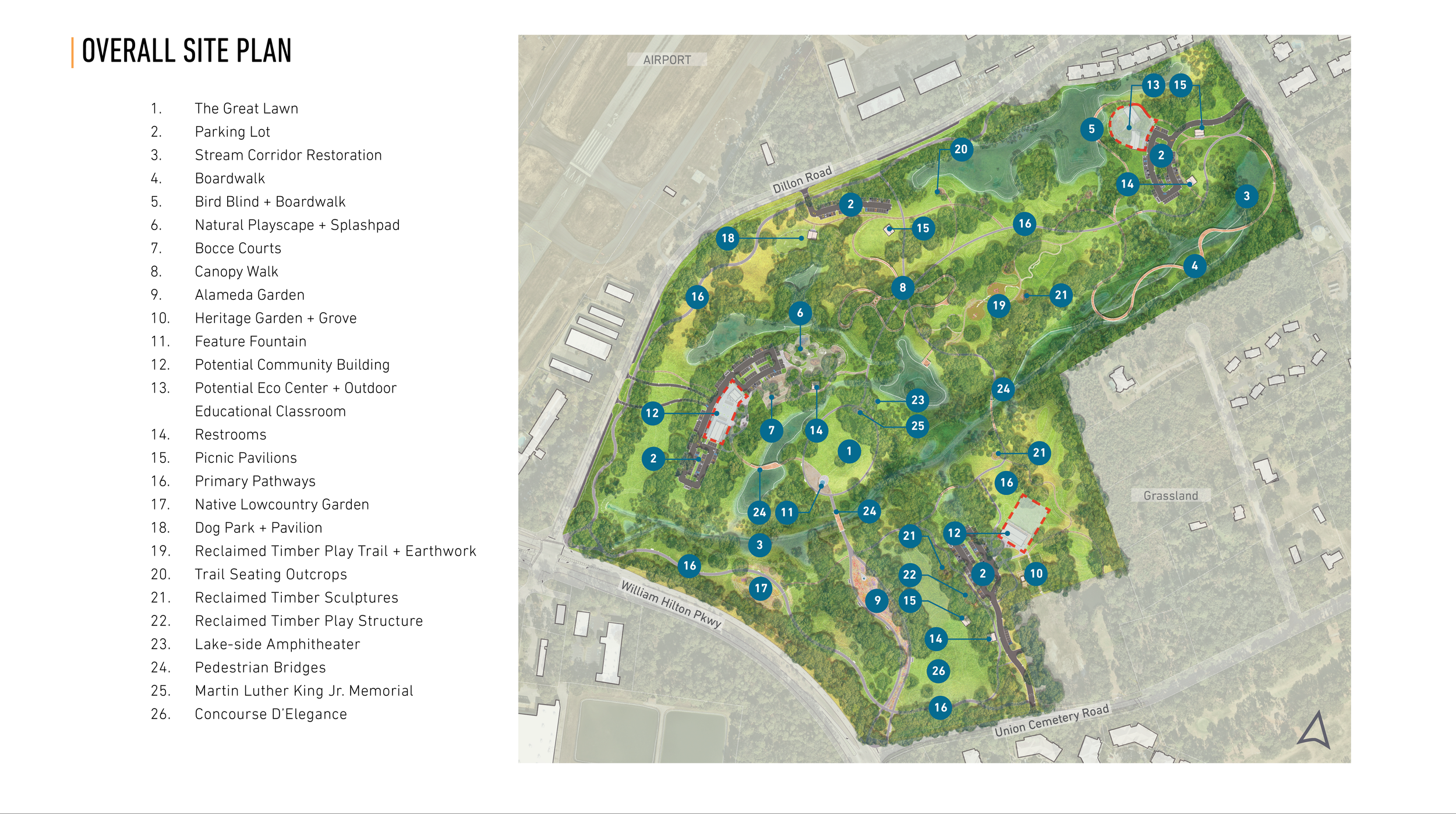
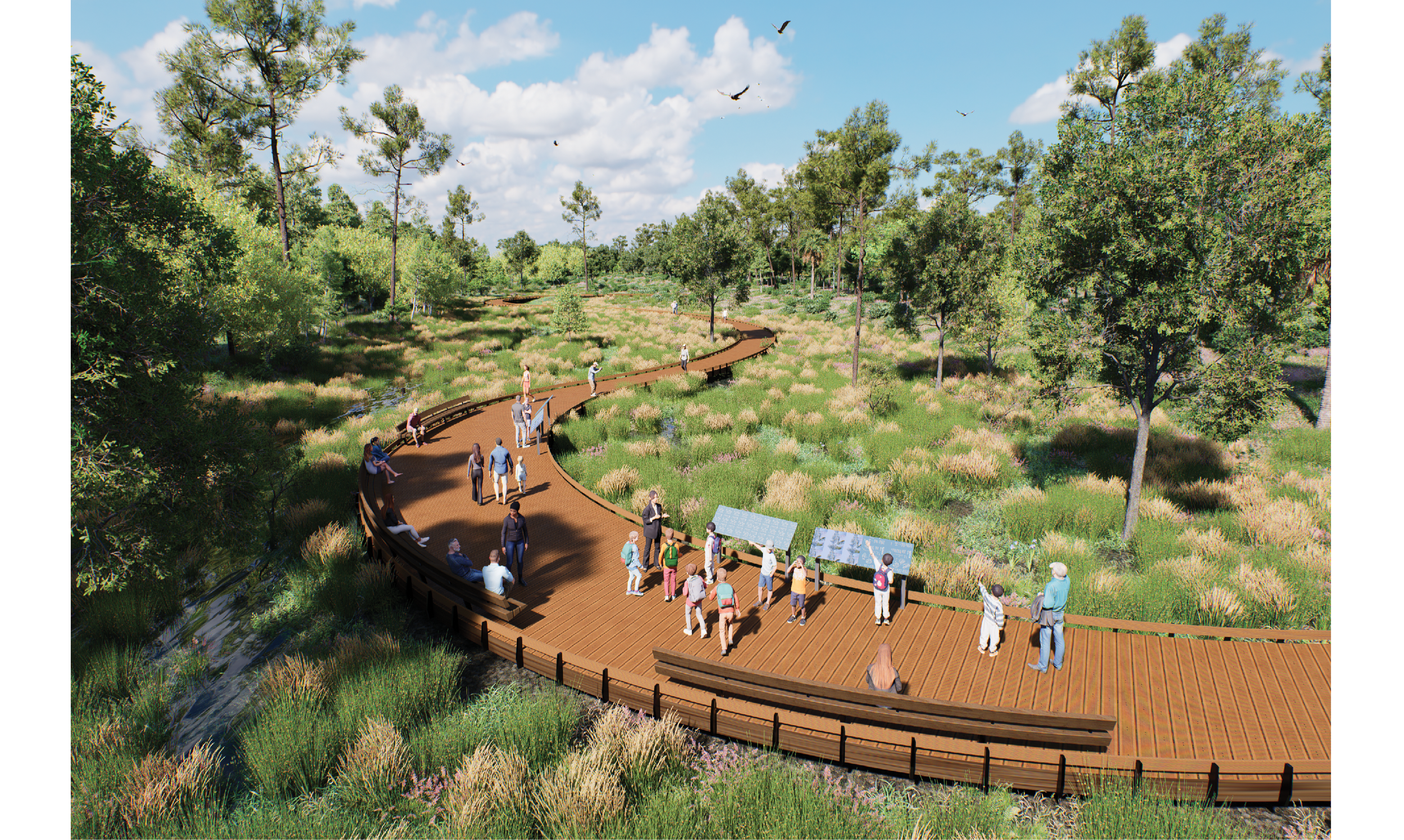
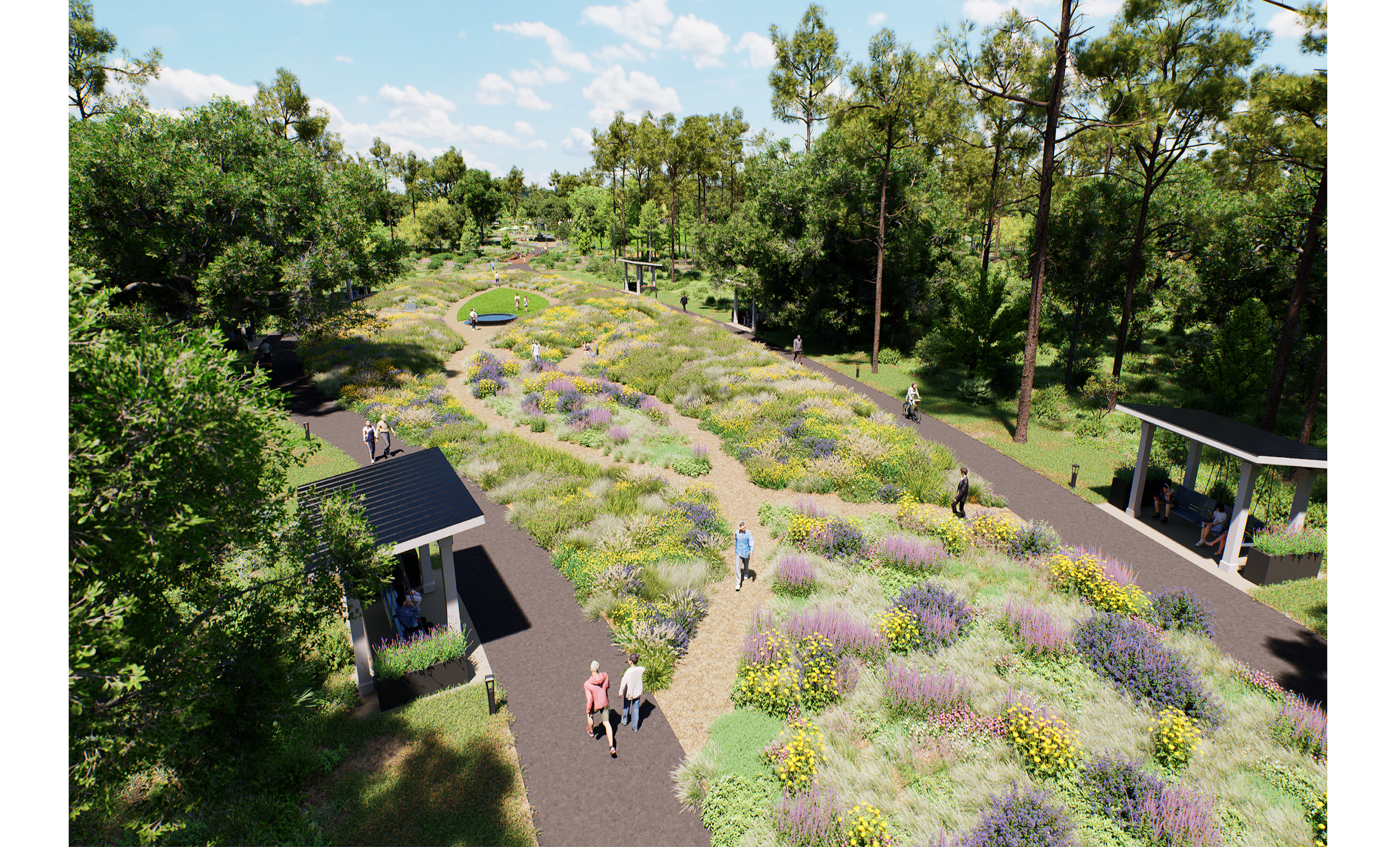
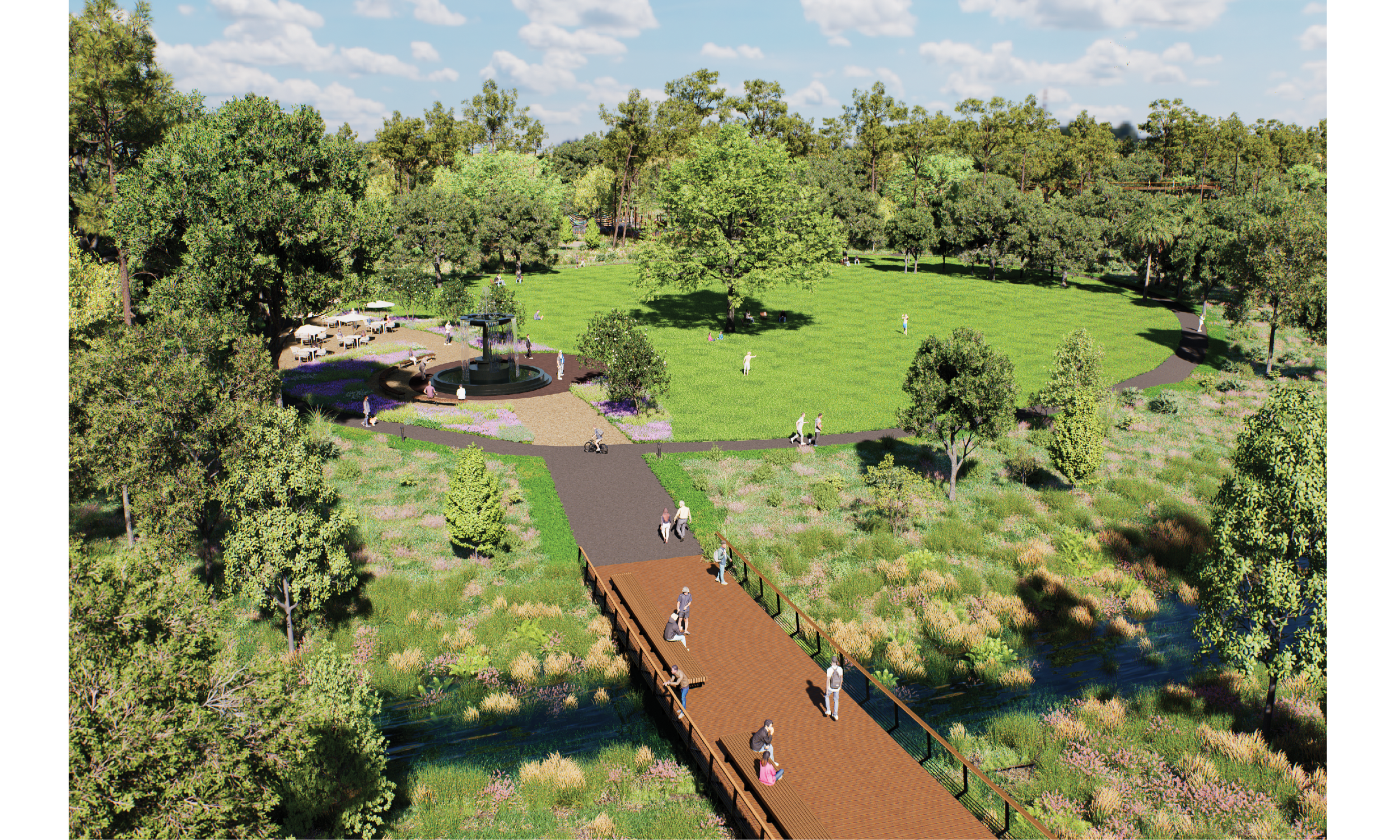
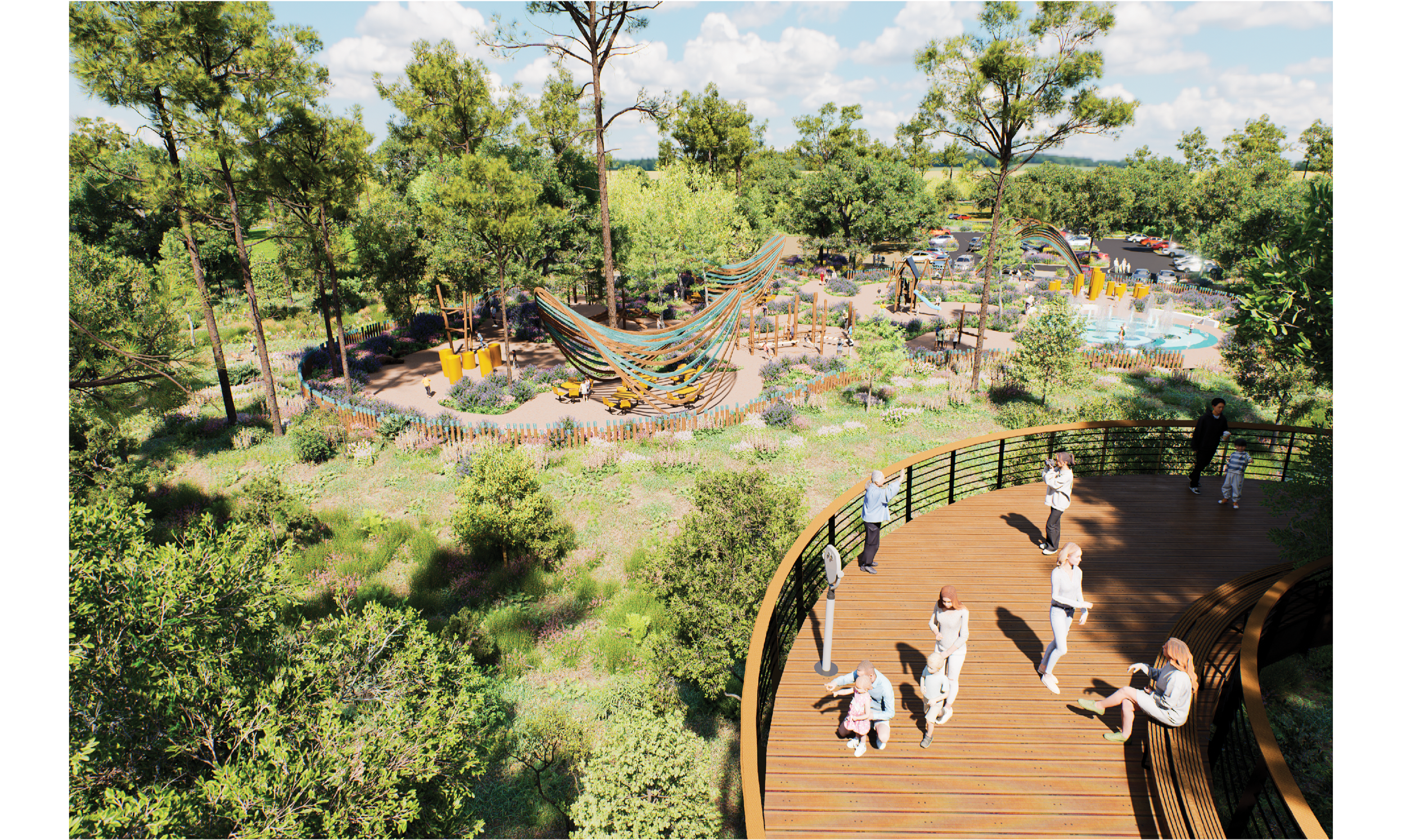
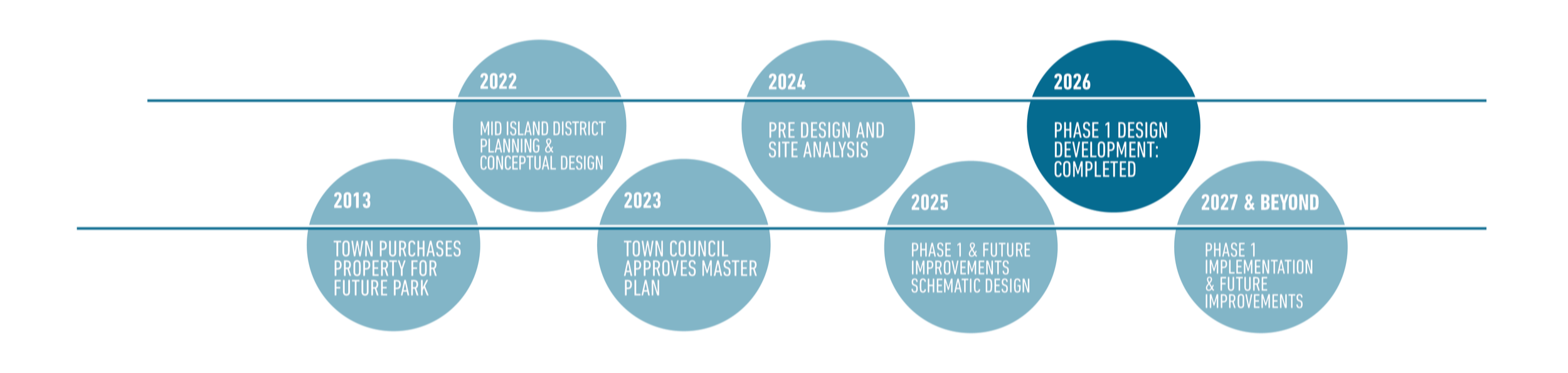
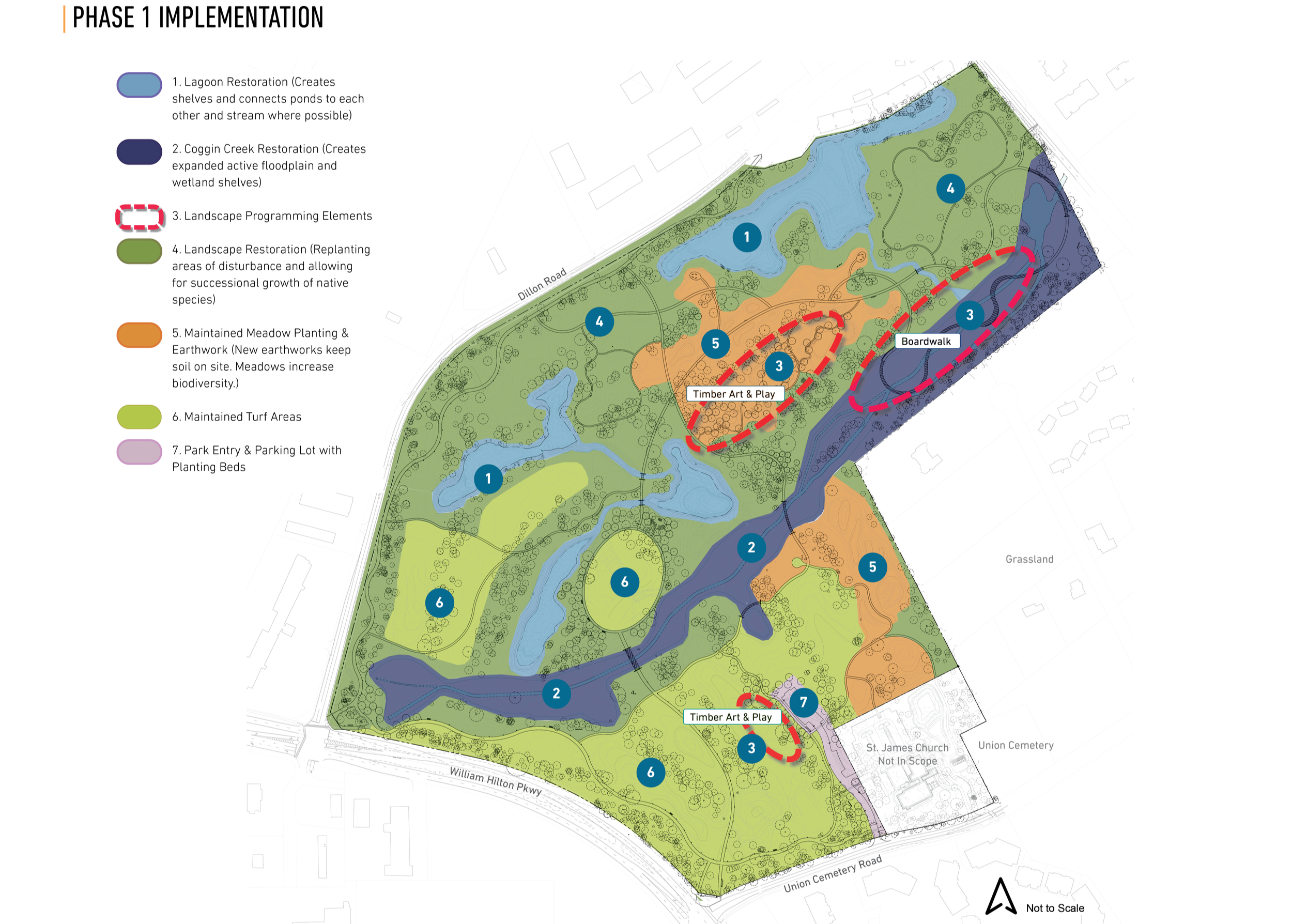
Phase One encompasses the majority of the park and establishes the foundation for future phases of development, with a primary focus on comprehensive environmental restoration, long-term environmental resilience, and circulation.
Design Intent: The plan reflects the Lowcountry native landscape and integrates community needs, Town Council direction, and staff input.
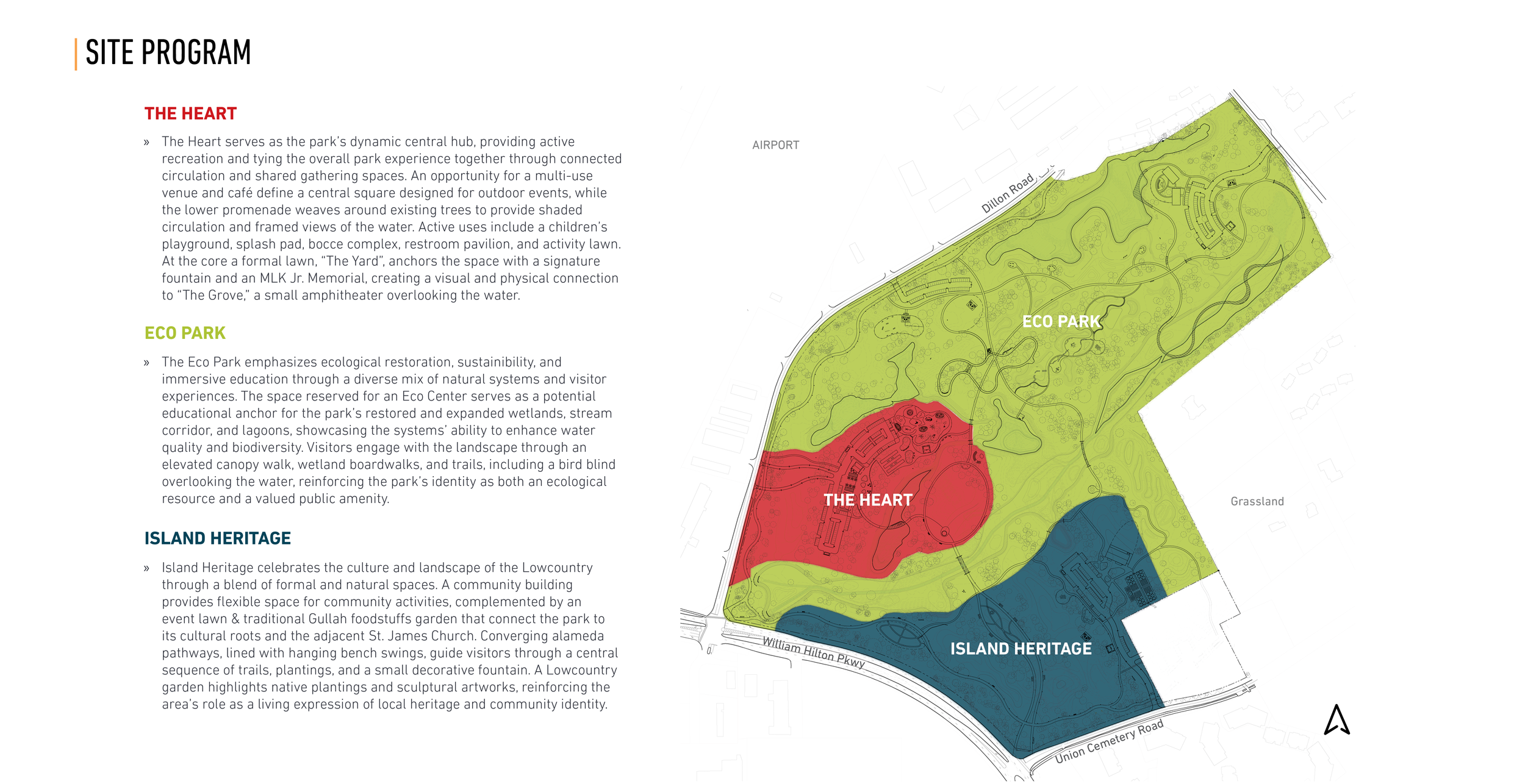
Three Major Program Zones: The Heart, Eco-Park, and Island Heritage—each offering distinct experiences and connections
Community Anchor: The park establishes a central gathering space linking neighborhoods, commercial centers, and the larger greenway network in the Mid-Island District
Focus: restoration, hydrologic improvement, and site access for the foundation for future program development.
Hydrology Restoration: Existing lagoons and channels will be reshaped to promote natural water flow, improve water quality, and enhance floodplain storage and aquifer recharge.
Ecological Enhancement: Approximately 1.5 acres of new wetlands will be added, restoring native Sa Palmetto Woodland and Cypress Tupelo Swamp habitats and increasing biodiversity.
Landscape Approach: 96% of the site’s ~3,000 trees will be preserved; new native plantings and invasive removal will re-establish a natural Lowcountry character.
As Mid-Island Park moves toward construction documentation, the project is well-positioned to pursue multiple third-party certifications and funding sources that recognize its environmental, cultural, and community benefits notably SITES (Sustainable SITES Initiative) certification, with documented alignment across nearly every credit category and WEDG (Waterfront Edge Design Guidelines) certification is well-supported by the project’s resilience strategy, including expanded floodplain capacity, interconnection of existing lagoons to promote natural water flow, improved aquifer recharge, and elevation of footbridges and boardwalks above base flood elevation. The project also aligns with a range of federal, state, and nonprofit funding sources that can support Phase 1 construction and future phase development.
The ambitious plan for Mid-Island Park will serve as a civic anchor to the Mid-Island District, provide critical stormwater needs, and restore the natural environment while providing a much-needed public place for the community to come together. This transformative investment demonstrates how infrastructure, conservation, and placemaking can work together to shape a more resilient future for the Town.