

Jefferson Memorial Forest Master Plan Louisville, Kentucky
Services Provided
Park Planning and Design
Engagement
People Involved
Andy Knight
Casey Elmer
Nathan Young
Amin Omidy
Carley Lemmon
A strategic master plan for the largest municipally-owned urban forest in the U.S.
Situated in the rolling ridges of the Bluegrass region in Kentucky, the Jefferson Memorial Forest Master Plan focuses on creating a more accessible and ecologically sustainable environment while enhancing the visitor experience across the nature preserve’s 7,000 acres of rugged hills, deep valleys, and winding streams. Rather than reinventing the landscape, the plan amplified what already makes this site unique by creating an inclusive framework that deepens connections between visitors and the forest’s rich ecological character with expanded recreation, lodging variety, and new educational opportunities. Through a balance of thoughtful design and environmental responsibility, MKSK’s master plan positions Jefferson Memorial Forest as a model for how large-scale urban landscapes can evolve by enhancing access and visitor experience while preserving the unique ecological systems that sustain them.
The Jefferson Memorial Forest, which opened in 1945 to honor military veterans, stands as the largest municipally owned urban forest in the United States. This expansive natural sanctuary stretches across Louisville and Bullitt County, offering a remarkable blend of urban accessibility and wilderness. MKSK’s Strategic Master Plan promised to further elevate its impact on the community and beyond while protecting the species that call this forest home. While the scale and topography of the forest is among its most impressive features, they also presented challenges to clarity and accessibility. The master plan envisioned a clear framework with distinct zones to transform the forest into a cohesive, engaging environment where every visitor can easily explore the landscape.
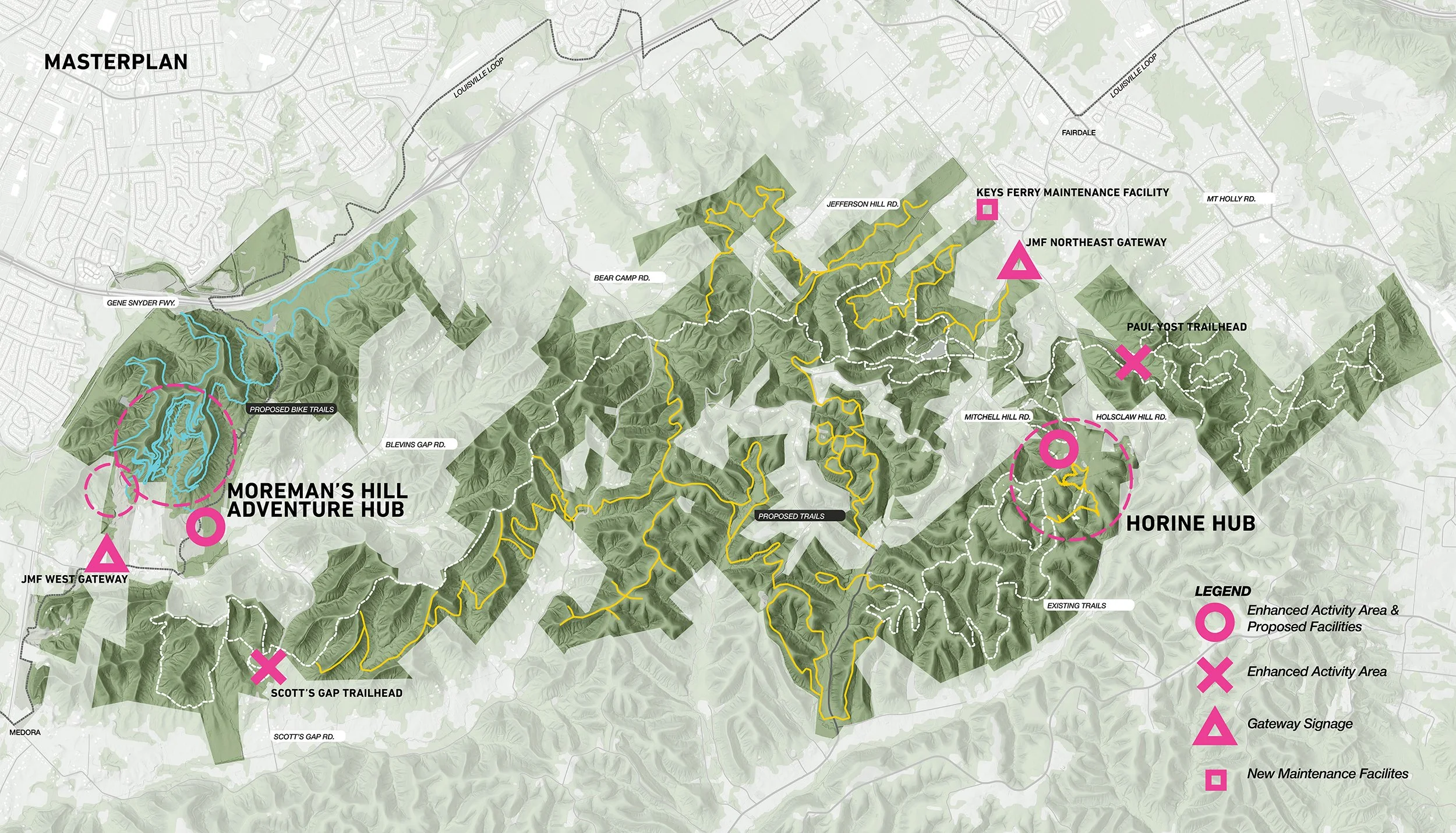
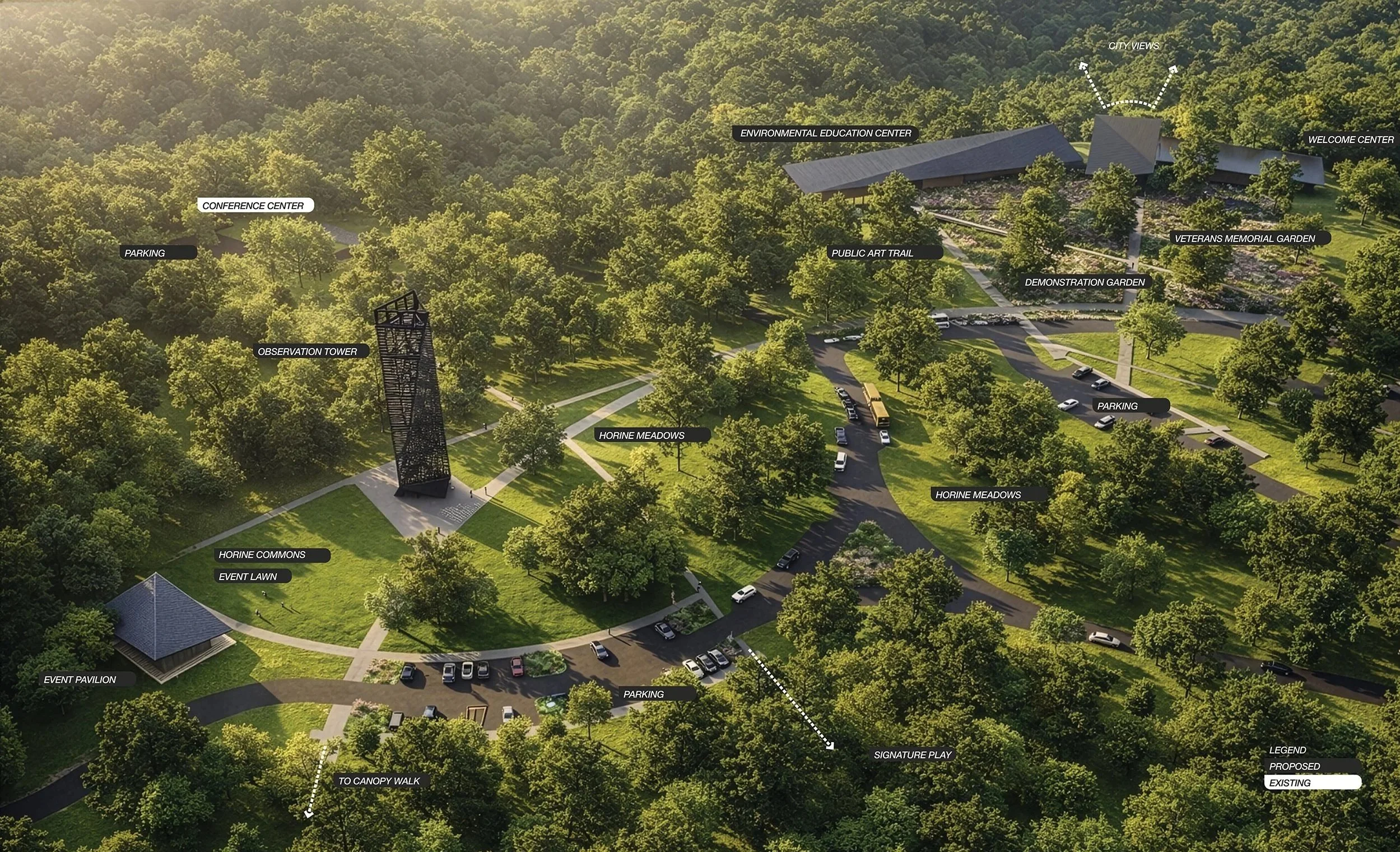
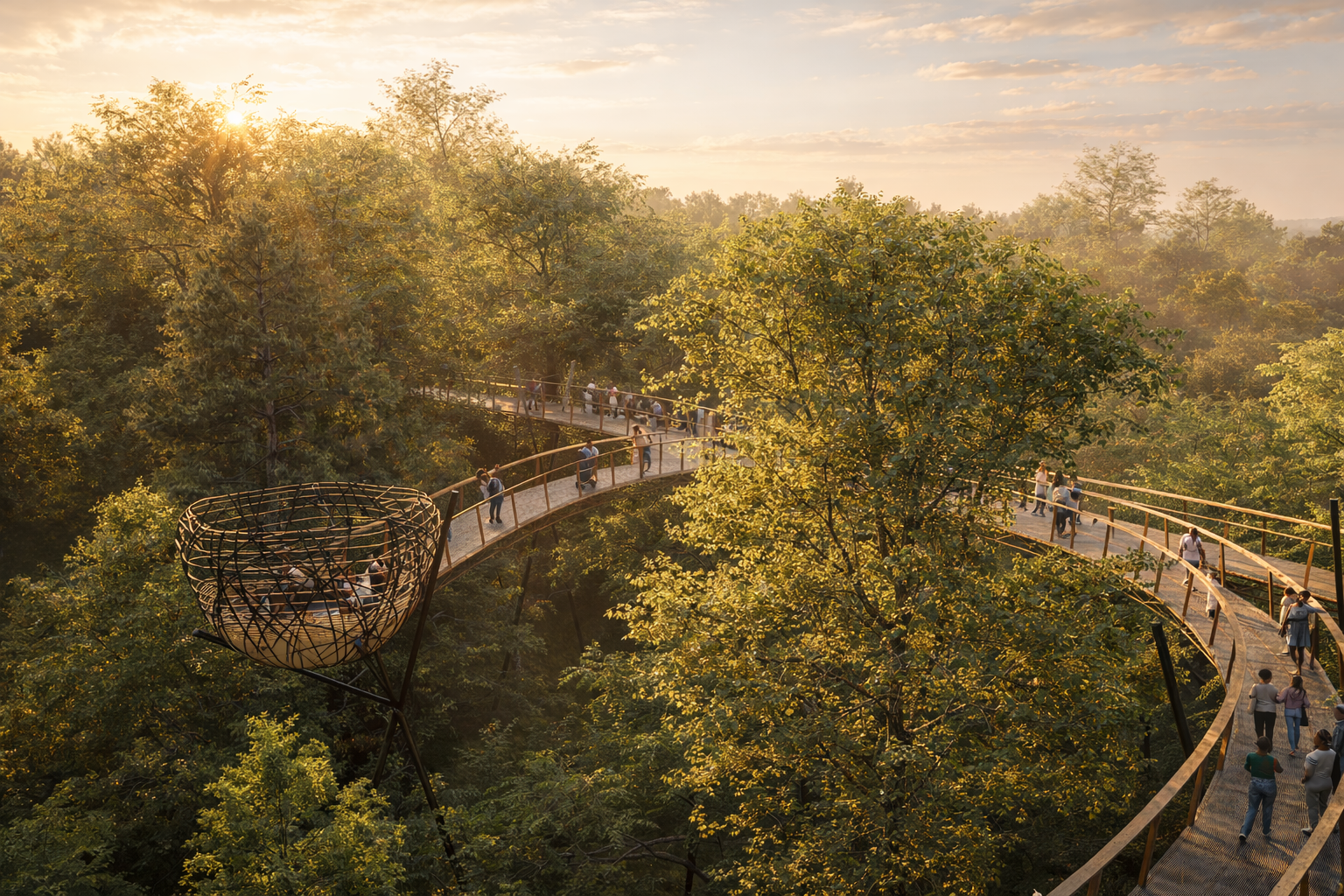
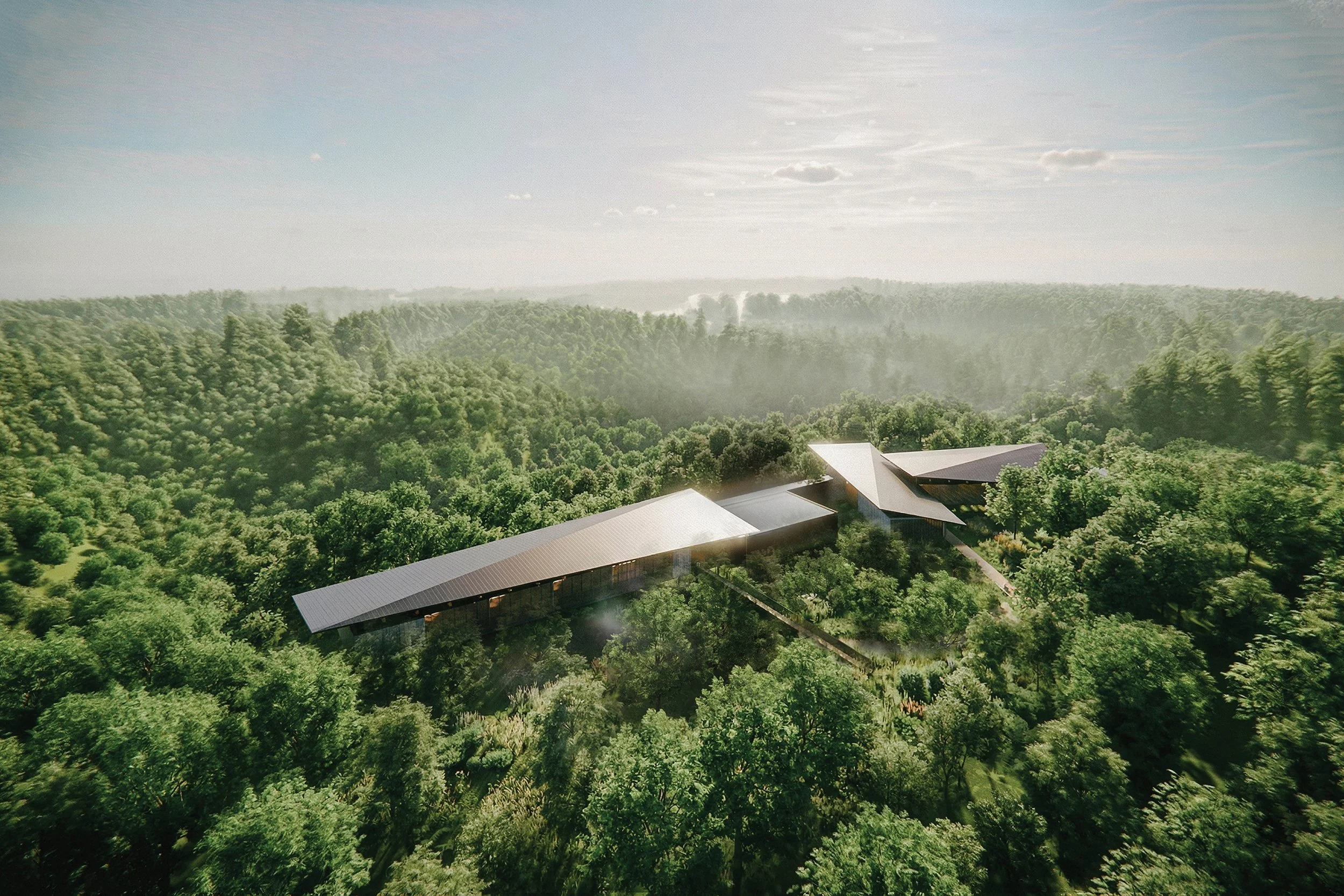
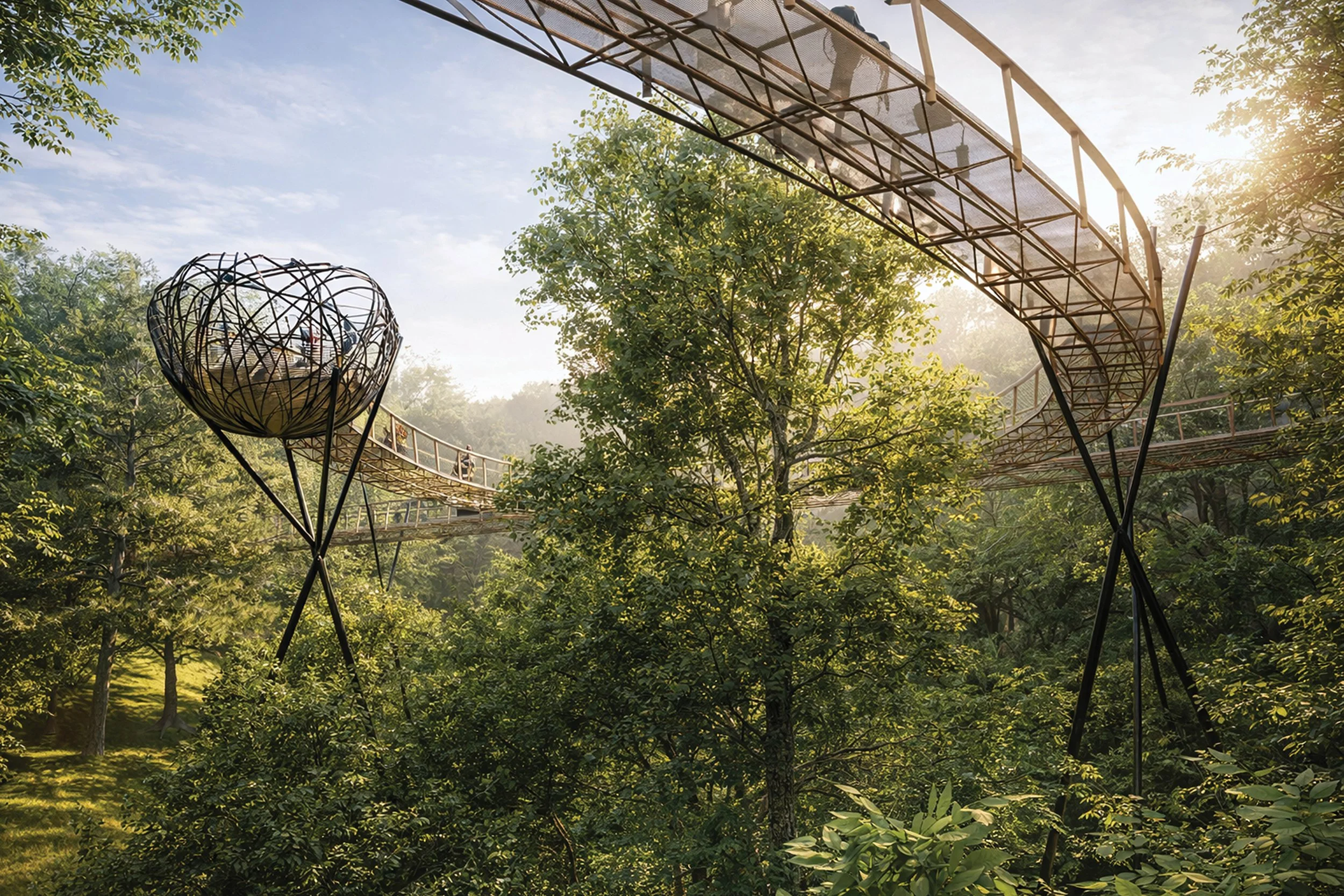
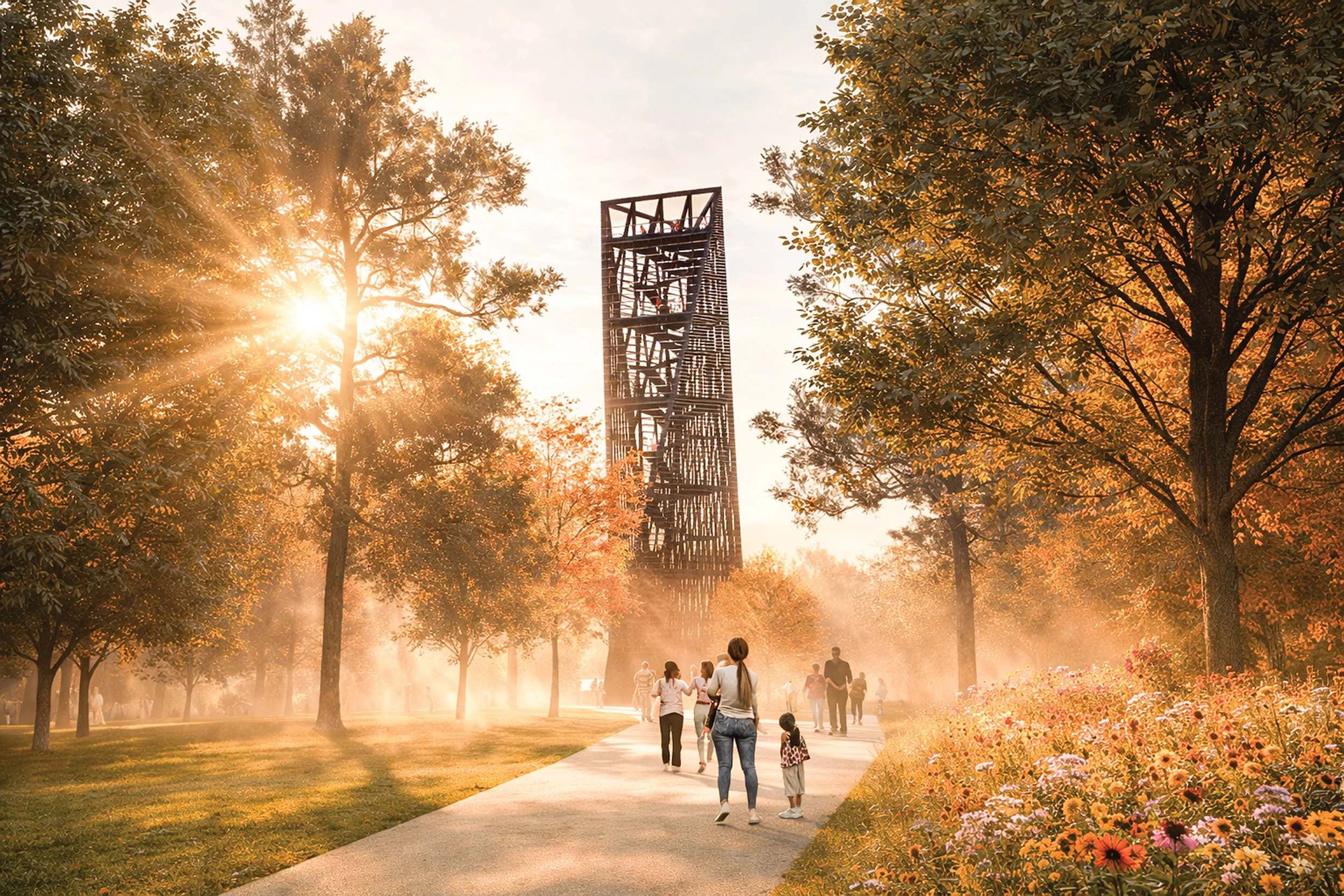
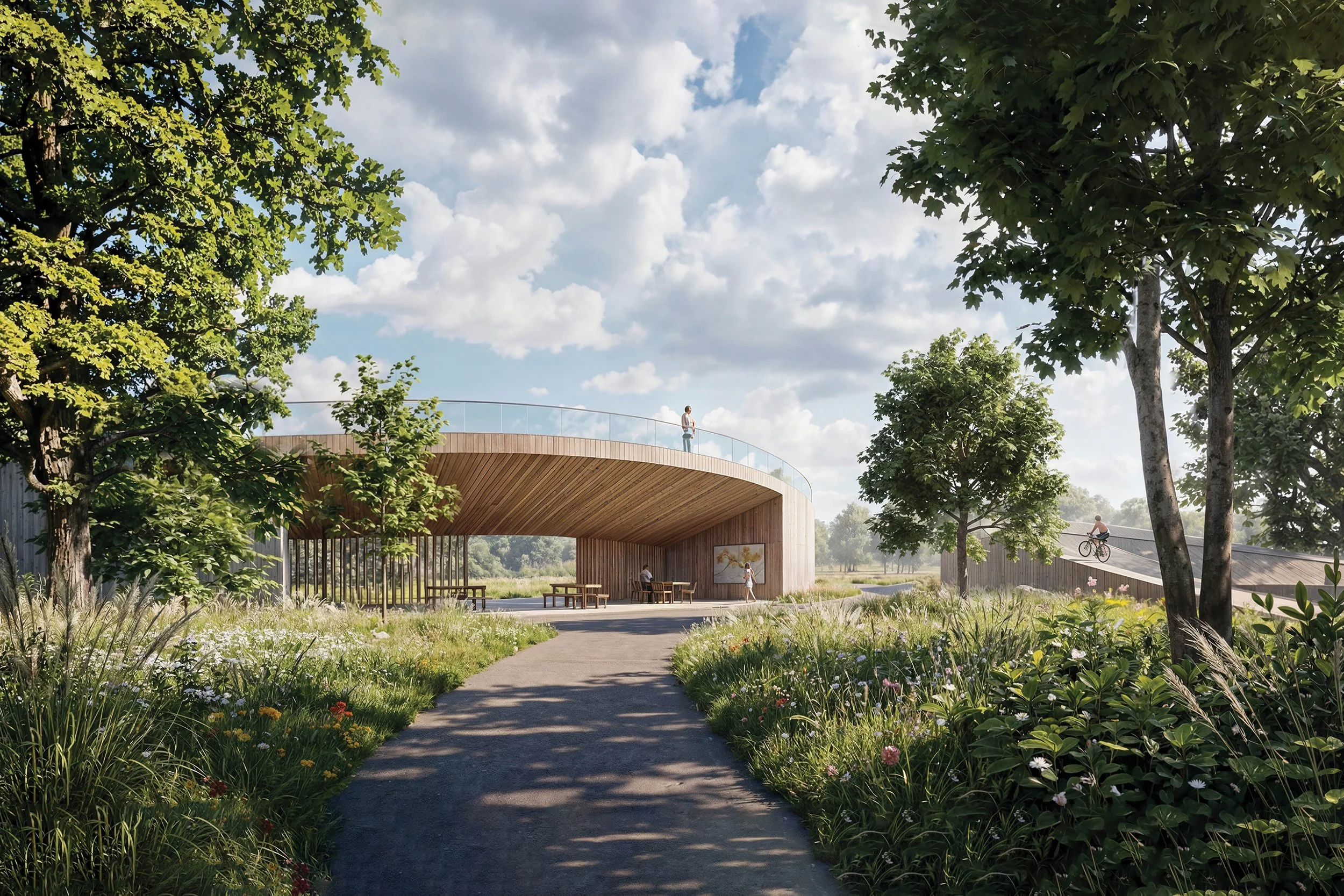
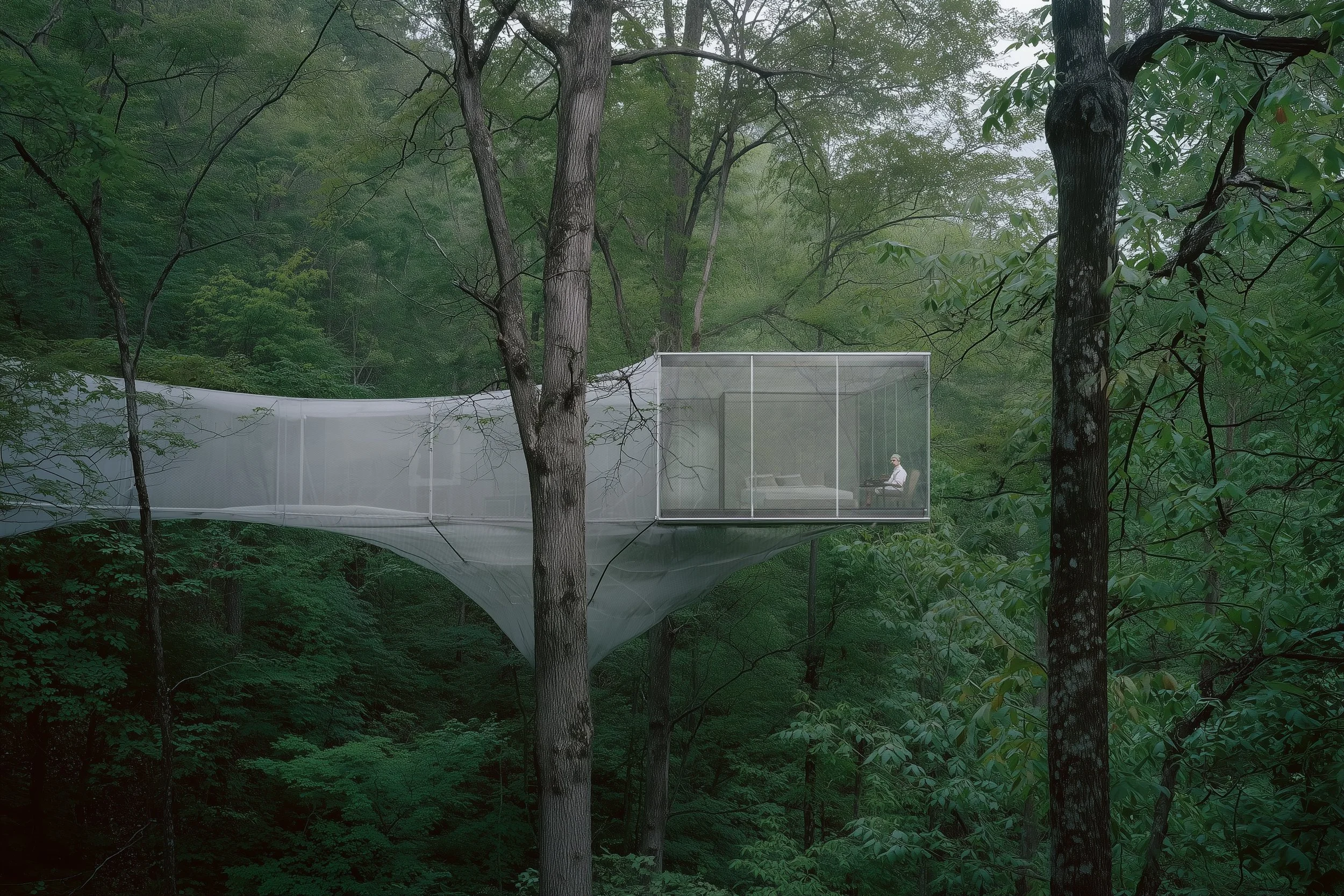
MKSK’s design plan was created as a framework of six distinct zones designed to host destination-oriented spaces while enhancing the existing patchwork of structures that defines the forest. Two focus areas were chosen for program development – The Horine Reservation and Moreman’s Hill. These hubs will serve as centers for ecological exploration and environmental education with a new learning center, a canopy walk and suspension bridge that immerses visitors in the trees, an observation tower offering panoramic views, a collection of event pavilions and a range of tree-house style lodgings.
The Moreman’s Hill zone represents a specialized opportunity to drive overnight stays through niche, experience-based demand—particularly within the mountain biking and adventure recreation market. The development of a tiered biking trail network through the forest will cater to riders of all skill levels. When combined with structured event programming and proximity to other adventure excursions like Red River Gorge, the area can generate concentrated visitation peaks that naturally translate into overnight stays.
JMF is a remarkable ecological resource that supports a rich diversity of habitats, rare, endangered species, and natural water systems. It lies along the intersection of two continental migratory bird flyways and two eco-regions consisting of varied soil compositions. In addition to the design plan, MKSK has established methods for reforestation and worked with biohabitat experts to identify where the plan could help heal part of the forest through invasive species removal, prescribed fire strategy, and relocating hiking trails that were increasing erosion in order to protect the habitat and help maintain soil stability.