Evanston Environmental Equity Investigation Evanston, Illinois
Services Provided
Community Planning
Resiliency Planning
Urban Design
Engagement
People Involved
Brett Weidl
Sarah Lilly
Javier Ortiz
Final Deliverables
Engaging the community to sustainably plan for the future
The City of Evanston is committed to equity and justice for its community members. To move the needle towards a future of greater equity for all Evanstonians, the city investigated its policies, practices, and priorities that perpetuate unequal burdens or barriers to opportunities across Evanston. The Environmental Equity Investigation (EEI) delivers actionable strategies for the City to implement through policies and projects; for local organizations to take collective action; and for households to take individual action.
The investigation is focused on four main factors of environmental equity within the control of the City, local organizations, and individual households. Those are: Open Space, Parks & Trees, Streets & Transportation, Housing & Development, and Community Services. Guided by these factors, the Investigation Team established Key Indicators to measure existing conditions and set metrics for incremental improvement while measuring successful implementation.
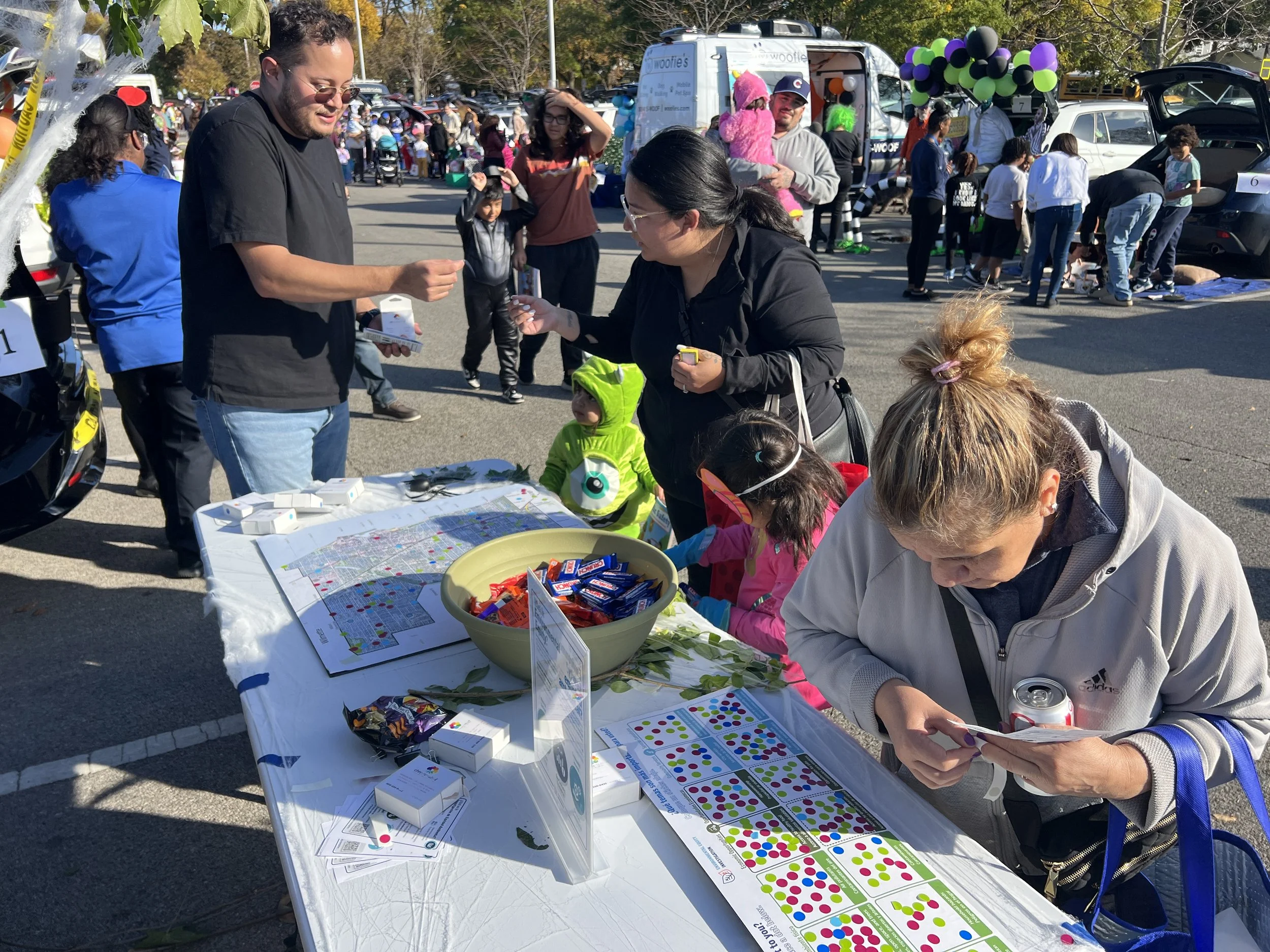
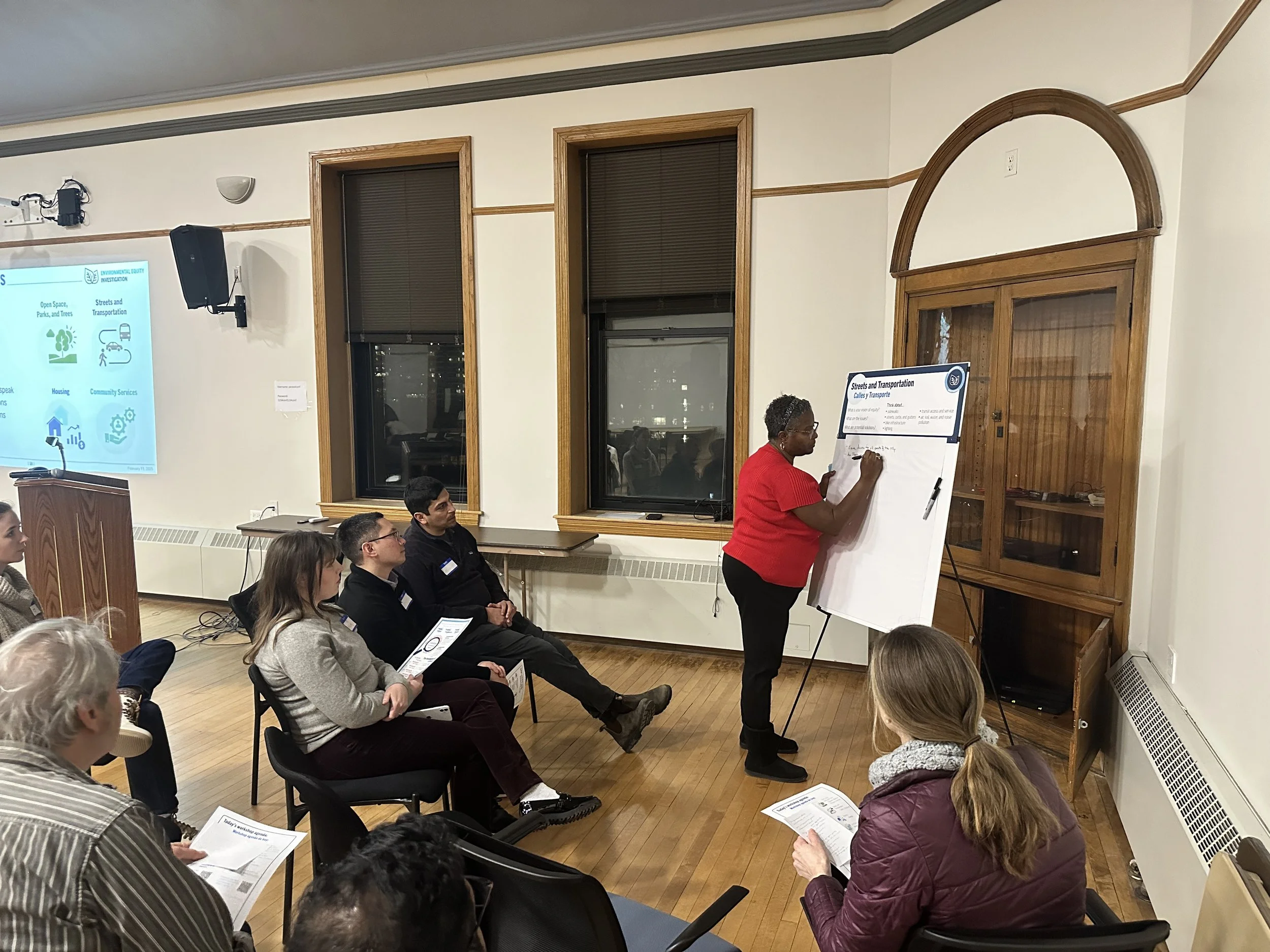
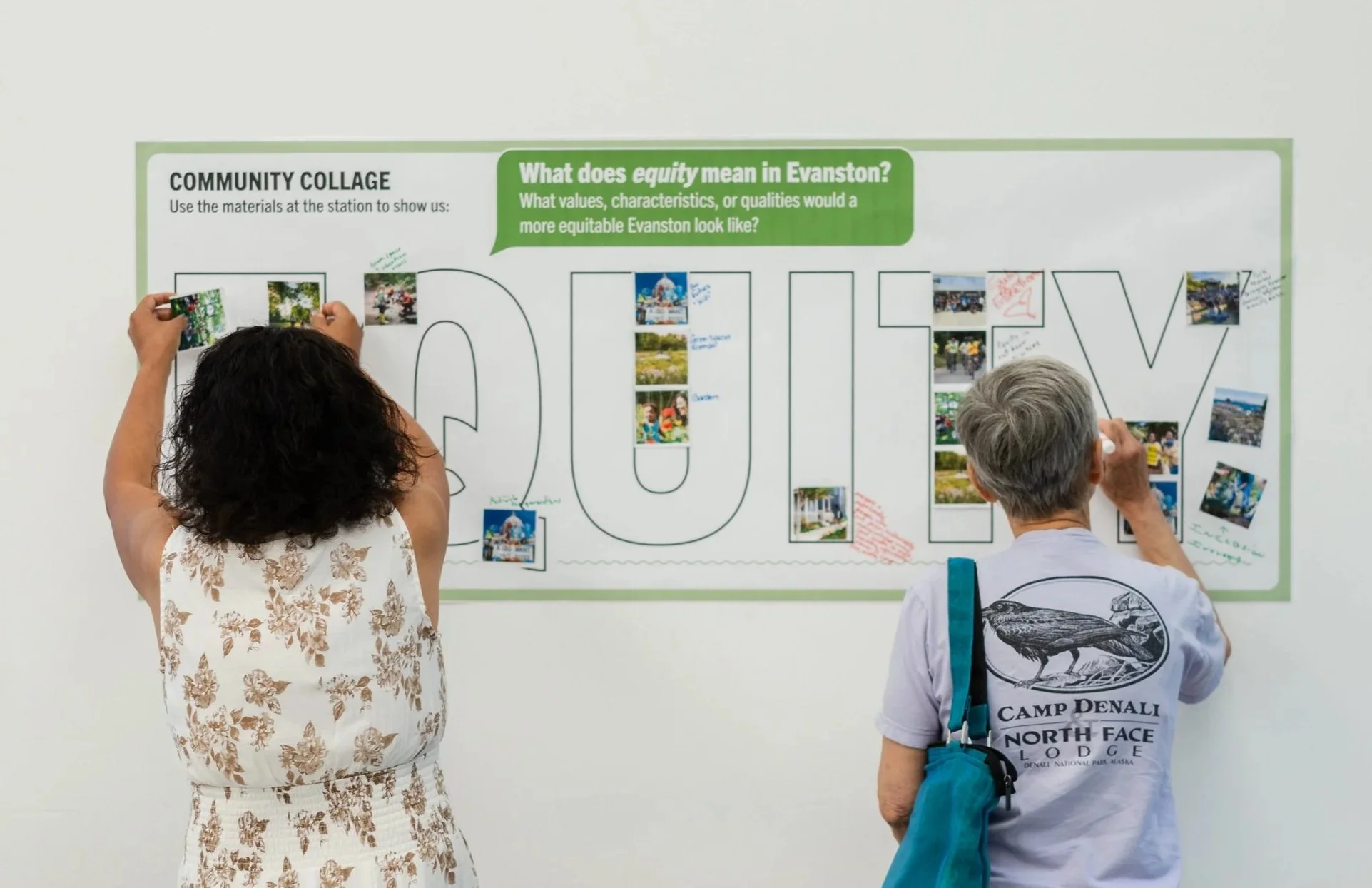
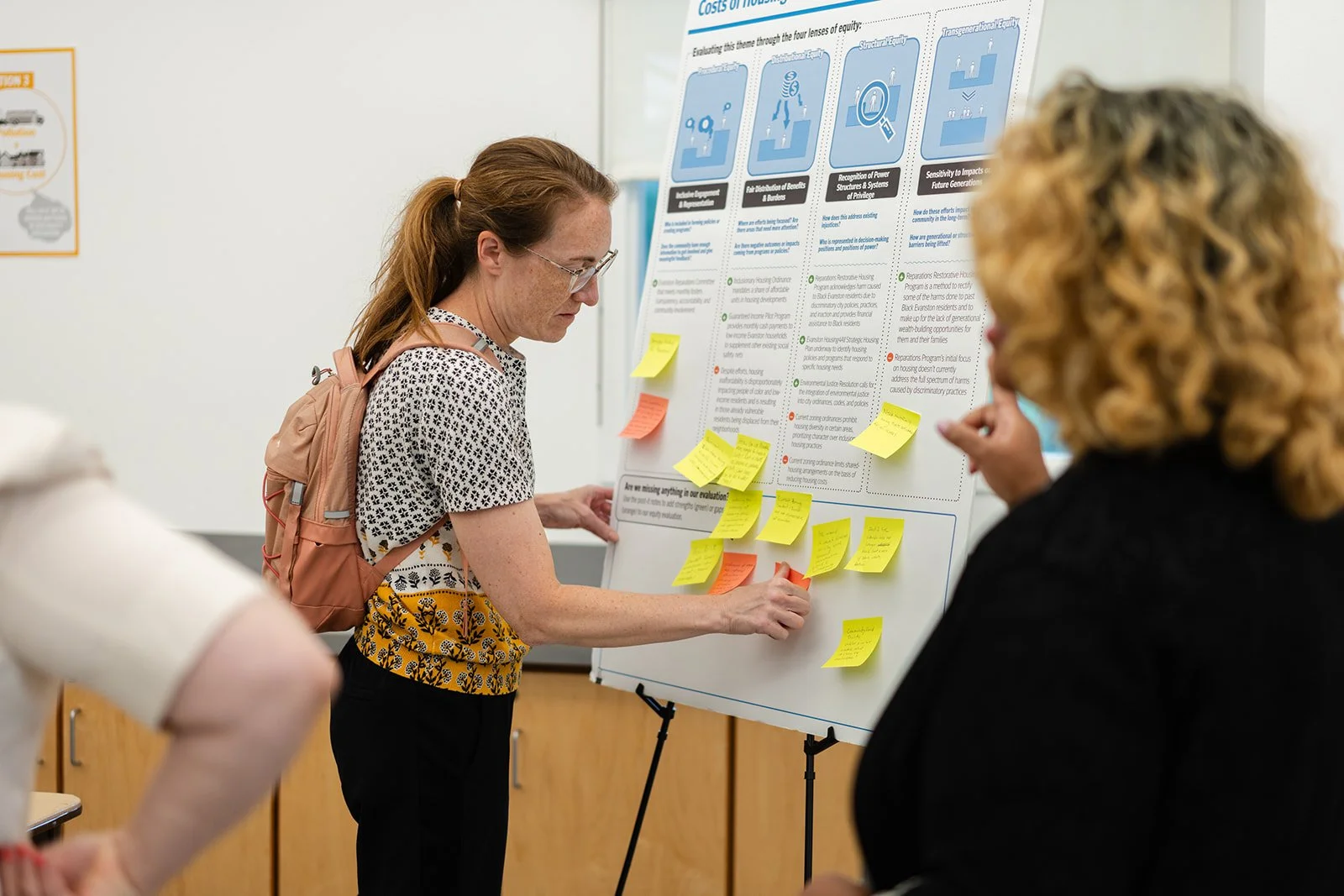
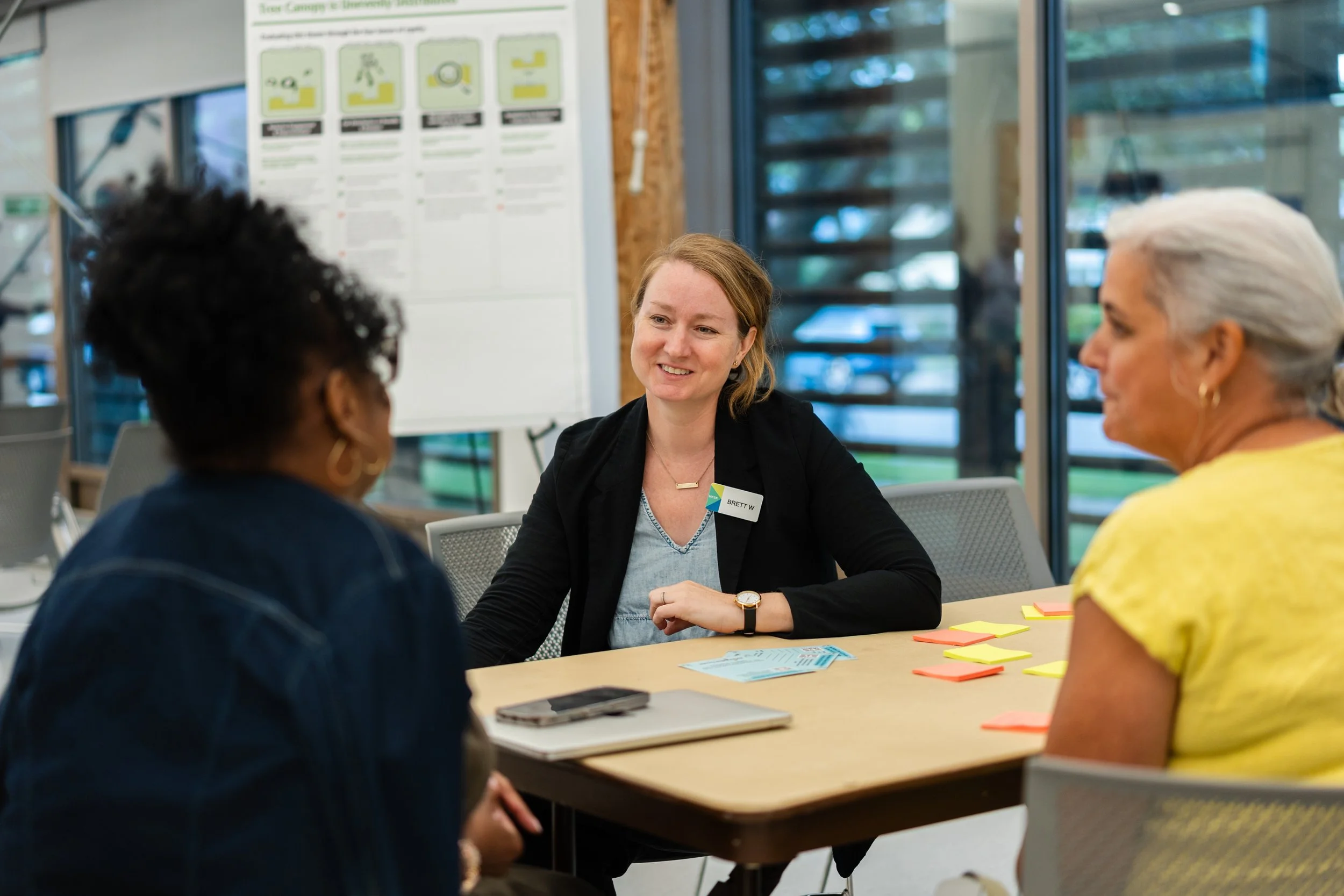
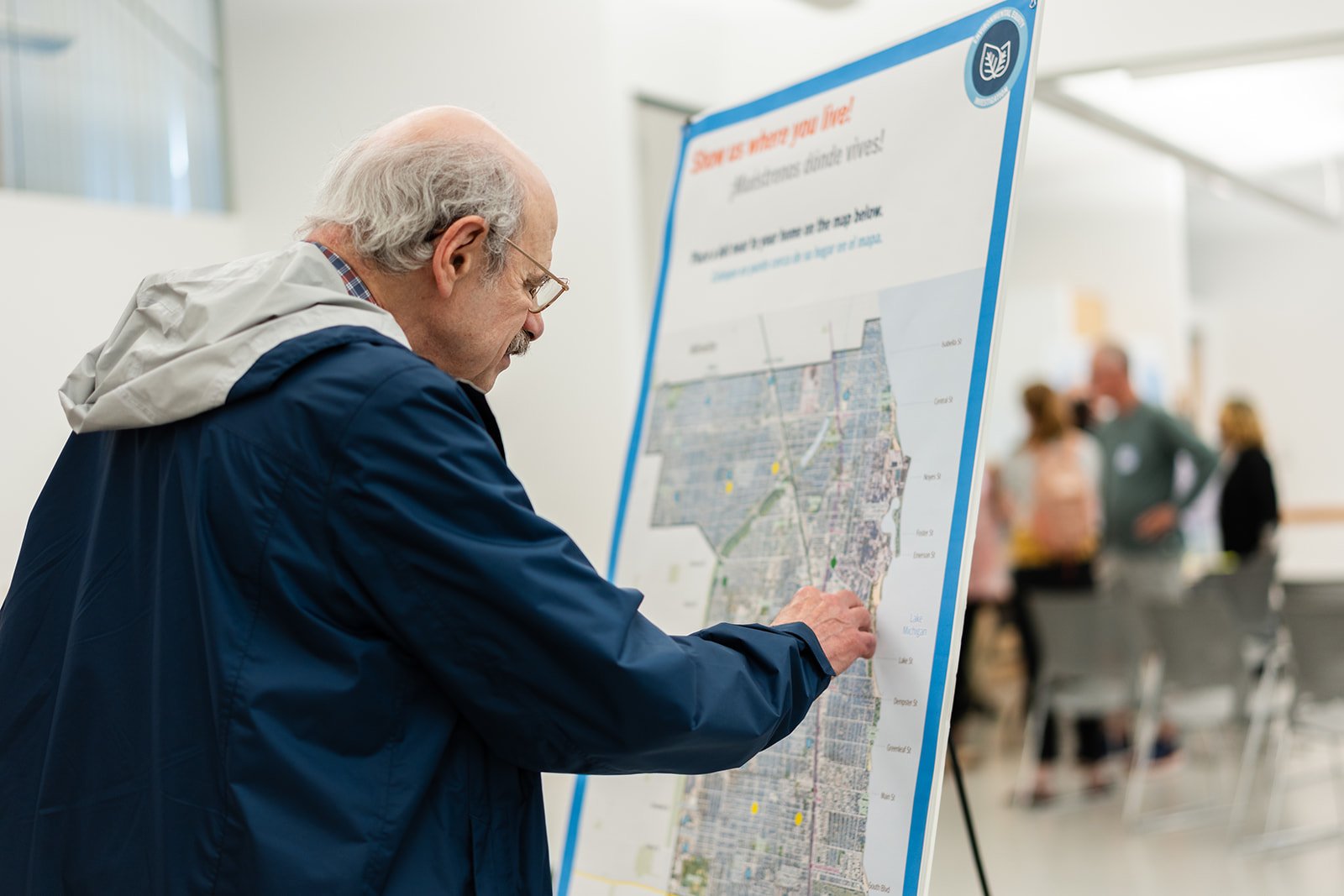
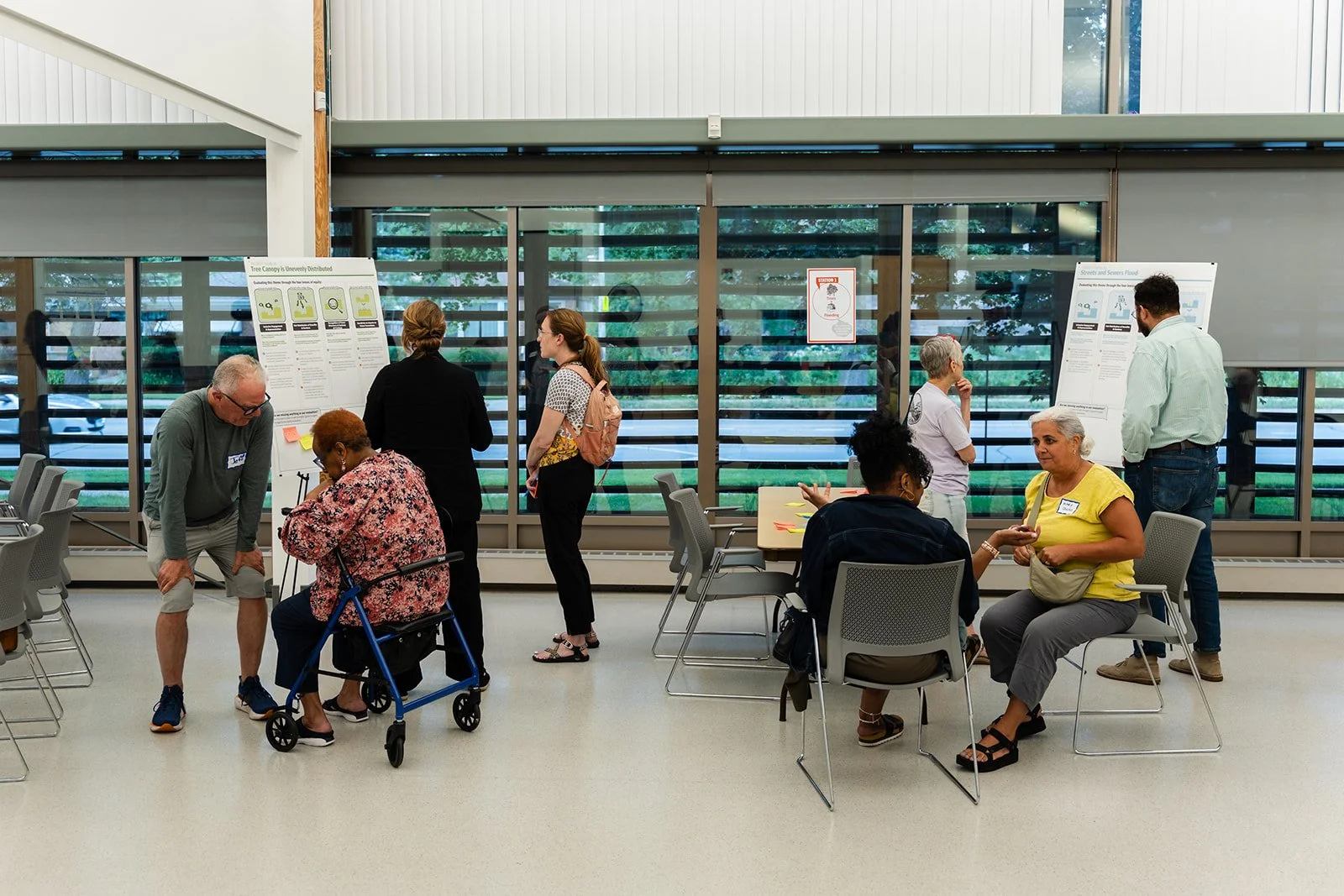
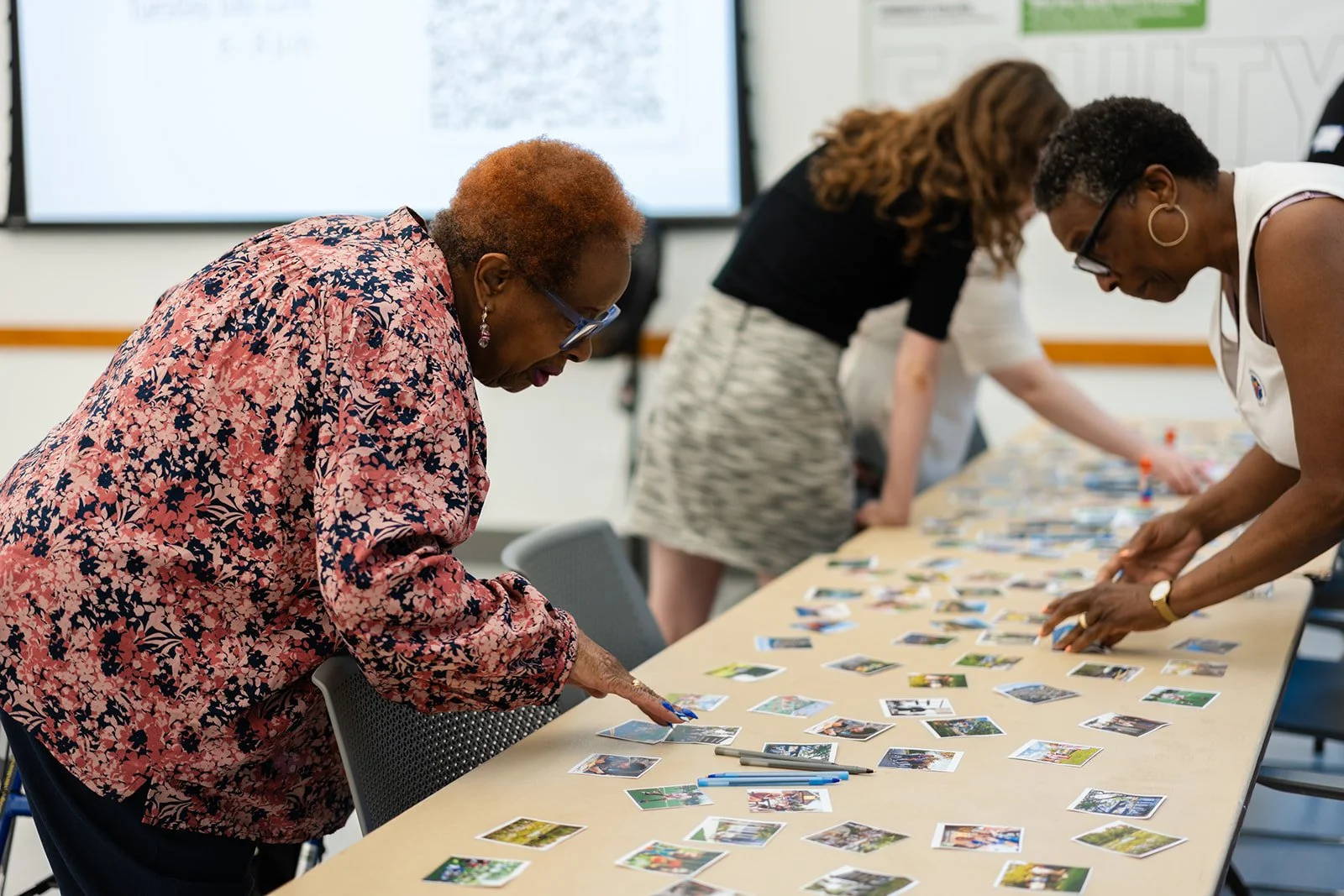
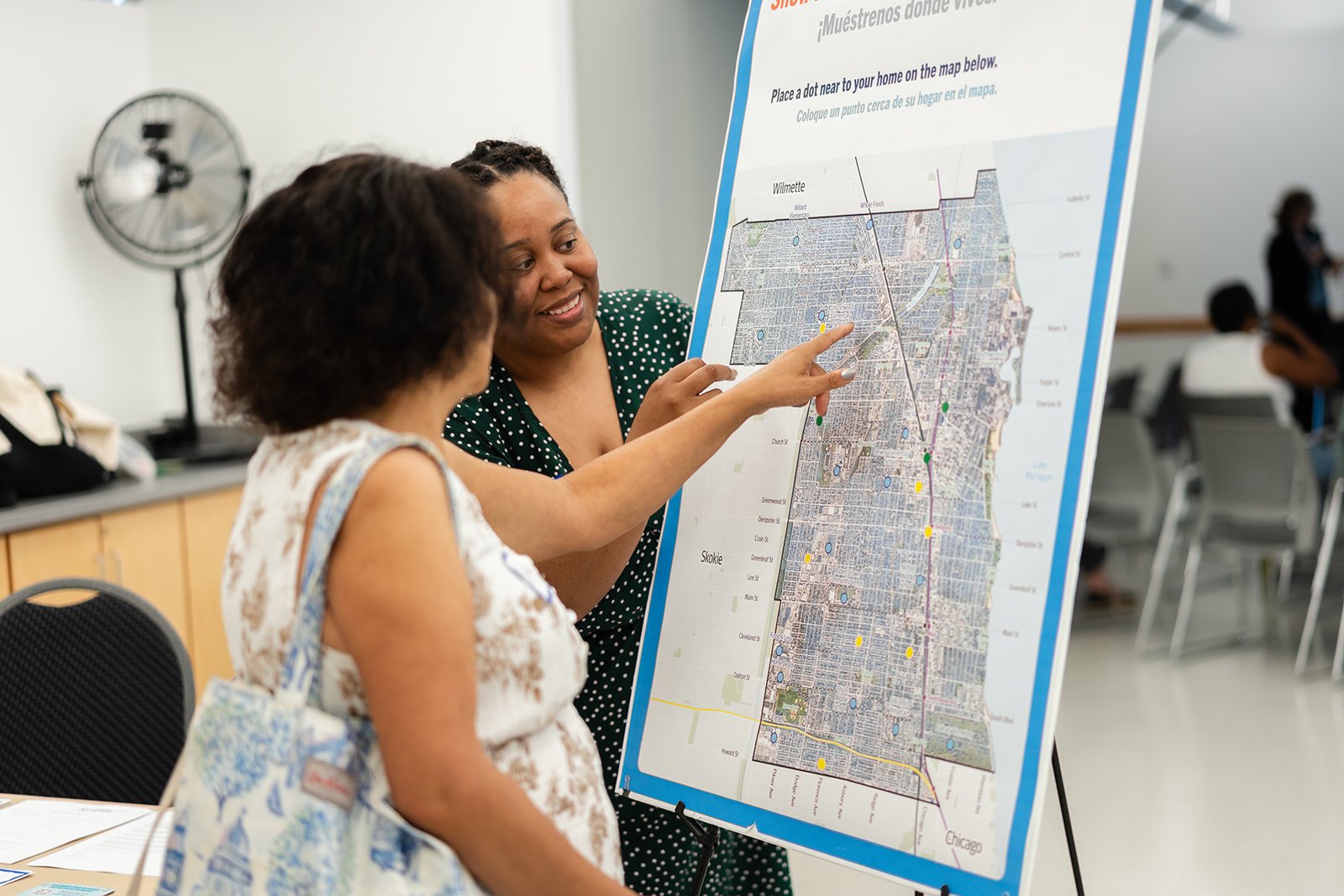
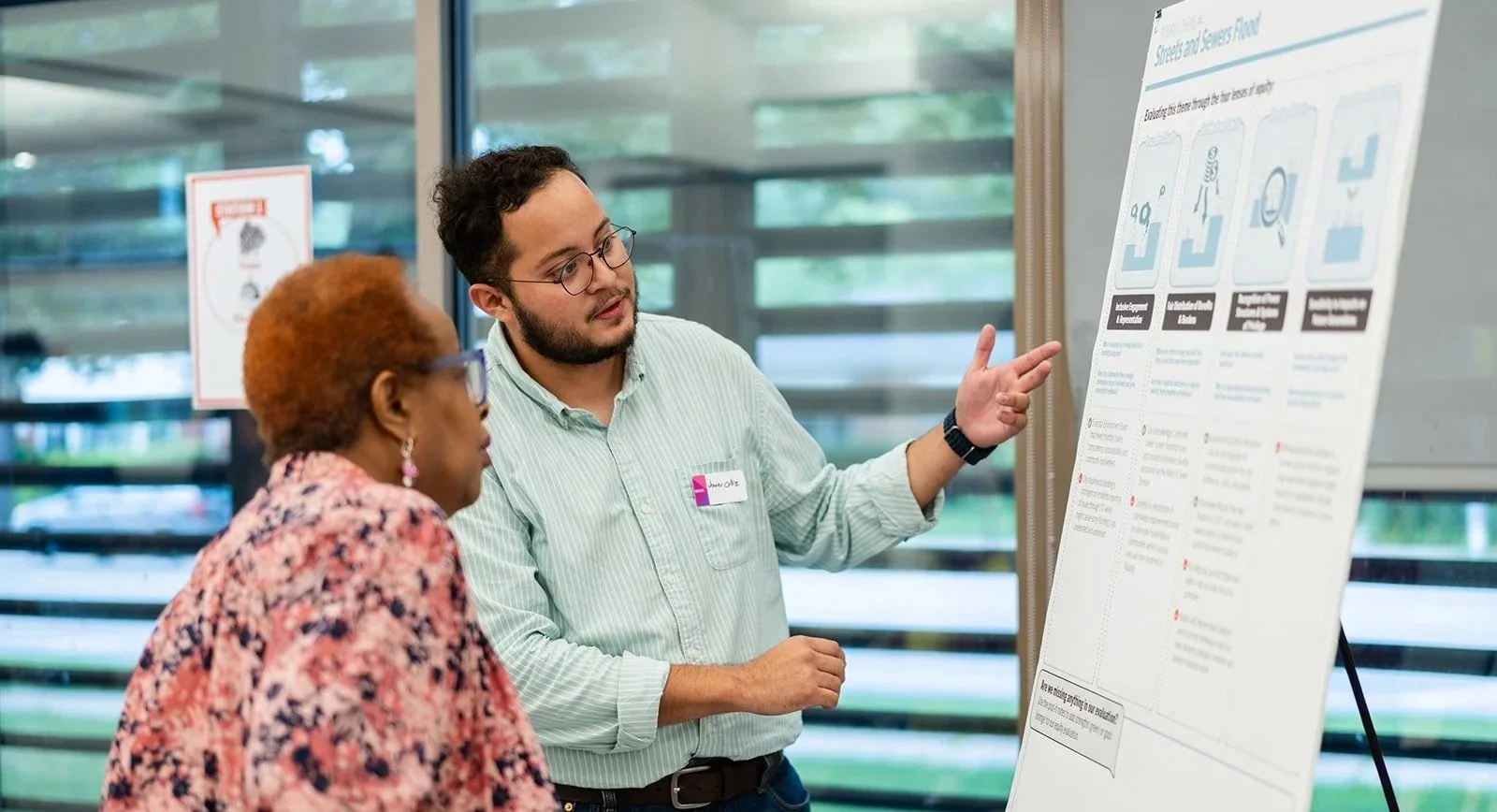
The EEI was grounded in robust and collaborative community participation in the form of a Leadership Committee, Focus Groups, and Public Workshops all conducted at four key intervals throughout the course of the investigation. All public meeting resources were available in both Spanish and English.
As the EEI continues, the City of Evanston and its partners are developing recommendations for issues addressing today’s challenges while also preparing the community for a more just and resilient tomorrow. By amplifying community member voices, especially those in historically marginalized and disinvested neighborhoods, and combining them with expert research and analysis, Evanston is leading by example by prioritizing environmental equity as a core component of future city governance.
Read more about the project here.
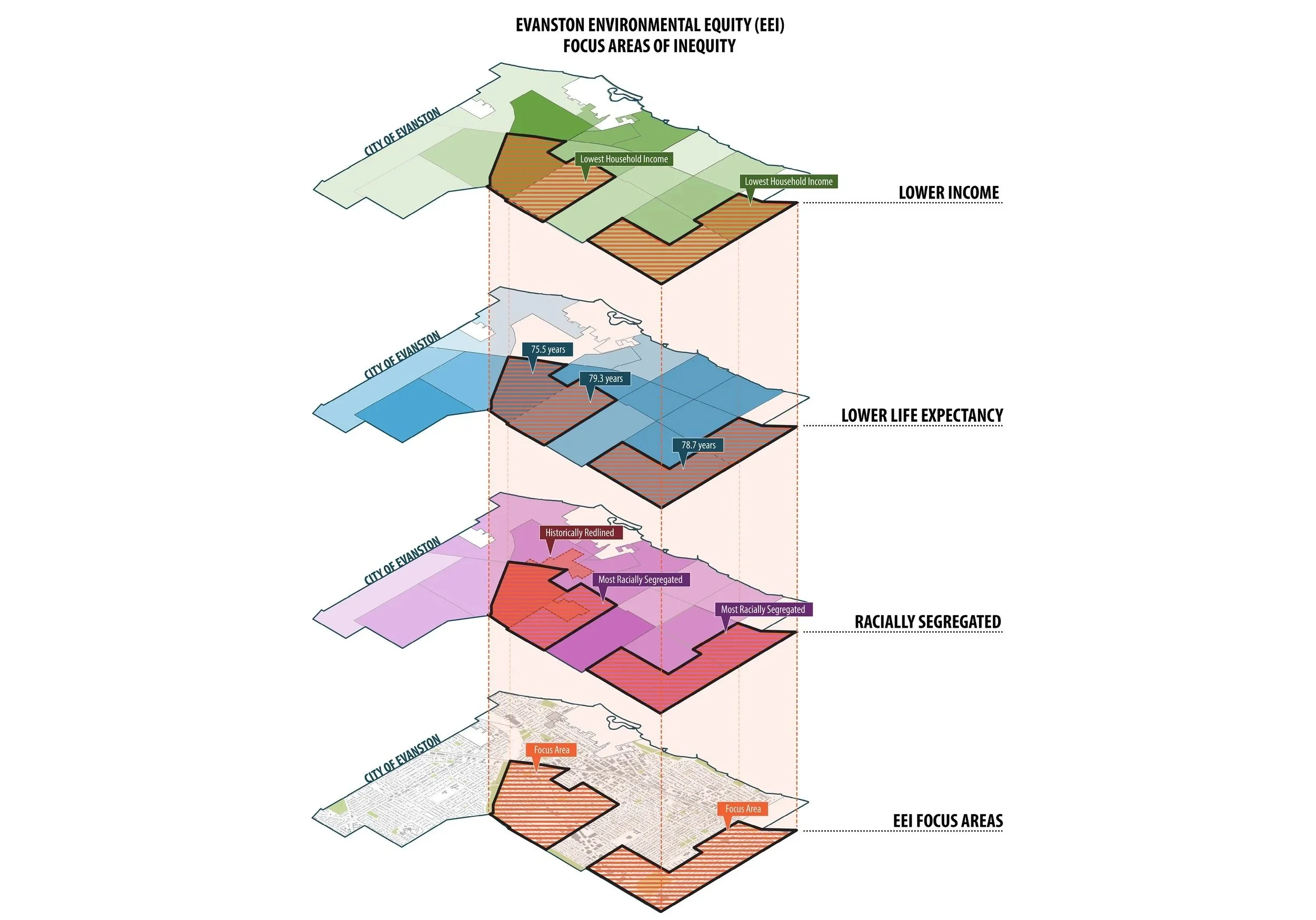
Environmental equity ensures that all people have the same opportunities for health and prosperity without unfair disadvantages from physical, economic, or social structures.
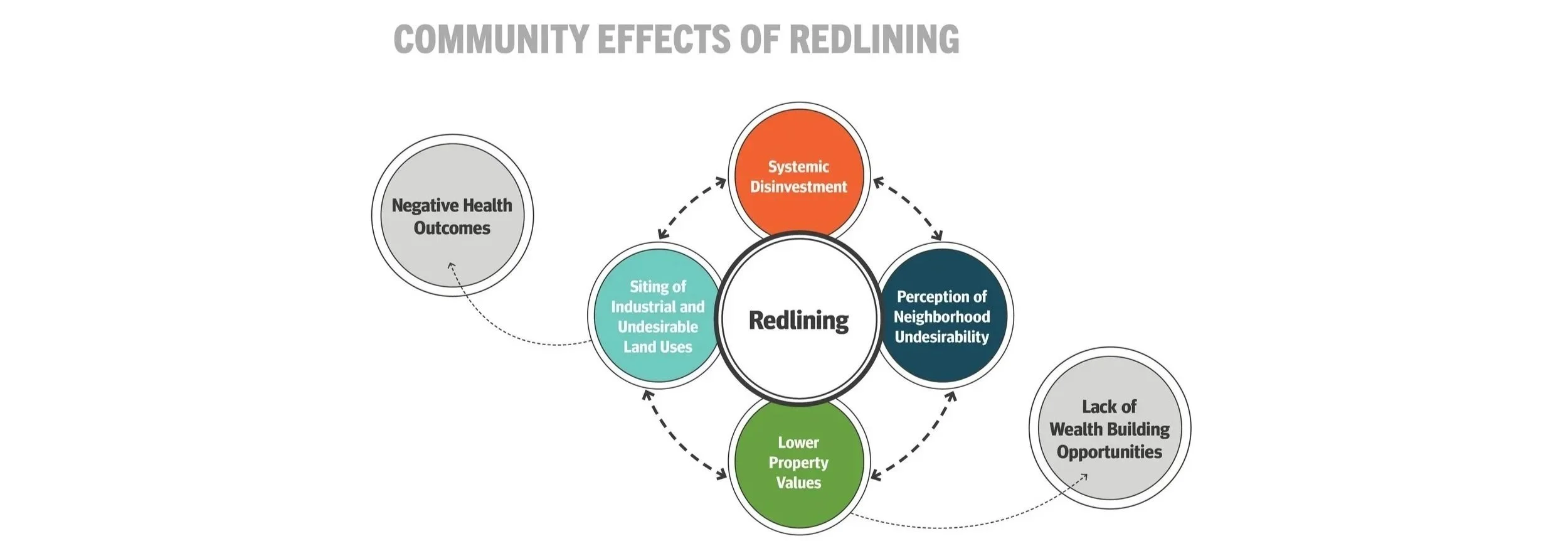
Many of the equity issues experienced today can be traced back to historic redlining and issues of housing growth and development over time.
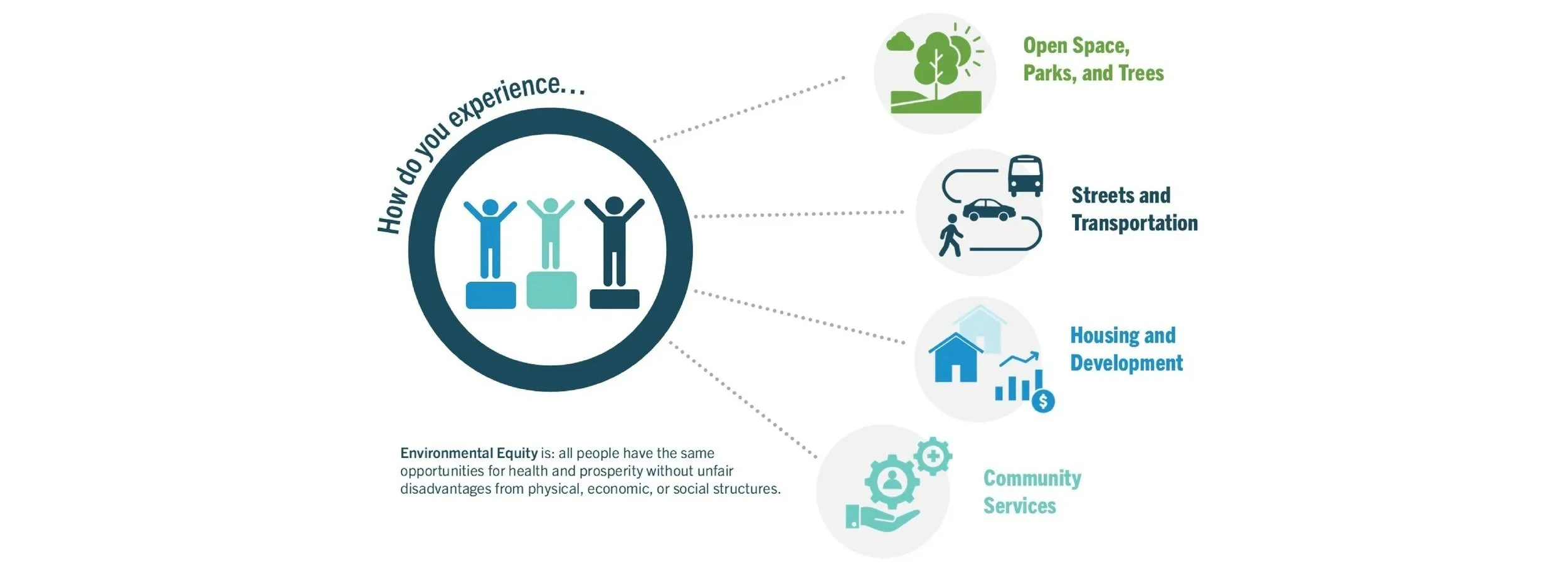
To uncover how issues have impacted the focus area neighborhoods, the EEI is structured around four central themes that touch nearly every aspect of daily life: Open Space, Parks, & Trees; Streets & Transportation; Housing & Development; Community Services.