
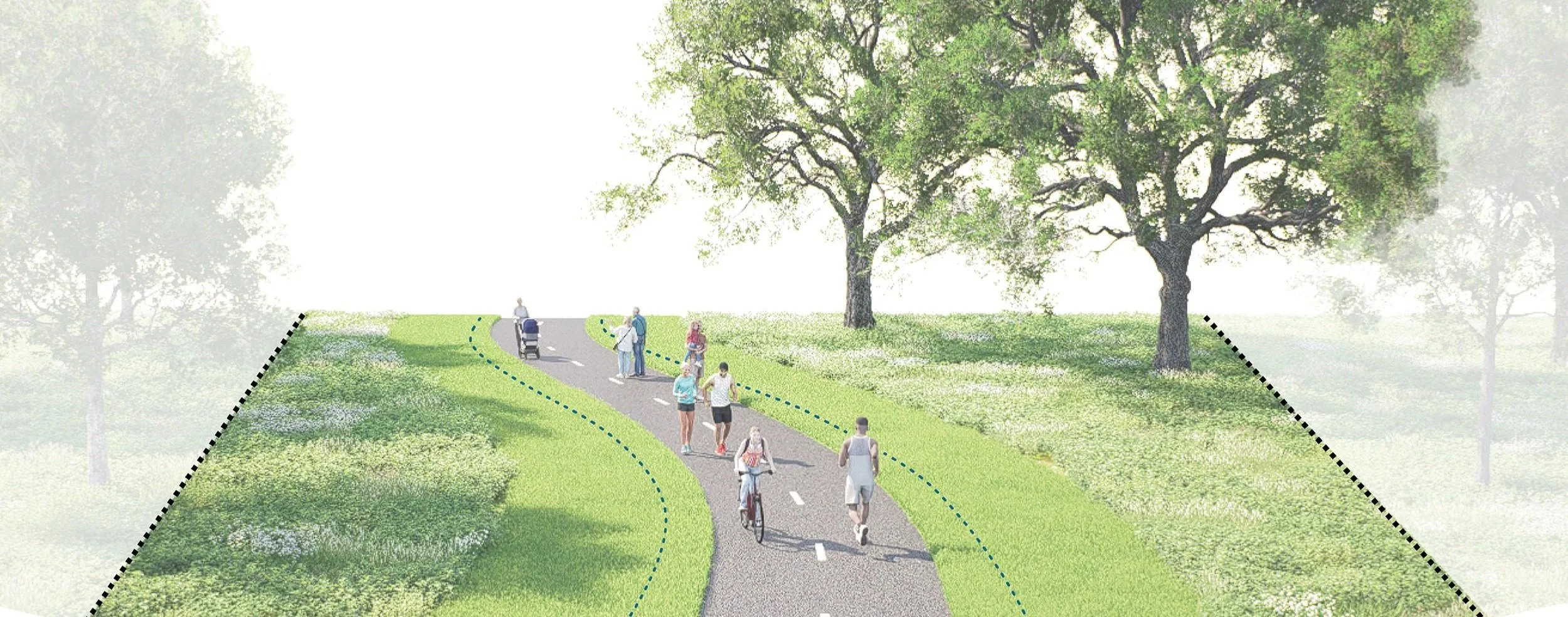
Indy Greenways for All Strategic Implementation Plan Indianapolis, Indiana
Role
Urban Design / Planning / Public Realm Strategy
People Involved
Andrew Overbeck, Aaron Kowalski, Donny Donoghue, Eric Lucas, Katie Clark, Yahan You, Tori Luckenbach, Ben Kern, Carley Lemmon
Typology
Public Park, Trail, Design Guidelines, City Infrastructure, Master Plan
Project Timeline
2025 - 2026
Collaborators
IEI, Policy Analytics, Taft
A strategic implementation plan to establish a clear vision for expanding and improving Indy’s greenway system
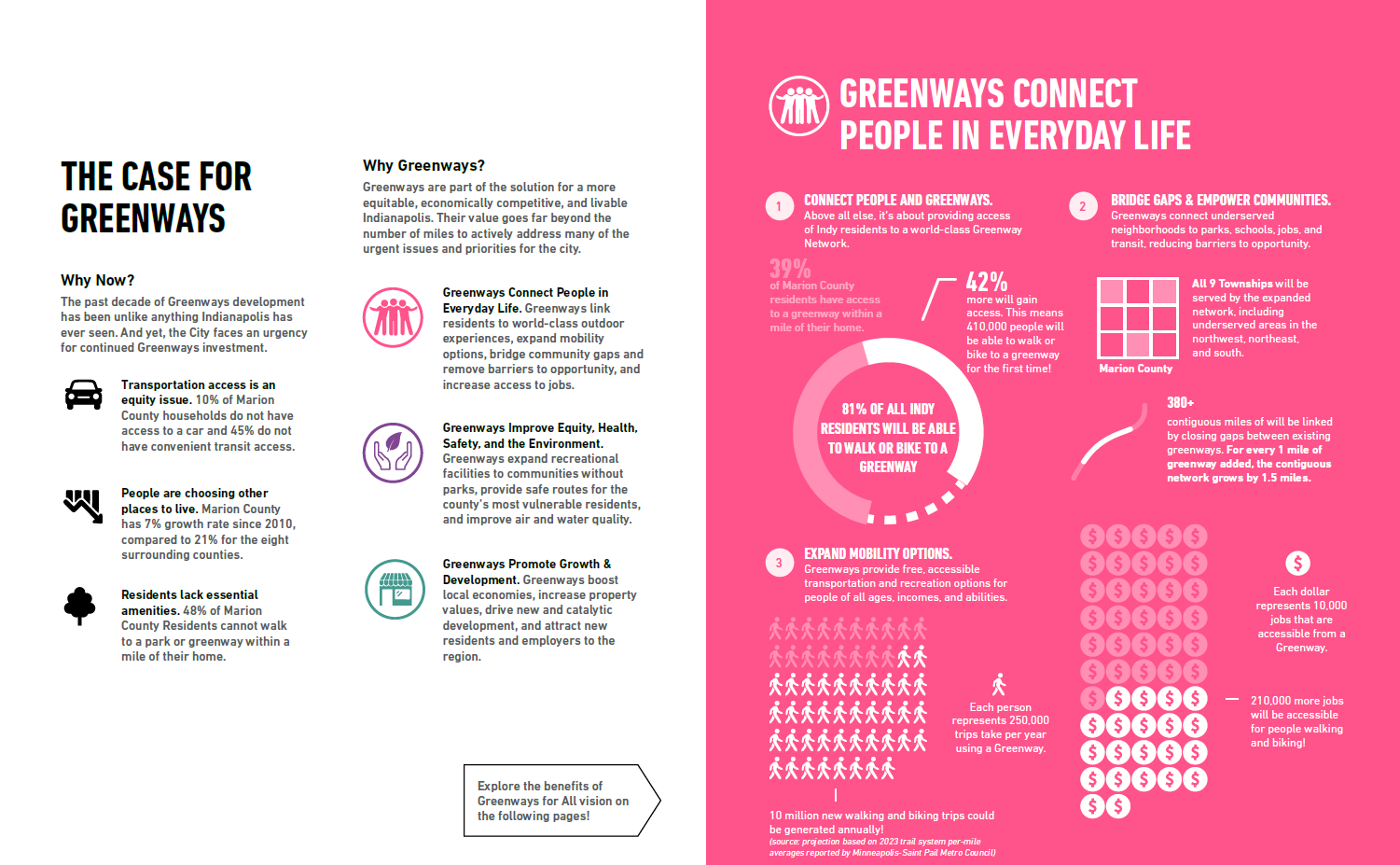
The Indy Greenways for All Strategic Implementation Plan represents one of the most ambitious efforts in Indianapolis’ history to strengthen its position as a premiere trail community nationwide. Building on the success of the 2014 Full Circle Plan, which envisioned 140 miles of new greenways across X area, the strategy advances a bold vision to expand the city’s network from approximately 120 miles today to over 380 miles of interconnected greenways. Connecting neighborhoods, parks, waterways, employment centers, and destinations across Marion County, the plan provides a comprehensive framework to accelerate trail development, improve access, and create a world-class network that supports mobility, recreation, development, and wellness for the Indy community.
The plan is grounded in data analysis and community input and envisions a future in which more than 80% of Marion County residents live within one mile of a greenway. Six strategic areas organize the implementation approach: mapping and expanding the network, designing safe and consistent trails, building the highest-priority segments, improving the places and communities along each route, maintaining the system over time, and establishing sustainable funding. Together, these strategies provide a coordinated roadmap for moving from vision to implementation.
"The Indy Greenways project represents much more than a network of trails. It is an investment in connectivity, health, and quality of life that will strengthen the relationship between people, neighborhoods, and the natural environment. By linking communities to parks, waterways, employment centers, and cultural destinations, we are creating a more accessible, resilient, and equitable future for Indianapolis—one that celebrates the region's landscape while enhancing everyday life for residents and visitors alike."
- Andrew Overbeck, AICP, Principal, Planner, Practice Leader, MKSK
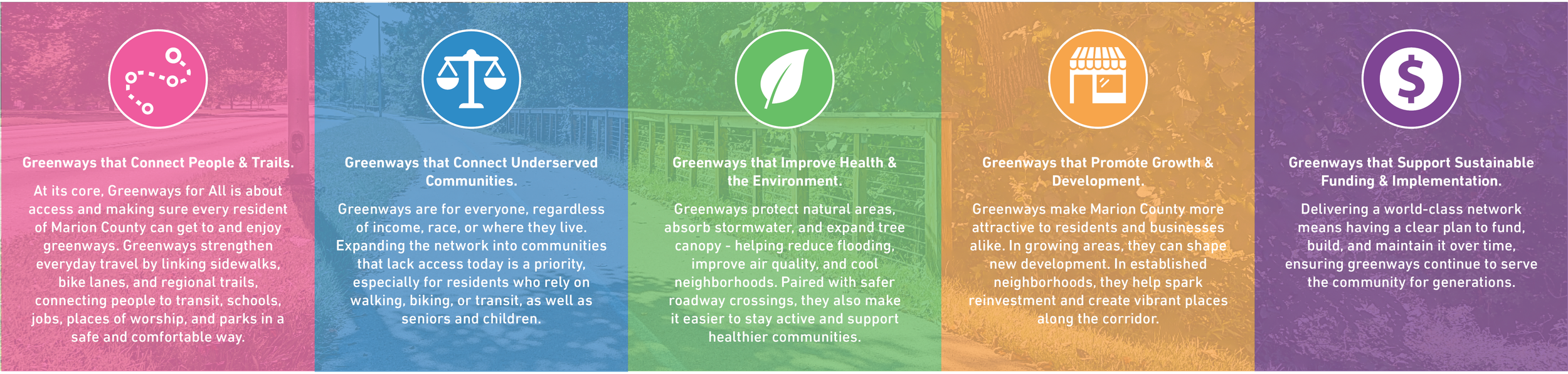
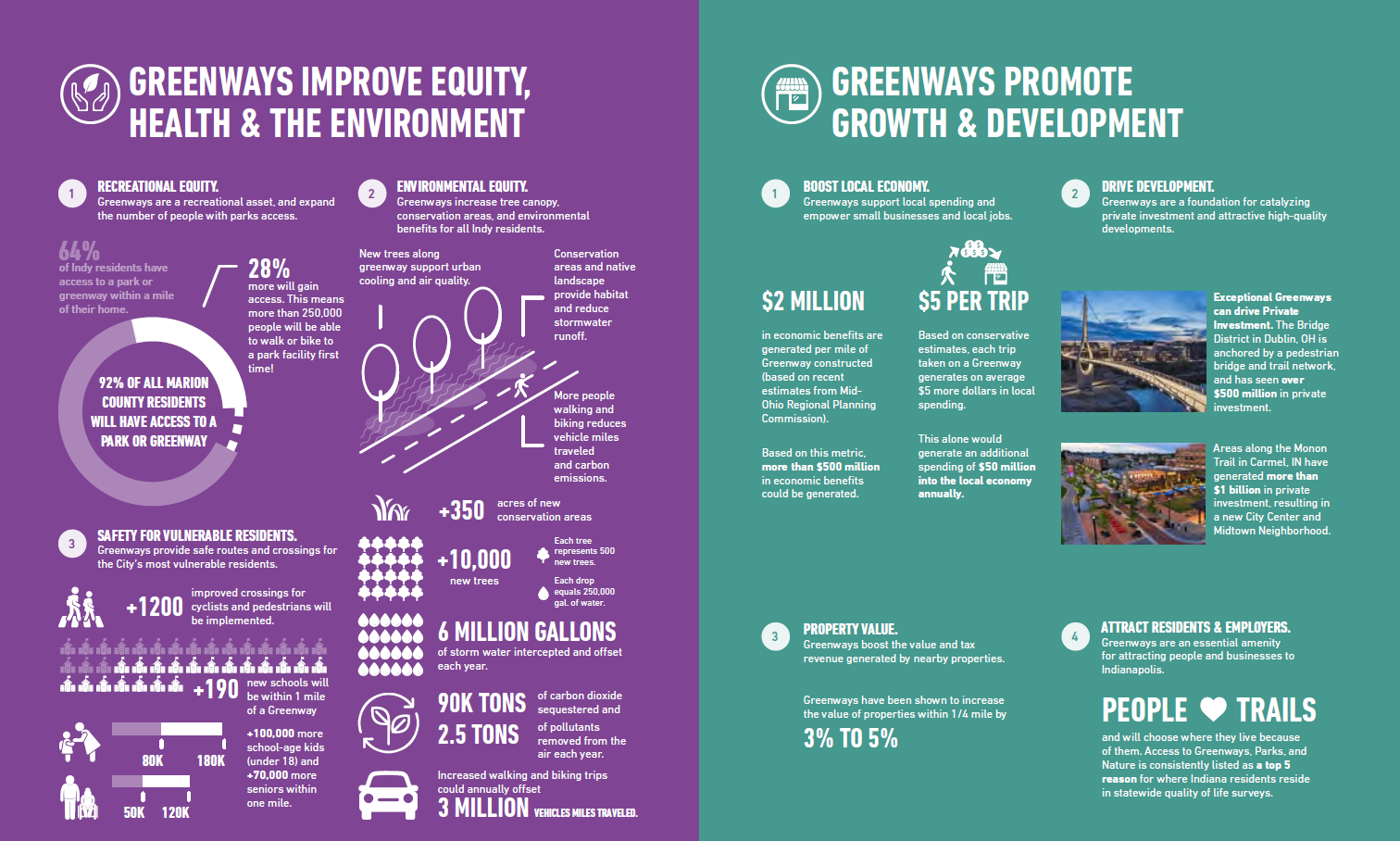
Core values, including improving transportation, advancing equity, protecting the environment, and supporting growth are guiding decisions throughout the plan. These values inform priorities such as closing gaps in the existing network, connecting neighborhoods and destinations, improving access to greenways, and creating new opportunities for investment and development. The result is a strategy designed to grow a connected, equitable, and beloved greenway system faster and more effectively than ever before.
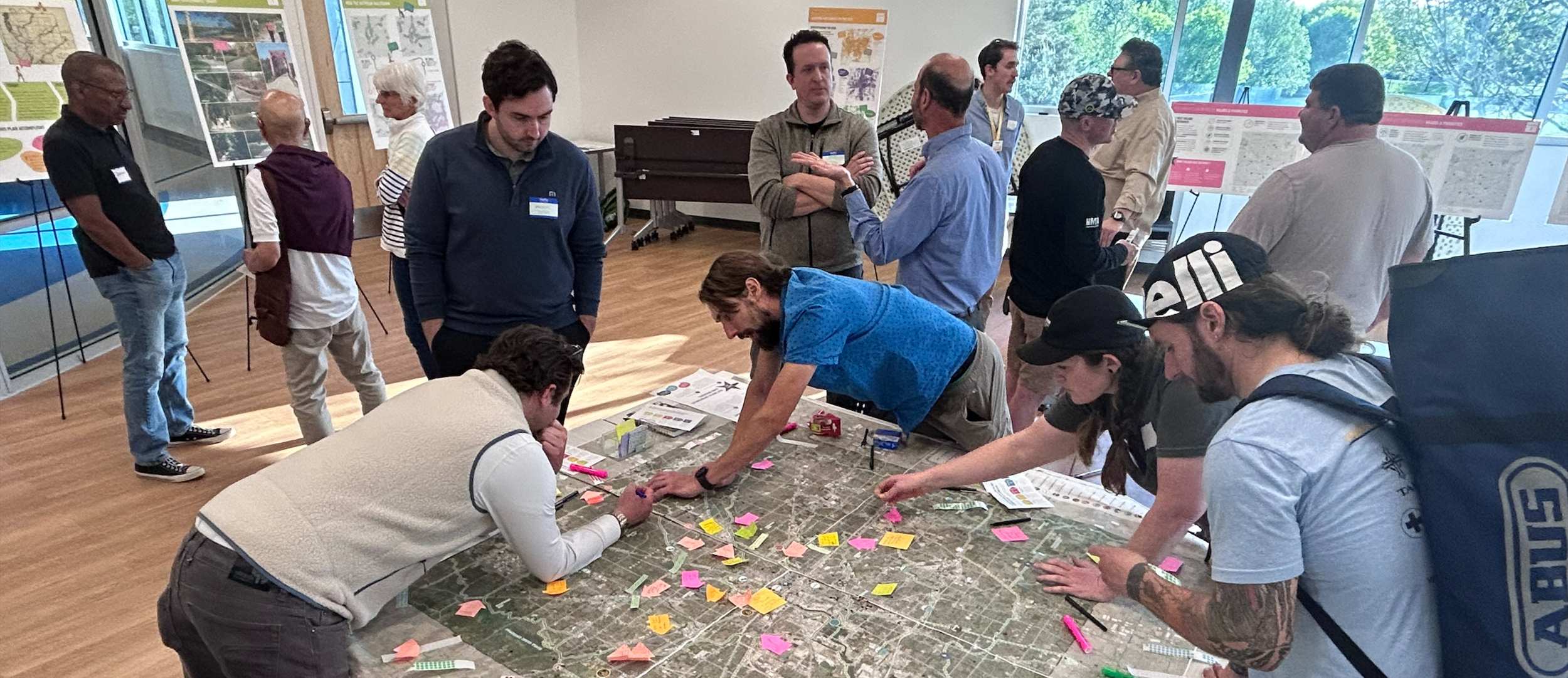
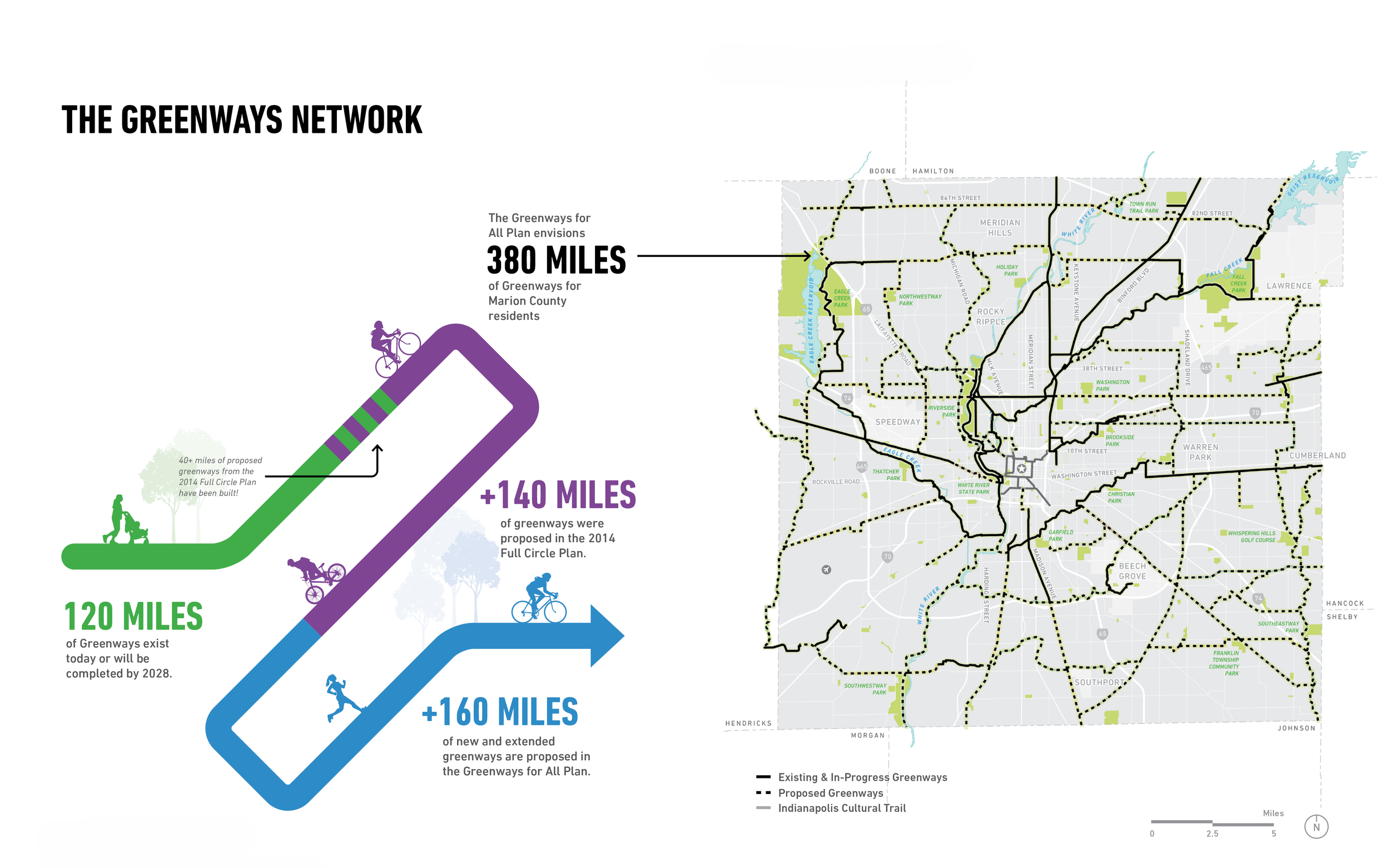
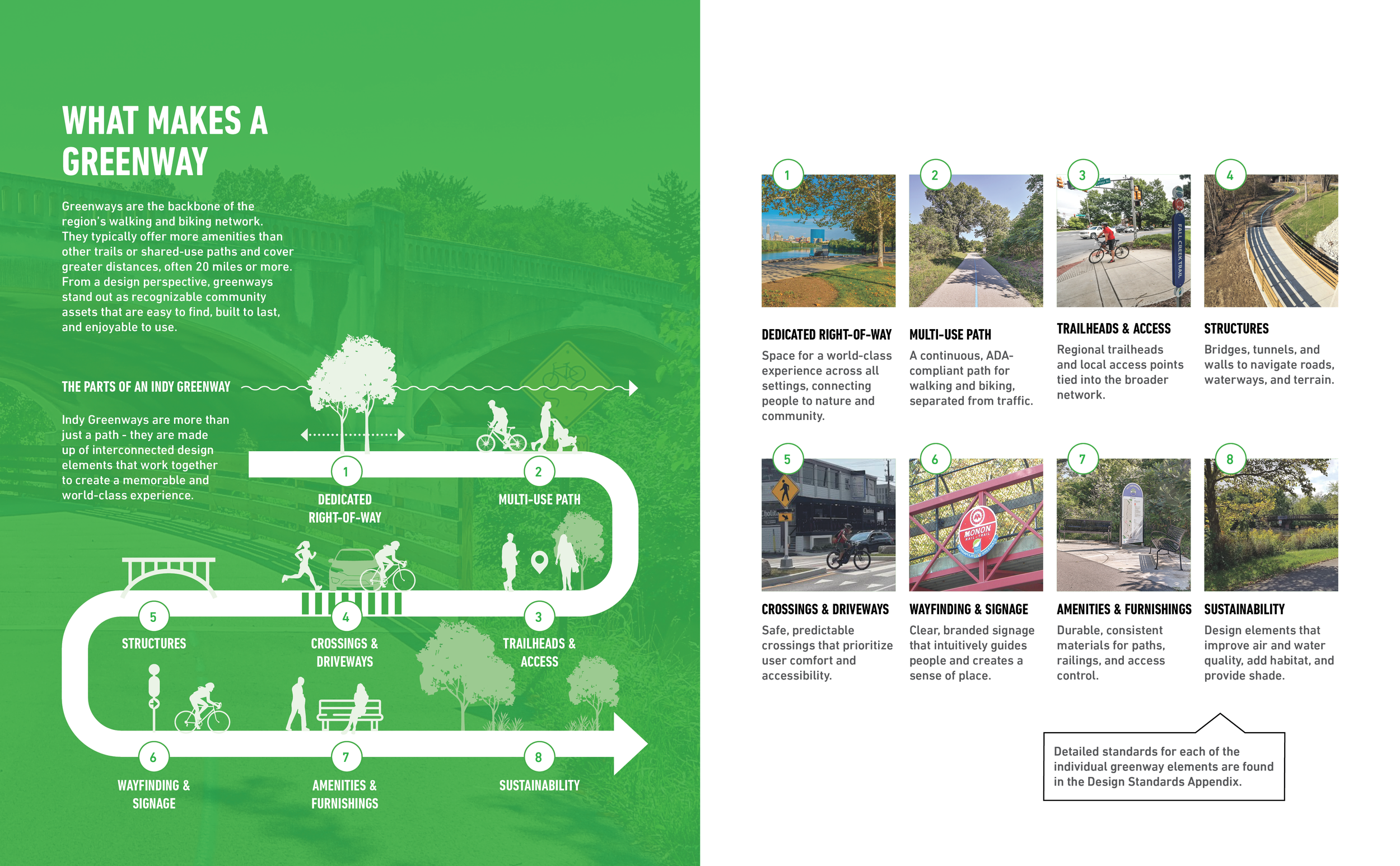
The Indy Greenways network weaves through a wide range of natural and built environments across Marion County. Greenways follow many types of corridors, including parks, waterways, levees, rail lines, easements, streets, and utility corridors.
Routes such as Fall Creek and Eagle Creek offer a very different experience from more urban greenways such as the Interurban and Pennsy Trails, and that variety is one of the defining characteristics of the system. Each greenway is shaped by its surrounding context, including right-of-way width, land uses, traffic, utilities, topography, rail lines, and environmental conditions.
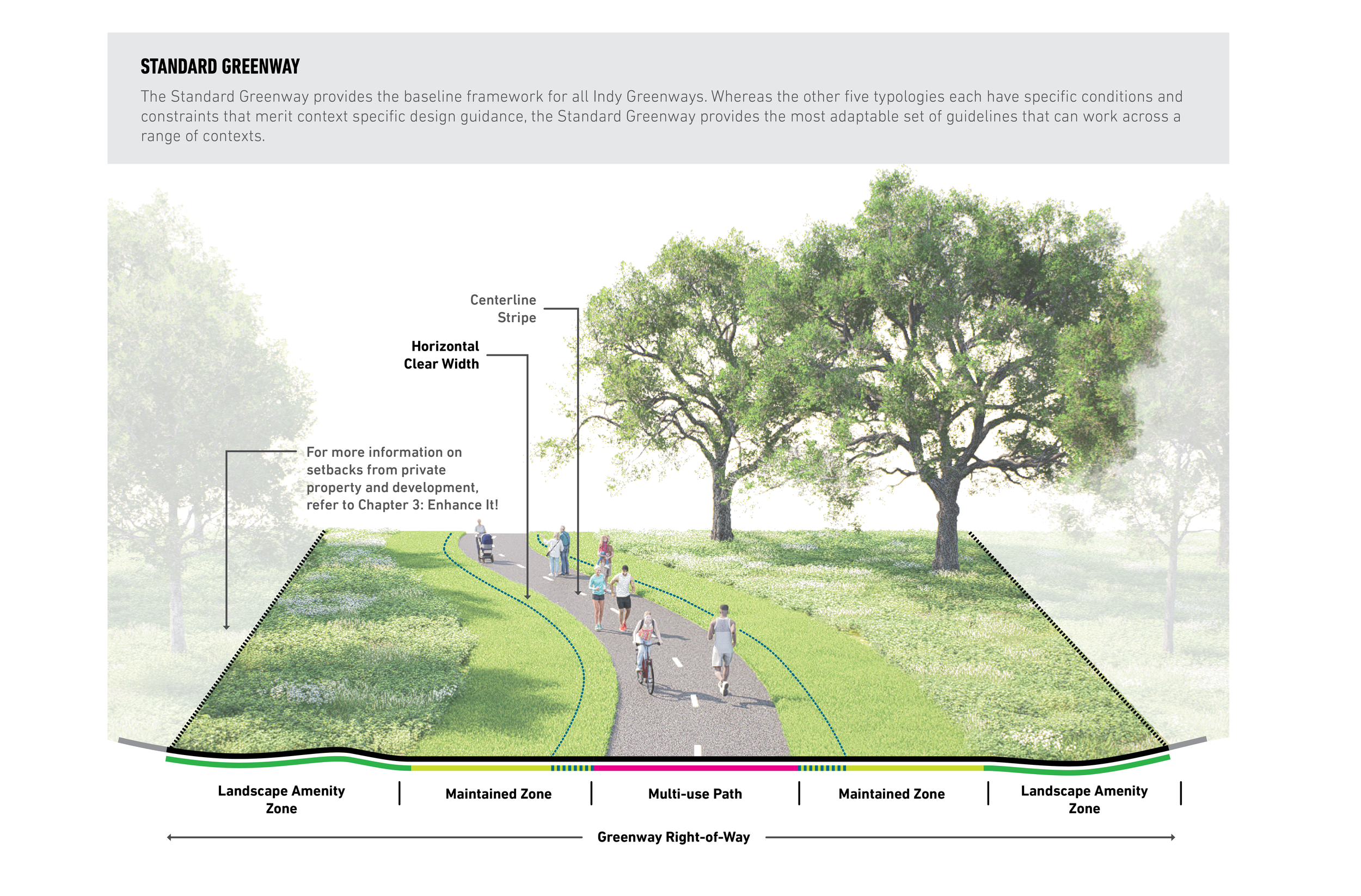
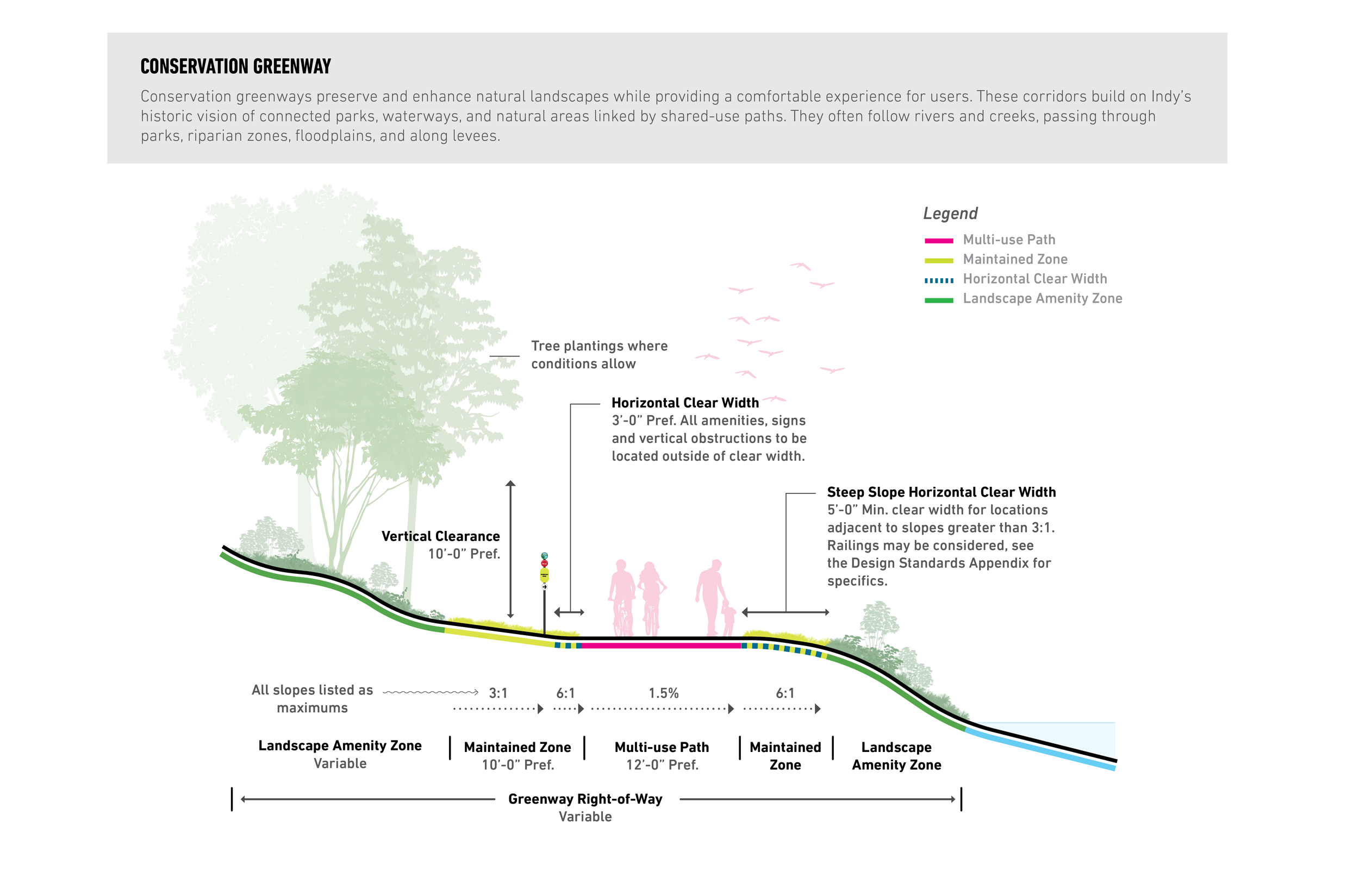
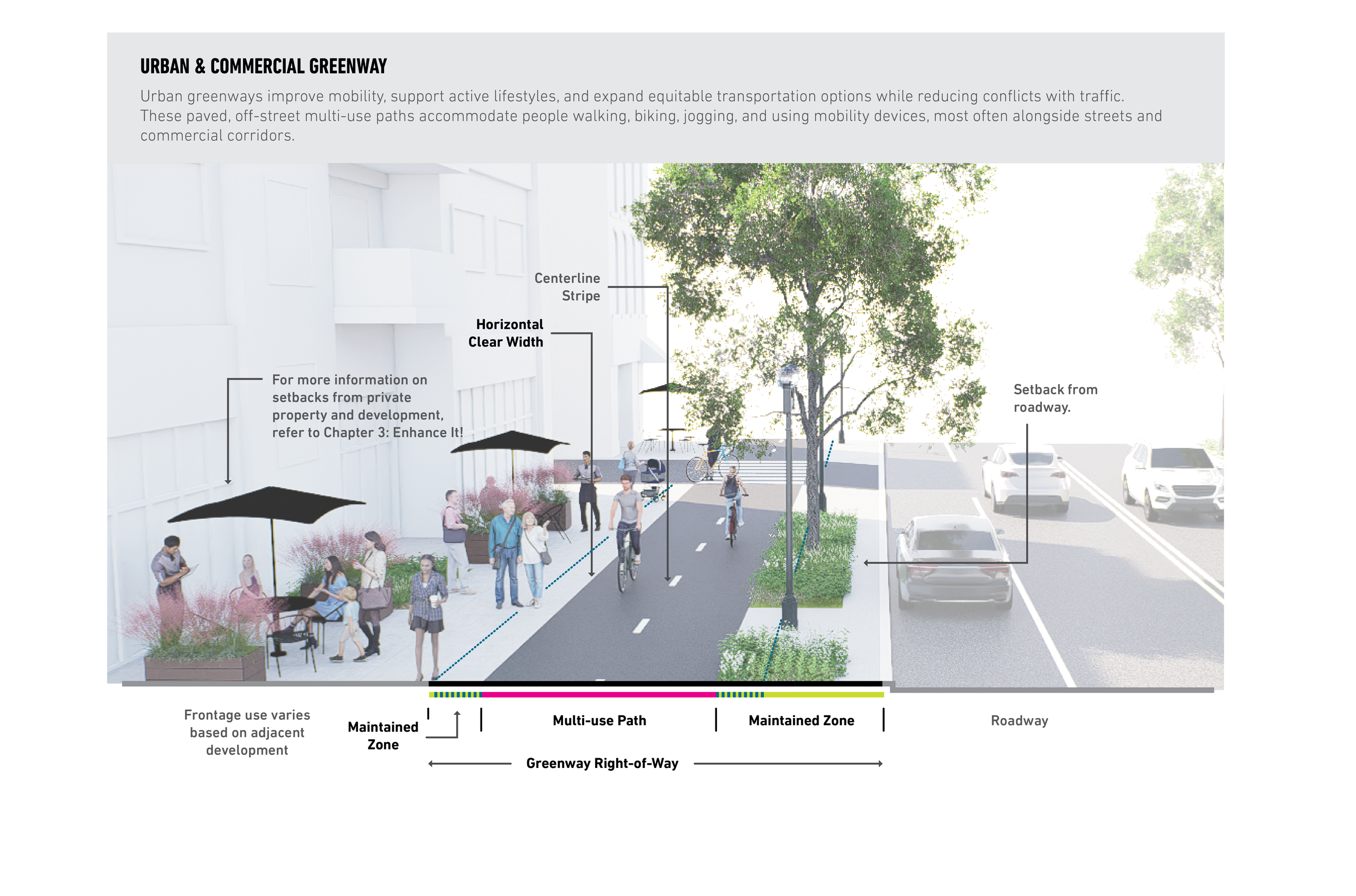
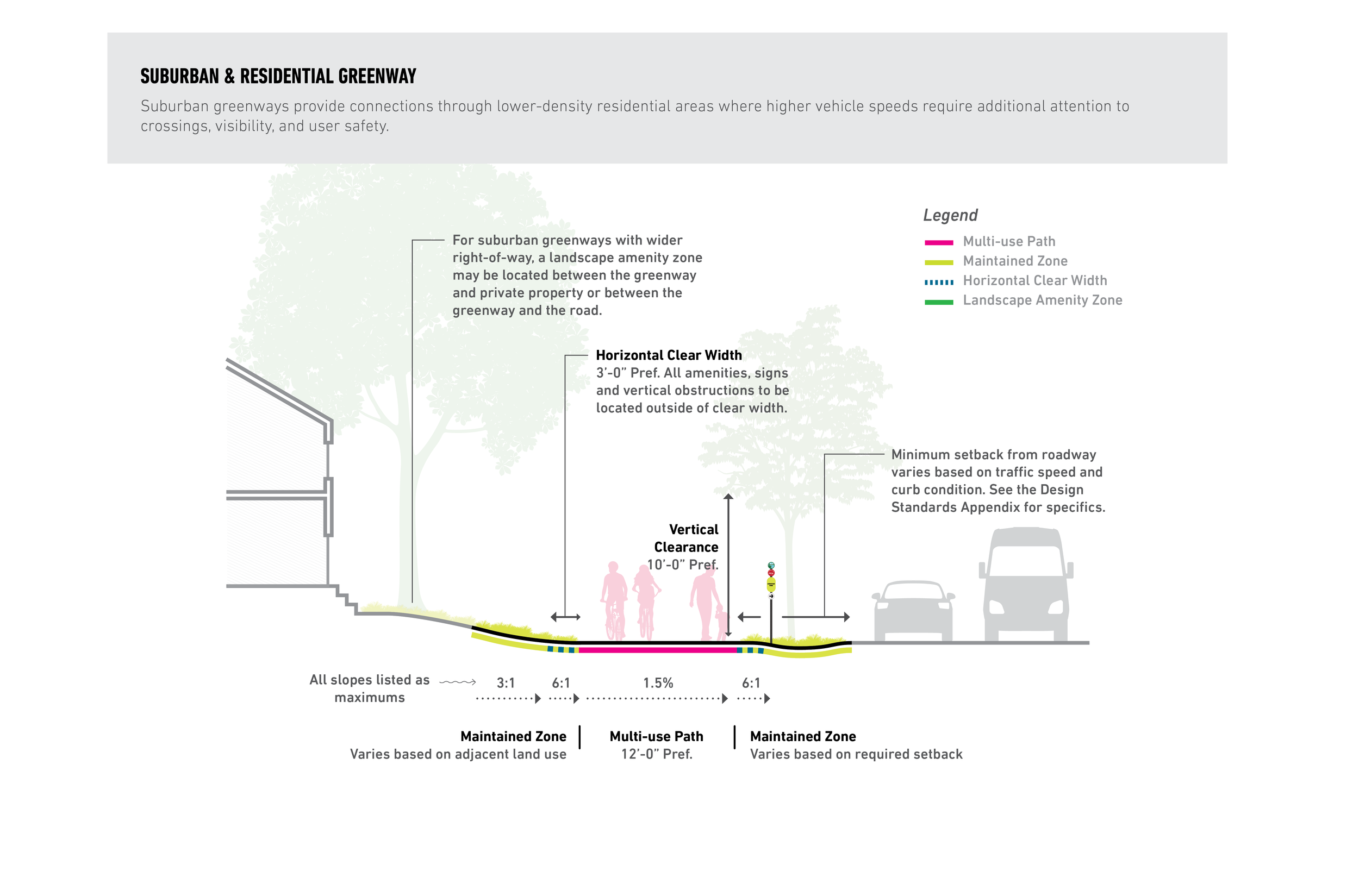
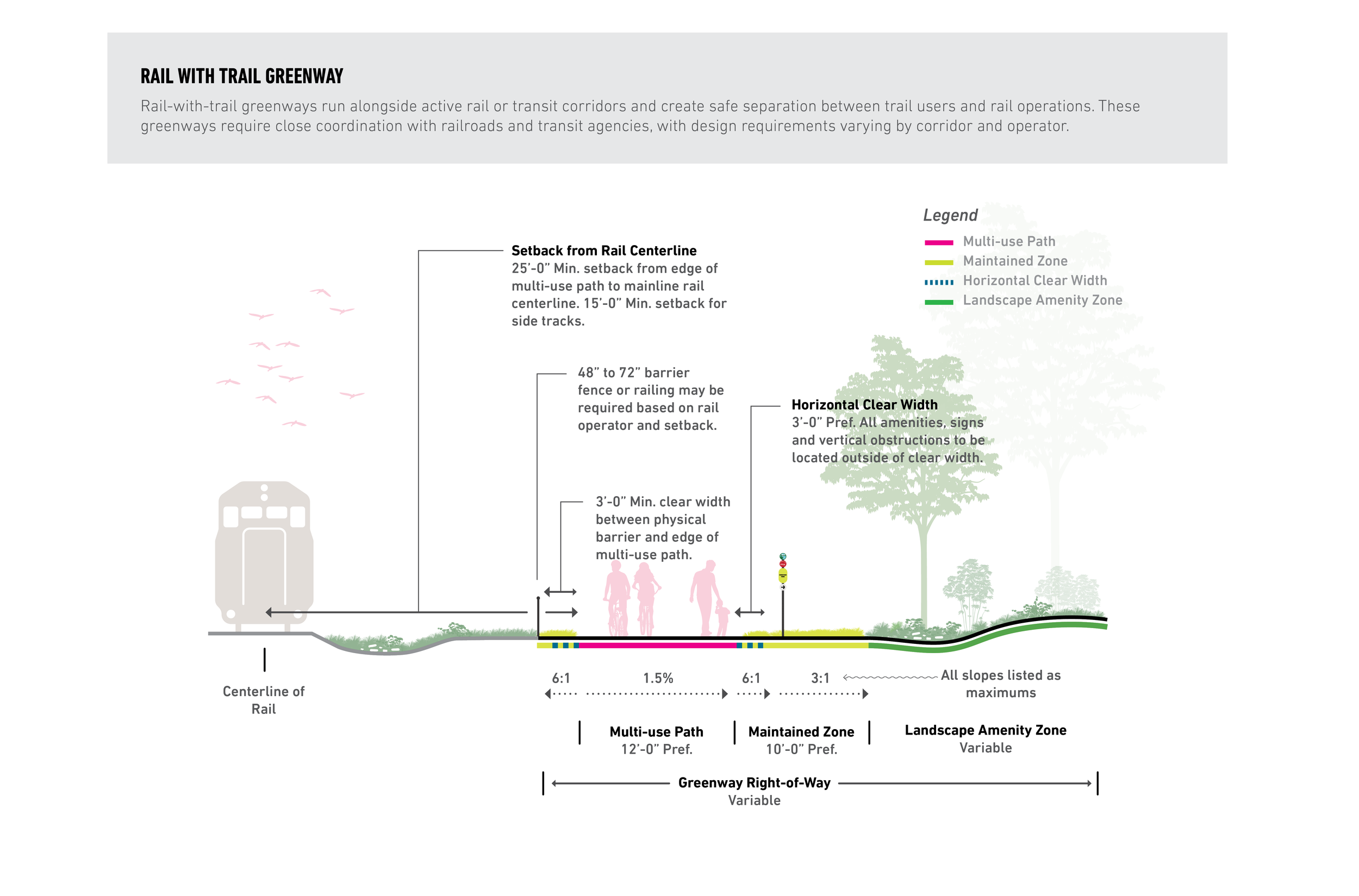
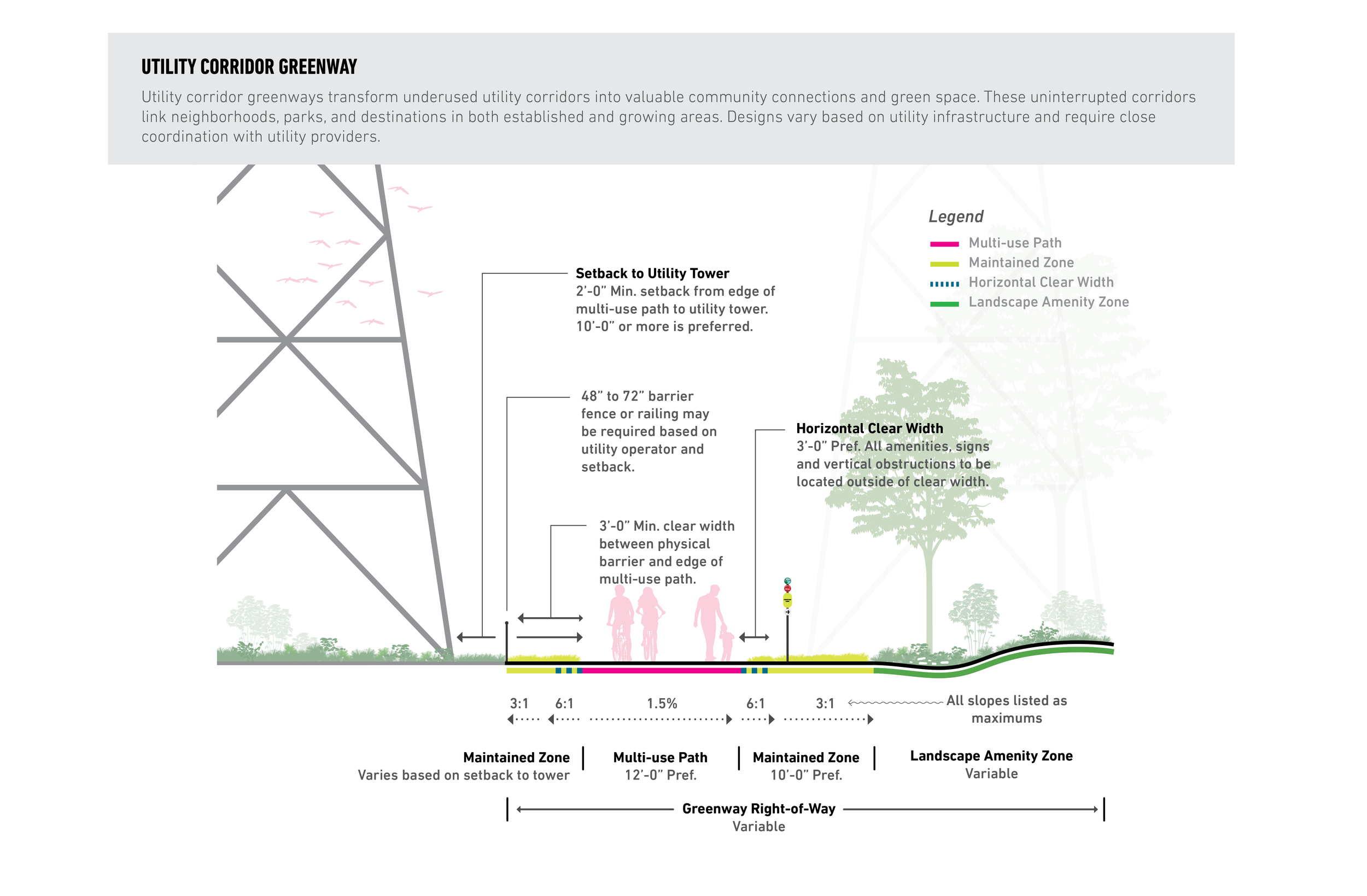
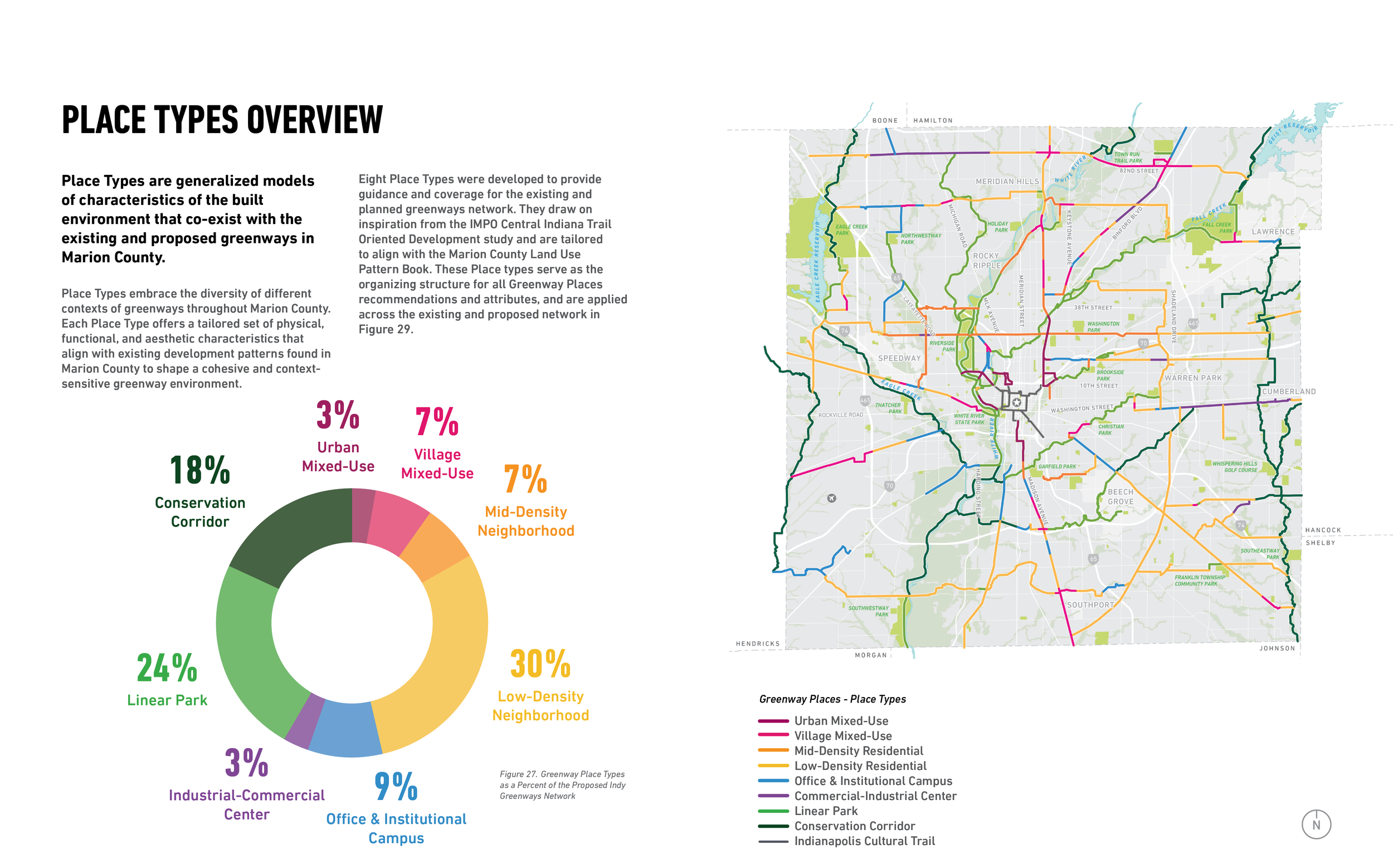
Many proposed routes also align with future land use and development opportunities, creating potential for new “Greenway Places” where investment in greenway infrastructure can help catalyze broader community improvements and economic development. By recognizing the unique context and potential of each corridor, the plan seeks to ensure that greenways function not simply as trails, but as integral parts of the communities they connect.
As one of the Midwest’s most trail-centric cities, Indianapolis is positioned to lead nationally in greenway-based infrastructure and public realm transformation. The Greenways for All Strategic Implementation Plan builds on that foundation by establishing a clear path toward a larger, more connected system. In doing so, it positions greenways as more than linear parks: they are essential civic assets that shape mobility, resilience, recreation, and inclusive community development across Indianapolis.
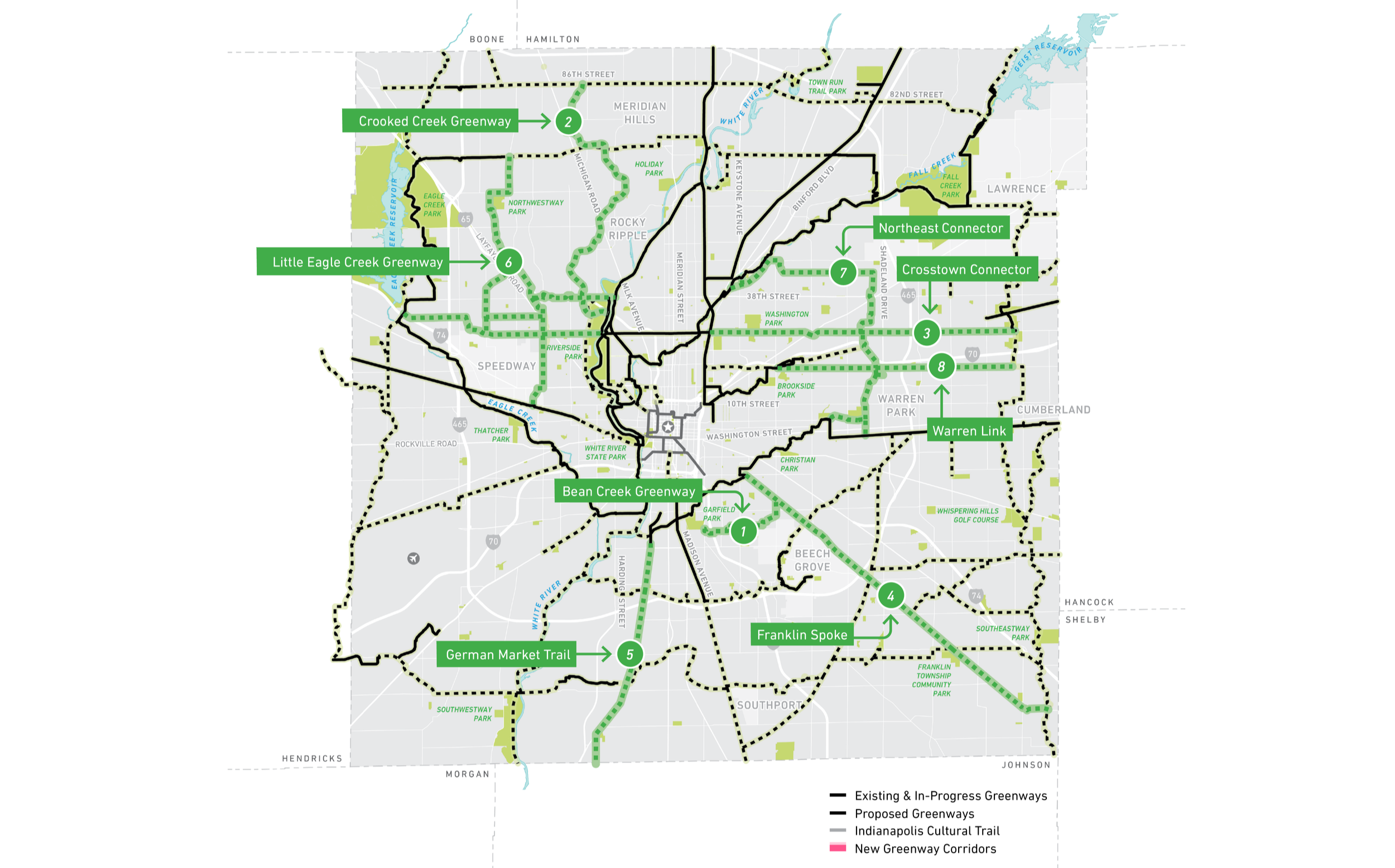
“The Greenways for All Strategic Implementation Plan is more than a trail plan. It is a strategy for keeping Indianapolis among the nation's premier trail cities by expanding the greenway network from 120 miles to more than 380 miles while connecting over 80 percent of Marion County residents to a trail. Beyond building trails, the plan establishes innovative design standards, development guidelines, and funding strategies that accelerate implementation, promote trail-oriented development, and prioritize equity by connecting underserved communities to jobs, parks, schools, and opportunity. Covering more than 30 greenway corridors, it provides a practical roadmap for delivering lasting mobility, economic, environmental, and community benefits.”
- Aaron Kowalski, AICP, Associate Principal, Planner, MKSK
Similar Work
White River State Park Extension
Todd’s Creek Relocation and Restoration
Great Parks of Hamilton County Comprehensive Plan
West Louisville Outdoor Recreation Initiative
Ridge Creek Park Vision Plan and Implementation
Indian Springs Environmental Discovery Center